
Follow the Sizzle: 55 Must-Try Taiwanese Foods That Will Blow Your Mind (and Taste Buds)
A Culinary Journey: 55 Taiwanese Foods You Must Try!
Taiwan isn’t just a destination—it’s a flavor explosion, wrapped in steam, dipped in sauce, and handed to you in a plastic bag. Whether you're wandering through the organized chaos of a night market or ducking into a nameless alley stall, food in Taiwan isn’t just something you eat—it’s something you chase.
So if you’re ready to follow the sizzle and eat your way across this island, here’s your hit list: 40 essential Taiwanese foods that will punch your taste buds, fuel your wanderlust, and maybe even change your life (or at least your Instagram feed).
How to Use This Guide
This isn’t your average food blog roundup. It’s a field manual for hungry travelers.
Each listing includes:
- Dish name (in English + Mandarin)
- What makes it iconic or crave-worthy
- Where to find it
- Pro tips from the street
Use it to:
- Plan your next night market mission
- Fill your foodie bucket list
- Learn what to hunt down between train stops
Whether you’re deep in Taipei or scrolling from home, this list brings Taiwan’s food culture straight to your plate.
Food Categories at a Glance
For easier cravings:
- 🍜 Soups & Noodles – Slurp-worthy staples from broth to dry stir-fry.
- 🥟 Snacks & Dumplings – Small bites that deliver bold flavor.
- 🐖 Meats & Mains – Hearty pork, chicken, and meat-forward dishes.
- 🌱 Veggie & Sides – Tofu, greens, and plant-powered eats.
- 🍬 Desserts & Sweets – Icy, chewy, syrupy goodness.
- 🧋 Drinks & Cold Treats – Boba tea, herbal brews, and icy refreshments.
🍜 Soups & Noodles
Slurp-worthy staples from broth to dry stir-fry.
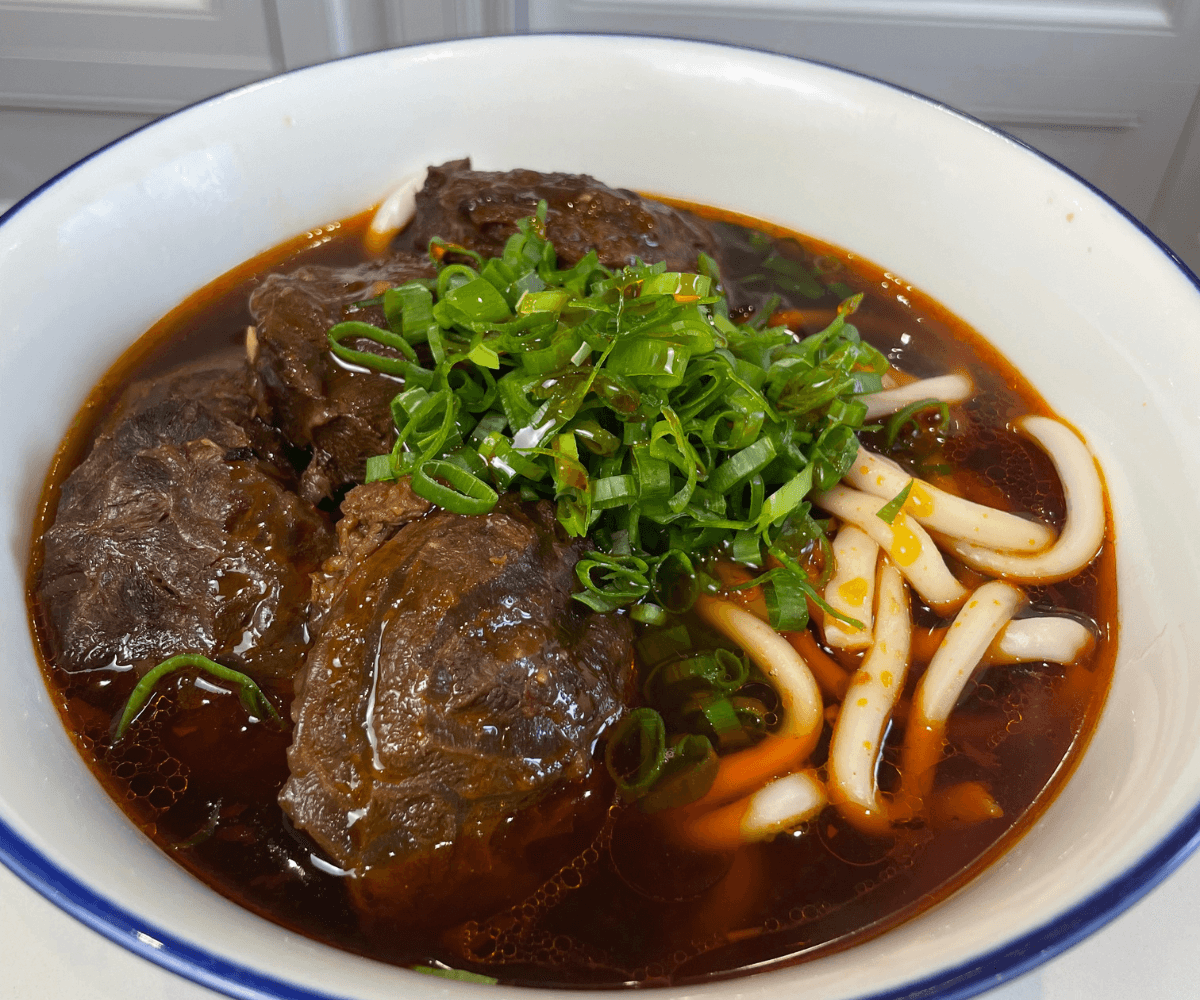
1. Beef Noodle Soup—Niúròu miàn—[nyoh2-roh4 myen4]—(牛肉麵)
Taiwan’s national comfort bowl. Rich, savory broth, chewy noodles, and melt-in-your-mouth braised beef. A go-to dish for locals and travelers alike.
This isn’t just soup; it’s survival fuel disguised as dinner. A bowl of beef noodle soup in Taiwan is like a rite of passage. Wander into a corner stall, and you’ll find old men slurping in silence, couples sharing broth between bites, and steam rising like incense from a temple of umami.
The broth is where the poetry lives bone-deep and slow-brewed, with whispers of star anise, soy, and secrets passed down like family debts. The beef is tender enough to make you question your life choices. The noodles? Chewy ropes of satisfaction you don’t so much eat as conquer.
Some say the dish came from Sichuan. Others say it was born in a military village and raised in Taipei’s alleys. Doesn’t matter. Taiwan took it, tuned it, and turned it into a masterpiece.
📍 Start at Yongkang Beef Noodles if you want legendary. But the best bowl might just come from a nameless shop under a flickering sign in Tainan.
💡 Pro tip: Taste the broth before anything else. It’ll tell you the whole story. The chef’s soul, the shop’s history, and whether you’ll be back tomorrow.
✈️ Travel tip: Want to slurp your way through Taiwan in person? Book your hotel with my go-to travel partner; it's the same platform I use when chasing noodles across the island.
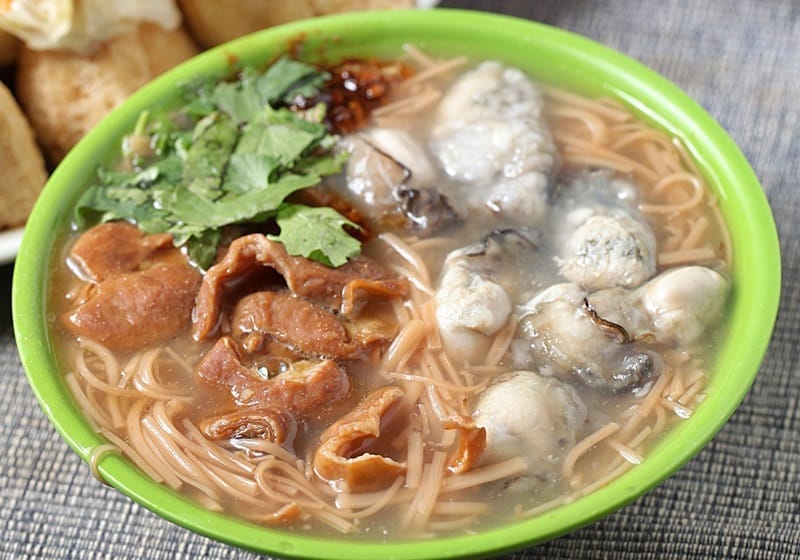
2. Oyster Vermicelli—Kēzǎi Miànxiàn—[kuh1-dzeye3 myen4-shyen4] –(蚵仔麵線)
This is the kind of dish that whispers, then slaps. A bowl of slippery vermicelli noodles swimming in a thick, gloopy broth that smells like the sea after a thunderstorm. Sounds sketchy? Good. You're on the right track.
It’s briny. It's funky. It's everything a Western palate wasn’t trained to expect, and that’s why it hits so hard. The oysters are fresh and plump, sometimes still twitching. Add a few strips of chewy pig intestine, and now you’re playing in the big leagues. Locals devour this stuff standing up, hunched over tiny bowls like they're guarding treasure.
Some carts throw in garlic paste, black vinegar, and a shake of white pepper. Suddenly it’s not just lunch; it’s a dare wrapped in steam.
📍Try it at Ningxia Night Market or Ay Chung in Ximending; just follow the crowd and the scent.
💡Pro tip: Don’t judge it by the texture. Close your eyes, taste, and let your instincts do the work.
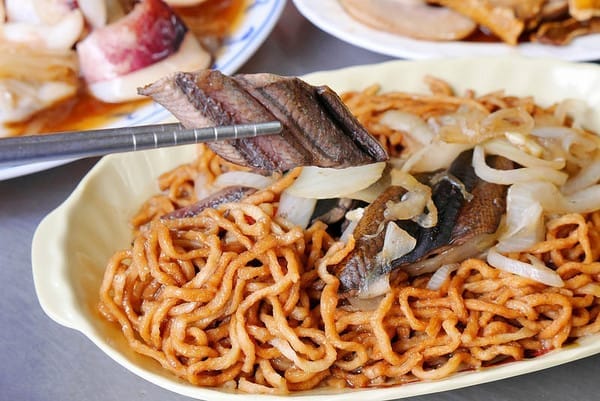
3. Eel Yi Noodles - Shànyú yìmiàn—[shahn4-yoo2 ee4-myen4] –(鱔魚意麵)
If Beef Noodle Soup is the golden child, Eel Noodles is the punk older cousin that sneaks in after dark, carrying stories and a flask of soy glaze. Born in Tainan, this dish throws sweet-and-sour into the ring with flash-fried eel and chewy egg noodles that bite back.
It’s chaotic in the best way—sticky sauce, wok hei smoke, sugar, vinegar, soy, and fish all crashing together like rush-hour scooters. You’re not just eating a bowl of noodles; you’re signing up for a flavor brawl.
You’ll find this dish in old-school noodle joints where the cooks wear flip-flops and don’t need your approval. The eel’s crispy on the outside, silky inside. And that sauce? It coats your lips like lacquer and makes you crave another bite before you've finished chewing.
📍Best had in the backstreets of Tainan. The grimmer the joint, the better the eel.
💡Pro tip: Get it “dry.” The sauce clings better and delivers a bigger punch. Bonus points if the cook is yelling when he makes it.
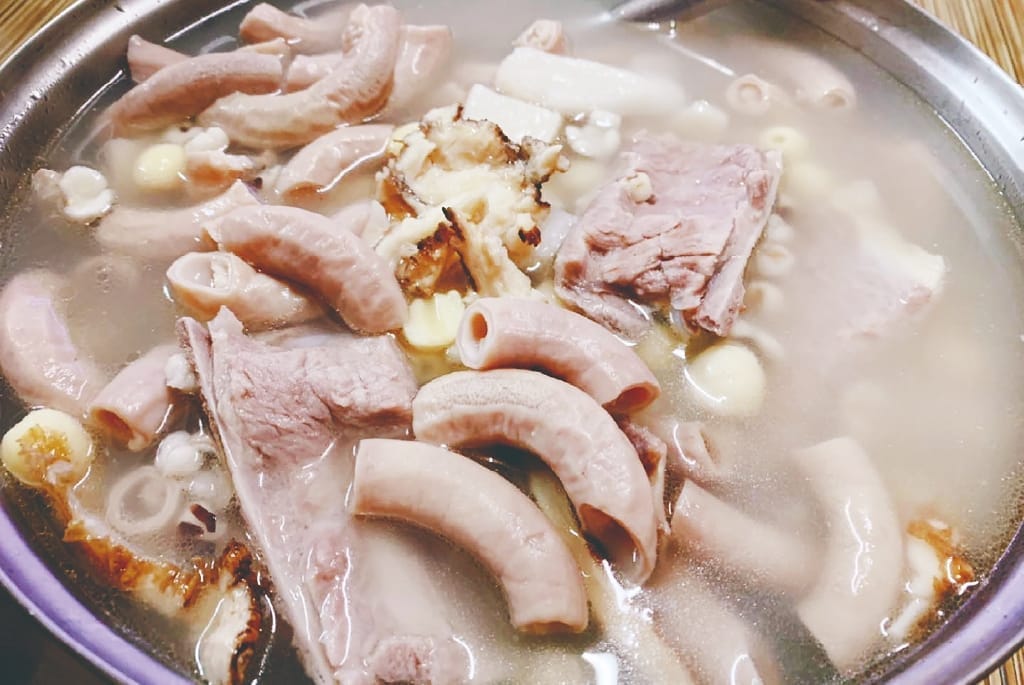
4. Four-Herb Soup—Sìshén tāng—[szz4-shum2 tahng1]—四神湯
This isn’t your flashy night market showstopper. It’s quiet, murky, and ancient. A bowl brewed from medicinal roots and long-forgotten wisdom your grandma might still believe in. Pork intestine is the protein of choice here—cleaned obsessively, boiled patiently, and floating like truth bombs in a cloudy herbal broth.
The “four gods” are actually herbs—lotus seed, Chinese yam, poria, and gorgon fruit. Together, they’re said to boost digestion, chi, and probably your odds of surviving another round of deep-fried snacks. Locals swear by it. Tourists blink at it. But once you’ve had a few chaotic meals, this is the reset button your gut will thank you for.
📍Found near temples, traditional breakfast joints, or tucked beside herbal pharmacies.
💡Pro tip: Pair it with sticky rice sausage "糯米腸" (Nuòmǐcháng – [nwo4-mee3-chahng2] – Sticky rice sausage) for a full local experience—and bonus points if you eat it with plastic stools under a temple lantern.
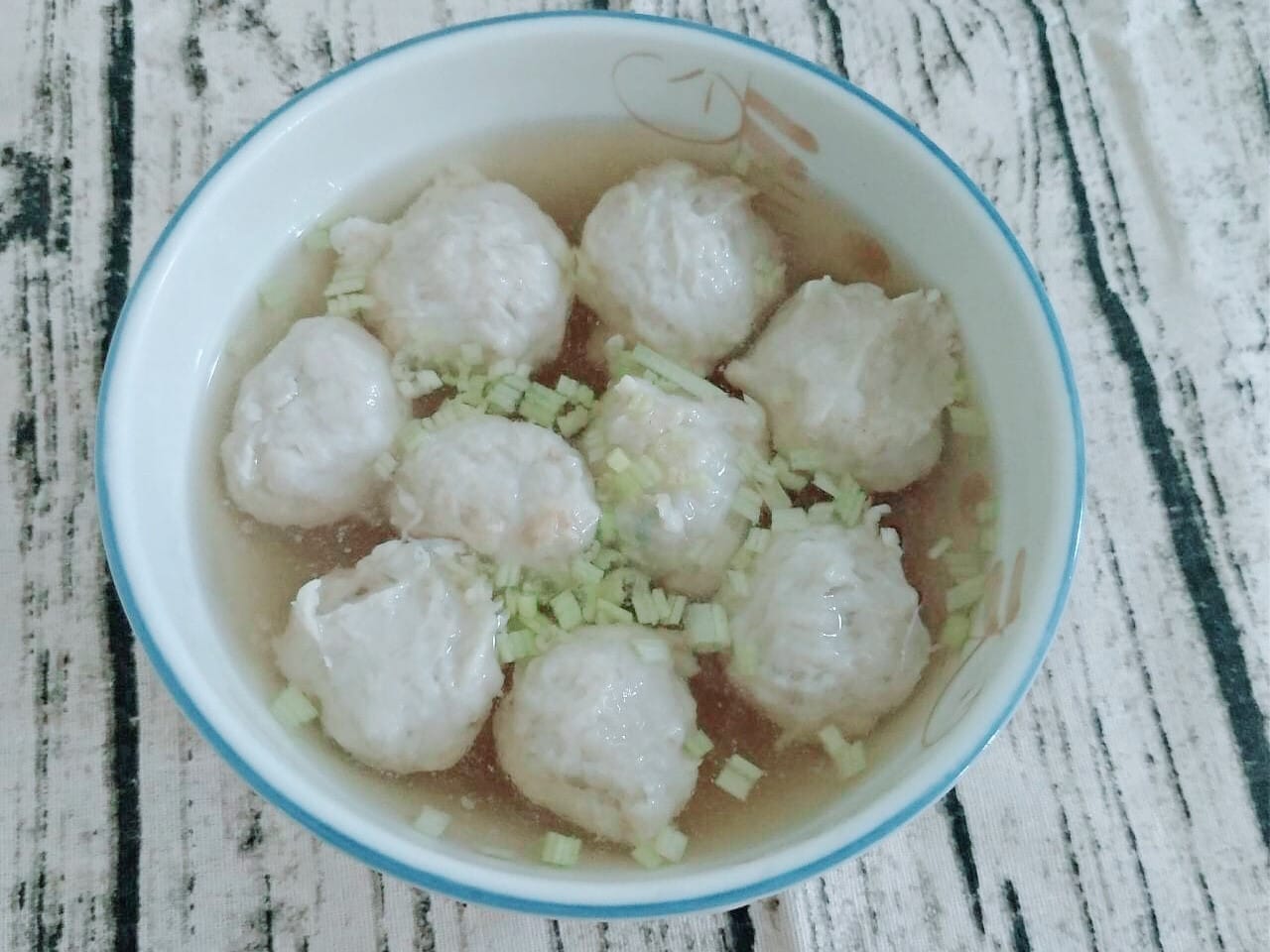
5. Fish Ball Soup—Yúwán tāng—[yoo2-wahn2 tahng1]—魚丸湯
Humble. Honest. Underrated. This clear, comforting broth holds bouncy little spheres of joy—fish balls so springy they could double as stress toys and flavorful enough to prove you don’t need fancy to taste fantastic.
The magic’s in the bounce. That signature chew comes from real fish paste, pounded and worked until it reaches that perfect “Q” texture locals obsess over. Some stalls serve them plain. Others stuff ‘em with minced pork for a surprise that hits mid-bite like a plot twist.
It’s not flashy or fierce. It’s the quiet kind of comfort that makes you feel like you belong—whether you’re a local on a break or a traveler nursing last night’s regrets.
📍Common at Keelung Night Market or any traditional wet market soup stall.
💡Pro tip: Go for the stuffed version if available. And ask for a splash of garlic oil—it elevates everything.
🥟 Snacks & Dumplings
Small bites that deliver bold flavor.
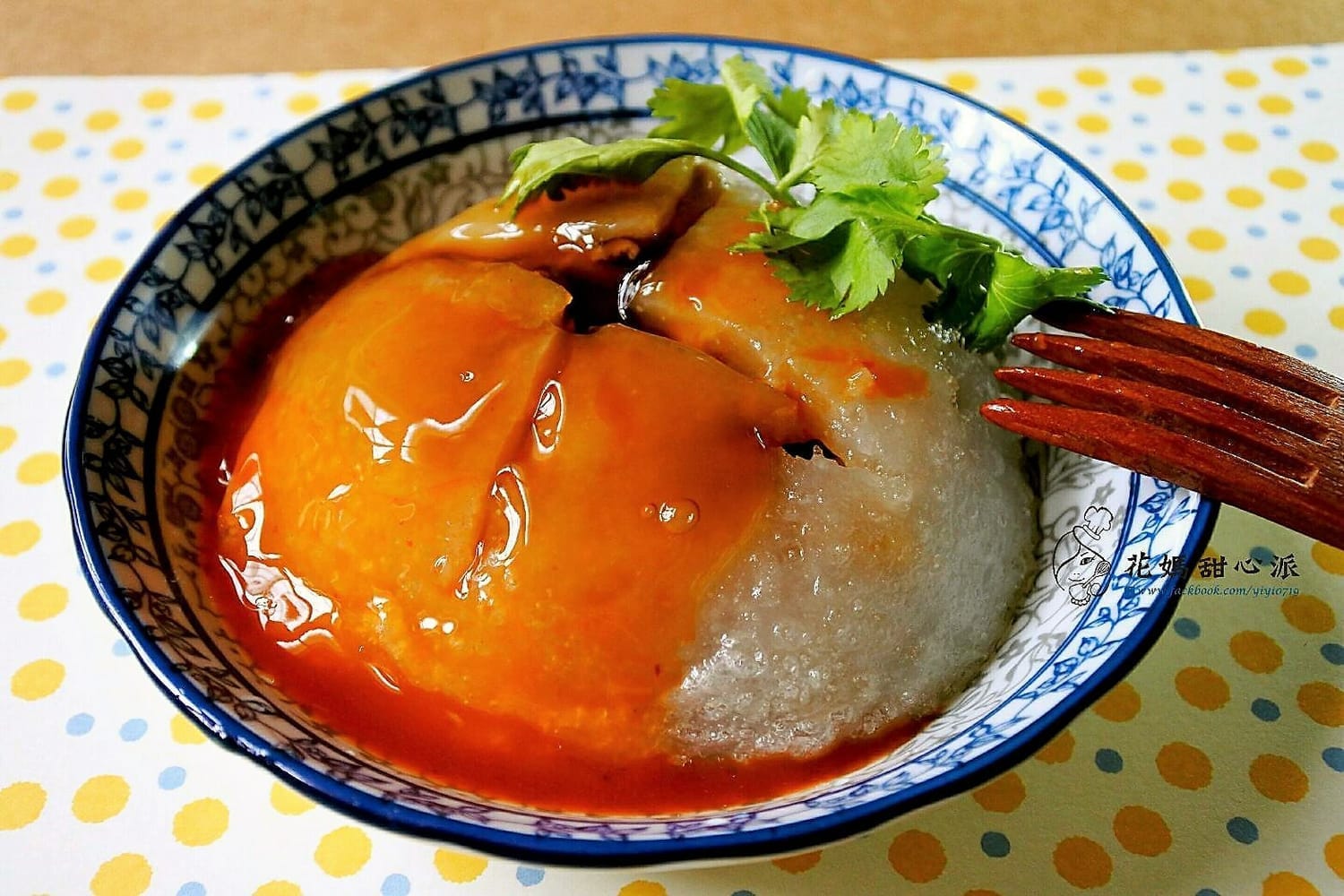
6. Meatball (Ba-wan)—Ròuyuán—[roh4-ywen2]—肉圓
Imagine a dumpling that crash-landed from another galaxy—translucent, jelly-like skin, stuffed with savory pork, bamboo shoots, and mushrooms, and drenched in a sweet-salty sauce that clings like a bad decision. That’s ba-wan.
You don’t bite into it. You slide in. It’s wobbly, glutinous, and gloriously weird. The texture alone will divide a crowd. But once you embrace it, there’s no turning back. Street vendors steam or deep-fry these UFOs of flavor, then spoon over a secret sauce that tastes like soy, garlic, sugar, and rebellion.
Locals eat it with toothpicks and deadpan faces. You’ll eat it with wide eyes, wondering how something so alien can taste so damn familiar.
📍Best found in Fengyuan or Changhua, but any decent night market will have one steaming nearby.
💡Pro tip: Let it cool slightly. The goo firms up, the flavors lock in, and the sauce sticks just right.
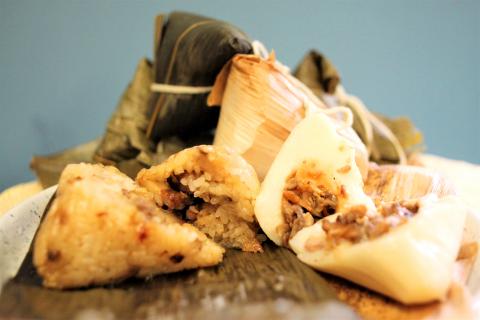
7. Zòngzi—[dzong4-dz]—Rice dumpling—(粽子)
Taiwan’s OG meal-prep wrapped in a leaf. Sticky rice stuffed with pork, mushrooms, salted egg yolk, and sometimes peanuts—then wrapped tight in bamboo leaves like a secret waiting to be steamed. It’s savory, rich, and deeply nostalgic.
You’ll find zongzi all over Taiwan, but especially around the Dragon Boat Festival, when grandmas across the island start tying them up like edible grenades. Some are Cantonese-style, some Hakka, some made with glutinous rice so soft it melts, and others so dense they could stop a scooter.
Forget the microwave. These are best eaten fresh, still warm, when the leaf unwraps with a puff of earthy steam and the rice inside smells like someone’s memory.
📍Look for pyramid-shaped bundles hanging from night market carts or convenience store counters during festival season.
💡Pro tip: A drizzle of sweet soy or chili sauce goes a long way. And don’t be afraid of the funky egg yolk—that’s the gold.
🛒 Can’t get to Taiwan just yet? Grab authentic Zòngzi and other Asian groceries shipped to your door from Weee! — America’s Largest Online Asian Market with my affiliate link.
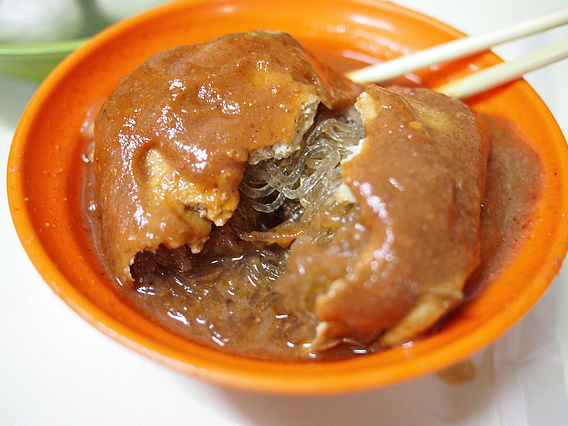
8. Stuffed Tofu Dish (A-gei)—Āgěi—[ah1-gay3]—阿給
Tamsui’s proudest Frankenstein creation. Start with fried tofu, slice it open like a coin purse, jam it full of crystal noodles, seal it with fish paste, and then steam the whole thing into a spongy, savory block of magic.
It sounds like a dare. It tastes like nostalgia. Invented in the riverside town of Tamsui back in the ’60s, A-gei is one of those local legends that never left its hometown—probably because it knew it didn’t have to. Locals line up for it, tour guides brag about it, and first-timers? They usually pause after the first bite and mutter, “What the hell… this is actually amazing.”
The sauce is the secret—sweet, garlicky, with a touch of heat. Without it, A-gei is just a tofu purse with commitment issues. With it, you’ve got something worth the train ride north.
📍Only legit in Tamsui Old Street. Look for stalls with faded signs and long queues.
💡Pro tip: Pair it with a cold soy milk or fish ball soup. Then walk it off by the riverside like a local philosopher.
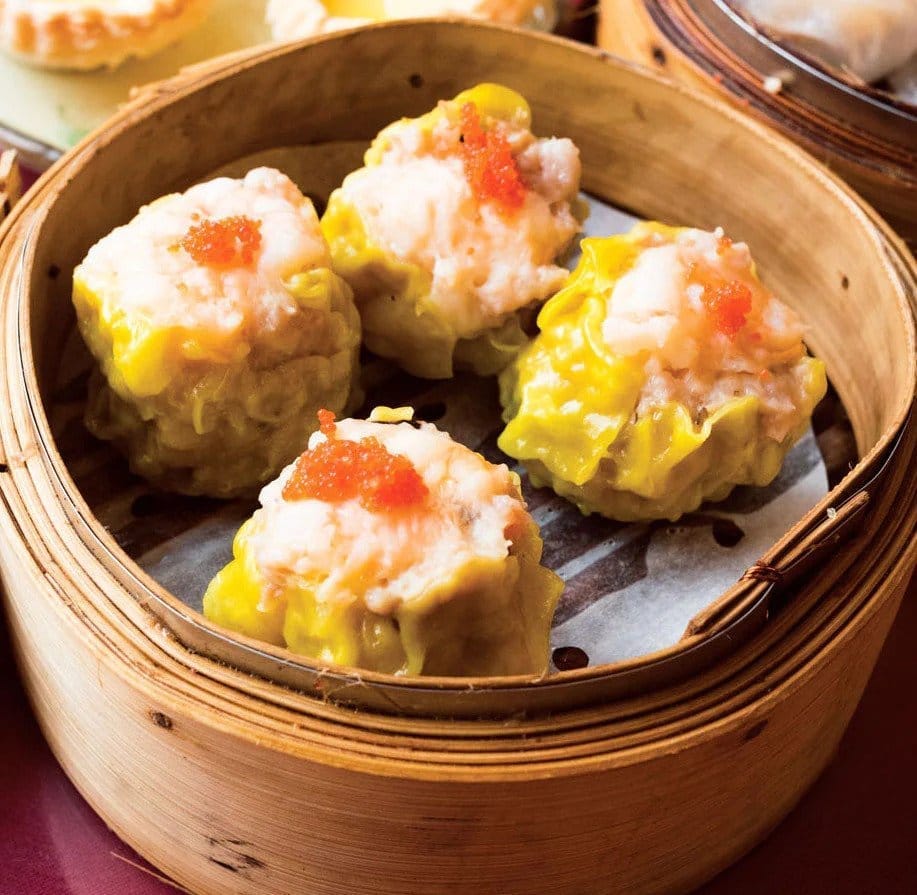
9. Shāomài—[shao1-my4] - Steamed pork dumpling - (燒賣)
Taiwan’s answer to dim sum—minus the chandeliers and linen napkins. Think juicy minced pork jammed into a thin wrapper, steamed until it's sloppy, salty, and slightly unhinged. No shrimp, no gold flakes—just pure, greasy glory.
You’ll find them stacked in bamboo baskets or tin steamers, usually manned by night market aunties who steam faster than your food app loads. These aren’t refined. They’re real. Dip 'em in chili sauce, pop 'em whole, and suddenly you’ve crushed a dozen and still feel like you’re warming up.
They’re cheap. They’re messy. And they disappear faster than your willpower.
📍Find them at Raohe or Luodong Night Market or most any Dim Sum restaurant; look for a line and a cloud of steam.
💡Pro tip: The more dented the steamer, the better the dumpling. And don’t even think about sharing.
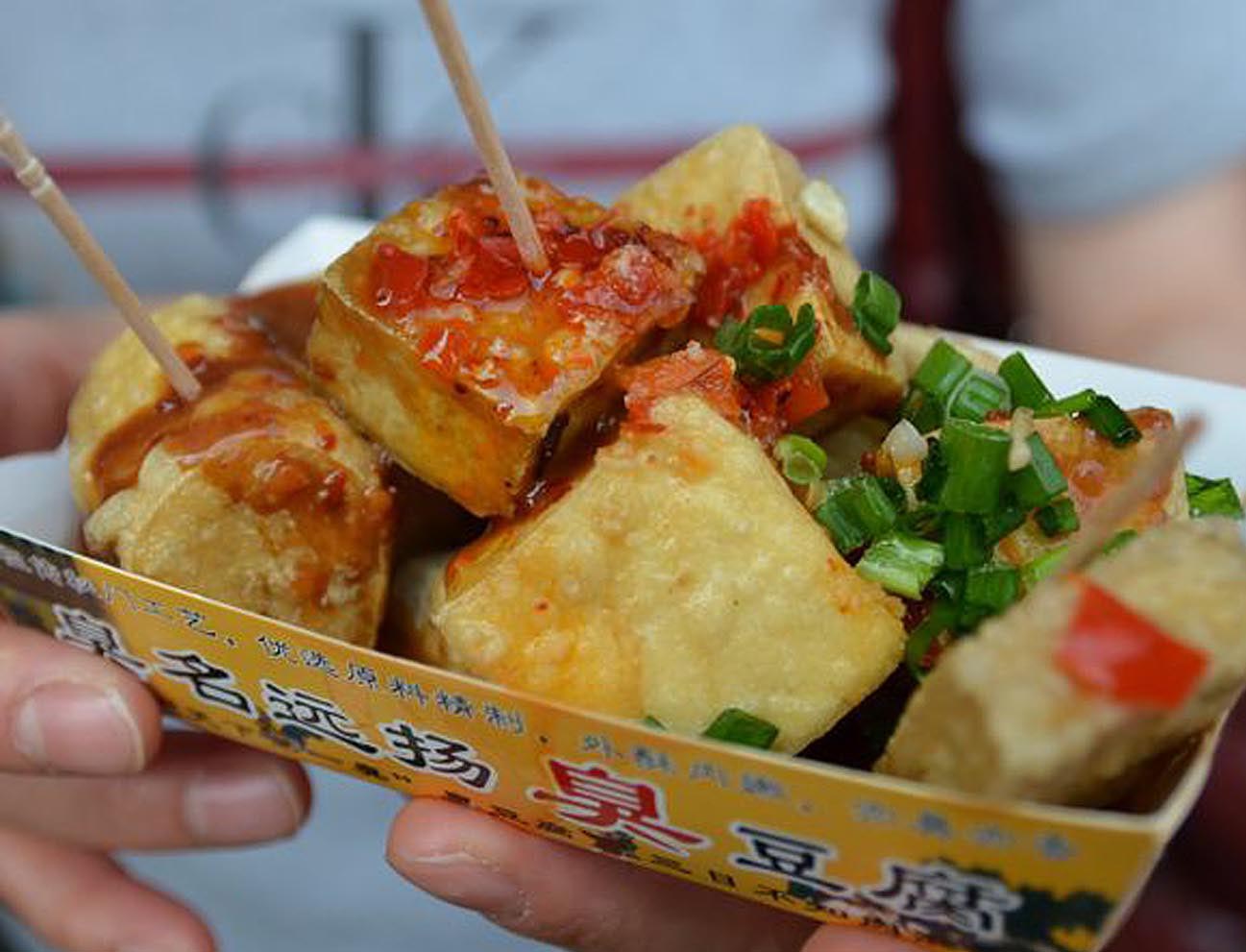
10. Chòudòufu—[Choh4 doh4 foo] - Stinky tofu - (臭豆腐)
You’ll smell it before you see it—and by then, it’s too late. This fermented icon is Taiwan’s most divisive snack: deep-fried and golden on the outside, creamy on the inside, and pungent enough to trigger an existential crisis.
Locals inhale it like popcorn. Tourists flinch, gag, and then—if they’re brave—fall a little in love. Crunchy edges, pickled cabbage, and garlicky chili sauce come together like some strange, fermented symphony. It’s stinky. It’s soulful. It’s strangely addictive.
Don’t trust anyone who tells you it’s “not that bad.” That smell is a warning and an invitation.
📍Follow the funk trail to Shenkeng Old Street or any decent night market.
💡Pro tip: Eat it hot. Real hot. Anything less, and the smell wins.
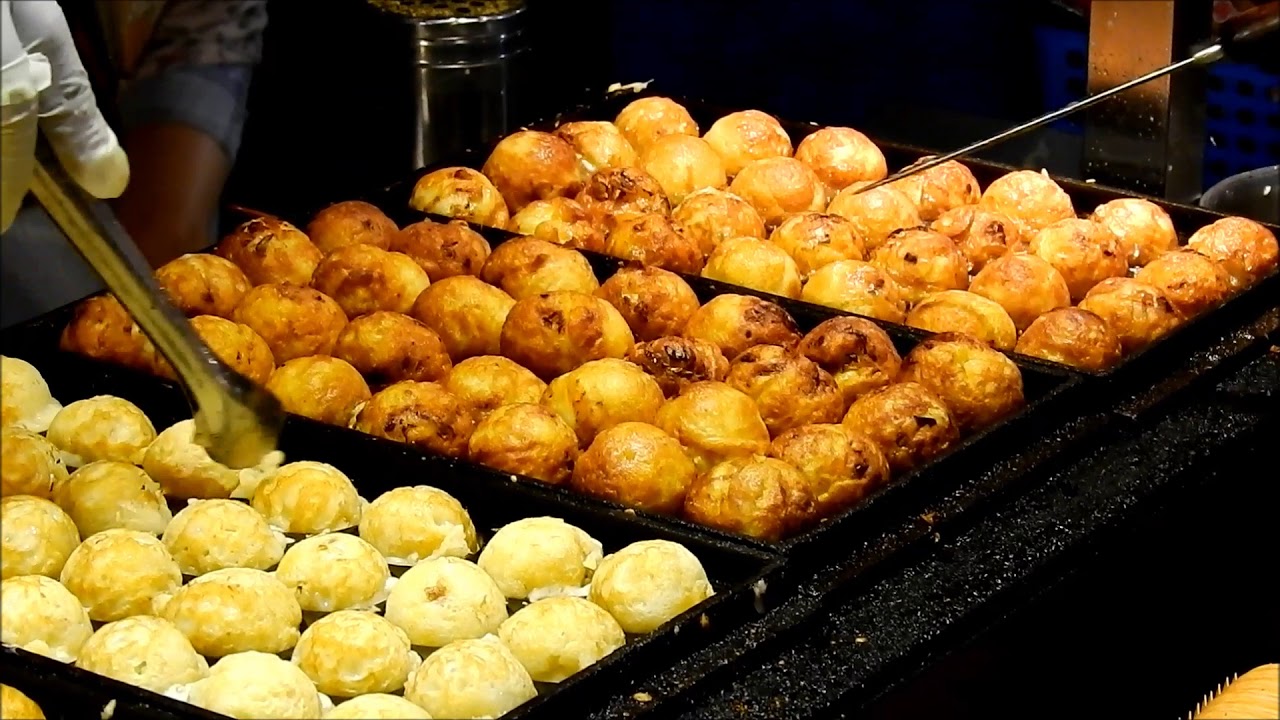
11. Fried Octopus Balls—Zhāngyúshāo—[jahng1-yoo2-shyal1] - Takoyaki - (章魚燒)
Bite-sized bombs of molten chaos. Crisp on the outside, gooey in the middle, and hot enough to make you question your life choices. These aren't snacks. They're culinary booby traps with tentacles.
Taiwan borrowed the blueprint from Japan’s takoyaki scene, then gave it its own chaotic swagger. Chopped octopus, green onion, and batter get griddled into little golden spheres—then the real show begins. Mayo zigzags. Sweet-salty sauce drips. Bonito flakes writhe like something’s still alive. It’s not just street food—it’s performance art.
One bite in and your tongue’s on fire, your fingers are sticky, and you’re wondering why you didn’t order six more.
📍Shilin and Fengjia Night Markets are ground zero. Trust the guy with a long line and a busted fan.
💡Pro tip: Blow on it like it owes you money. That lava-core center waits for no one.
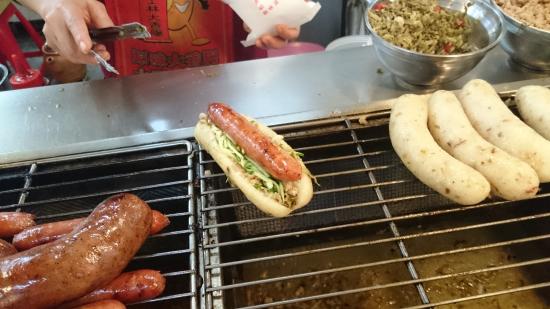
12. Big Sausage Wraps Little Sausage—Dàcháng bāo xiǎo cháng - [dah4-chahng baow1 shyal3 chahng] - (大腸包小腸)
It sounds like a punchline, but this is Taiwan’s ultimate street food power move. A sticky rice “bun” split open and jammed with a juicy pork sausage, pickled greens, and enough garlic to take down a vampire clan.
The outer sausage? Glutinous rice, grilled till crispy. The inner? Sweet, garlicky Taiwanese sausage that snaps when you bite it. Toss in some cilantro, basil, and crunchy peanuts, and you’ve got the food equivalent of a mosh pit.
It’s messy. It’s smoky. And it’s not here to be polite.
📍Found sizzling on grills at almost every night market—from Tainan to Taipei.
💡Pro tip: Order it “all the way” (加辣加蒜) if you’re feeling bold. Garlic and heat unlock beast mode.
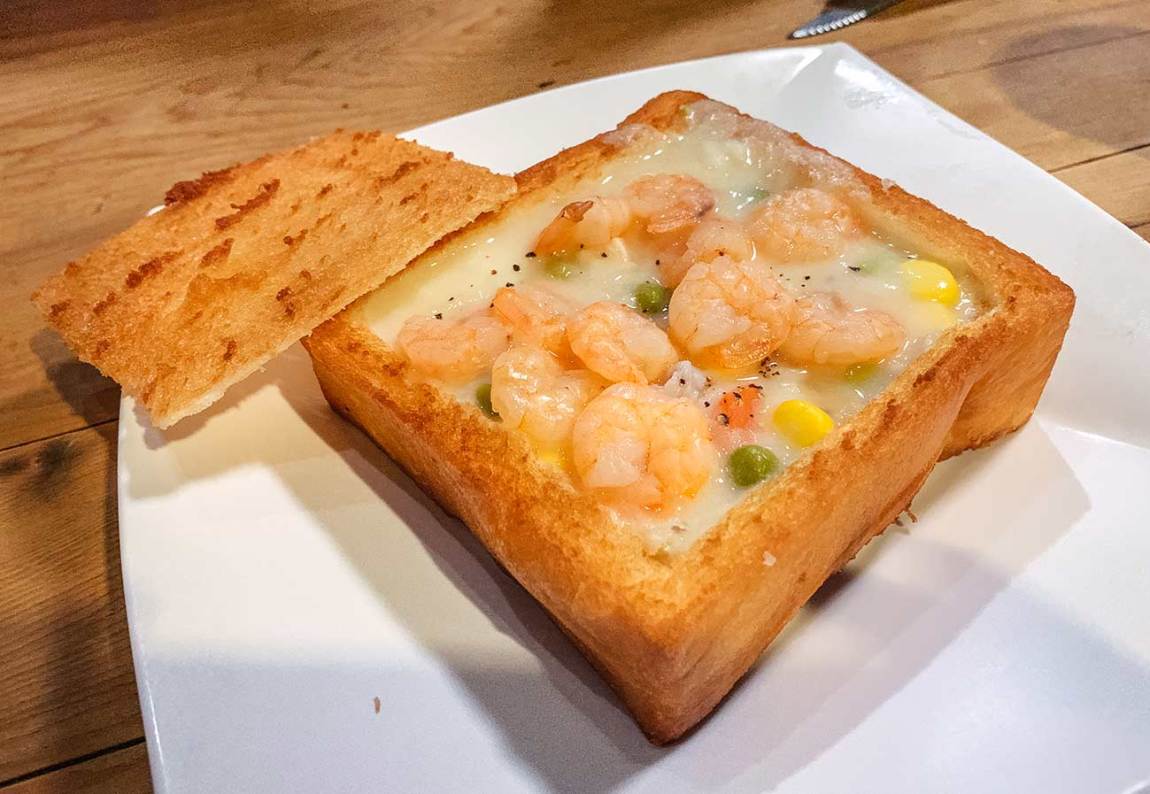
13. Coffin Bread—Guāncái miànbāo—[gwan1-tseye2 myen4-baow1] - (棺材麵包)
Taiwan’s most morbidly named snack—and one of its most unexpectedly comforting. Imagine a thick hunk of white toast akin to Texas toast, deep-fried till golden, hollowed out like a treasure chest, and then crammed with creamy seafood chowder. That’s coffin bread. Crispy shell on the outside, hot creamy chaos inside.
It was born in Tainan and somehow tastes like your childhood and your last cheat meal had a baby. There’s crunch, there’s goo, there’s nostalgia, and a little absurdity. Because why not put soup in toast and name it after a coffin?
It’s weird. It’s wonderful. And it’s worth hunting down.
📍Head straight to Tainan’s night markets—especially the ones where nobody’s speaking English.
💡Pro tip: Eat it fresh and hot. Once it cools down, it turns from a magic box to soggy regret.
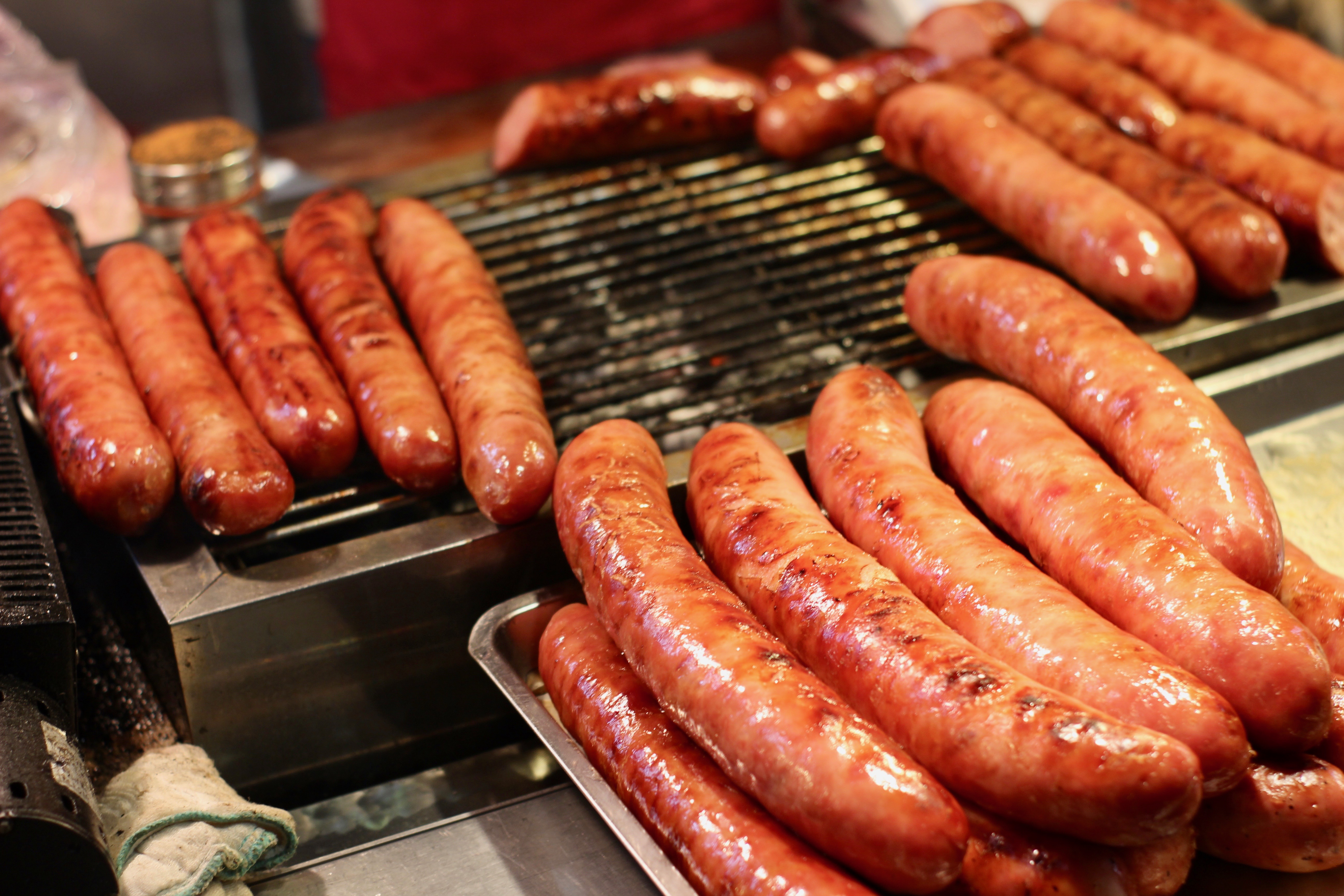
14. Taiwanese Sausage—Xiāngcháng—[shyang1-chahng] - (香腸)
This isn’t your average ballpark frank. Taiwanese sausage is sweet, savory, and unapologetically fatty—grilled over open flames and served on a stick like it was born for the streets. It’s sugar-kissed pork with a garlicky snap, dripping juice and attitude in equal measure.
No buns. No ketchup. Just meat, fire, and maybe a clove of raw garlic on the side if you’re feeling dangerous. Sometimes it’s paired with sticky rice sausage, sometimes it’s on its own—either way, it’s the flavor of night market survival.
It’s the snack equivalent of a motorcycle revving at a red light: loud, greasy, and gone too fast.
📍Every decent night market has one. Bonus points if it’s grilled on a barrel drum and the vendor’s got a cigarette hanging from his mouth.
💡Pro tip: Pair with a cold Taiwan Beer and dare someone to out-garlic you.
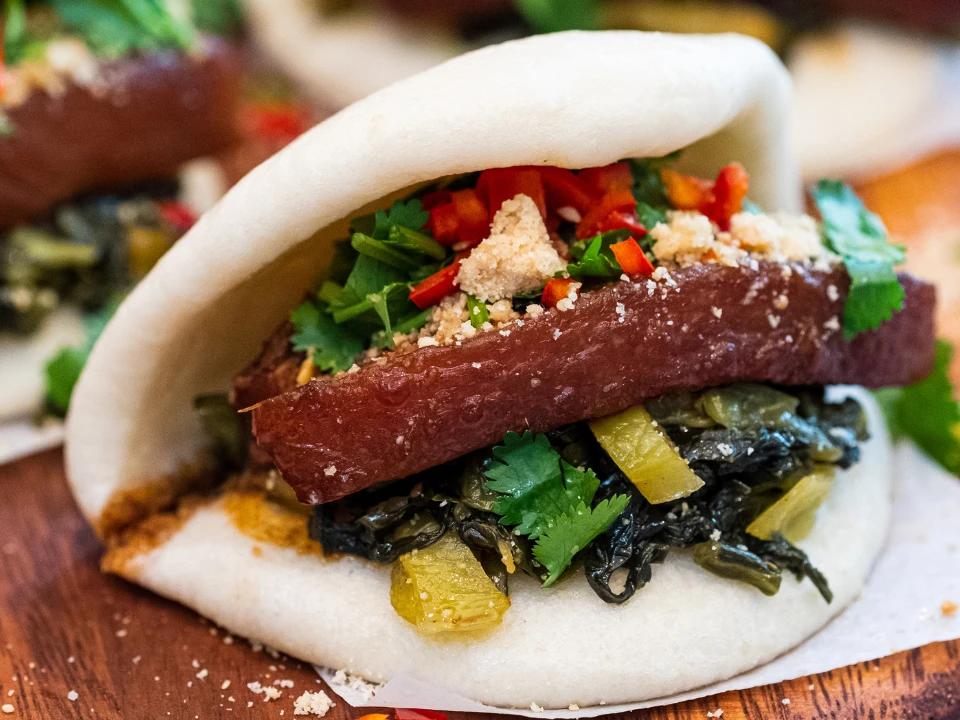
15. Guàbāo – [gwah4-bao1] – Cut bun (Taiwanese pork belly bun) – (刈包)
If a burger and a bao had a rebellious night out, this would be the love child. Gua Bao is Taiwan’s take on the perfect hand-held comfort bomb: a fluffy white steamed bun folded over braised pork belly, crushed peanuts, pickled mustard greens, and a sprinkle of cilantro that somehow pulls it all together.
It’s sweet. It’s savory. It’s messy in the best possible way. You’ll find vendors stacking buns like poker chips, flipping pork belly with the confidence of someone who knows their fat ratio is just right.
Bite in, and you get a soft bun, melt-in-your-mouth pork, and crunch all in one glorious mouthful. This isn’t a snack—it’s a mic drop.
📍Lurking in night markets, temple fairs, and hole-in-the-wall joints across Taipei and beyond.
💡Pro tip: Ask for extra peanuts if you like that sandy-sweet contrast. And bring napkins. Lots of napkins.
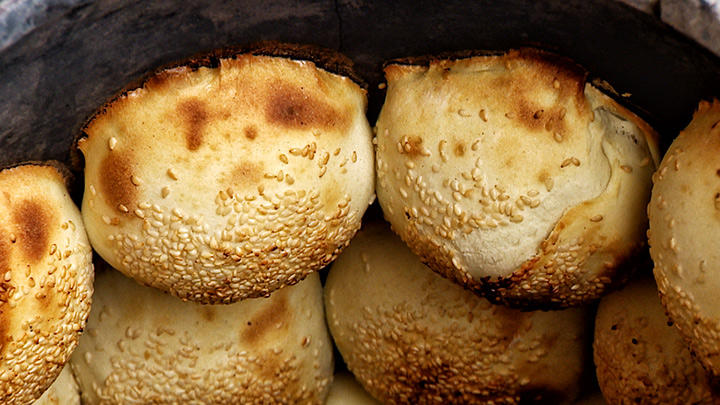
16. Pepper Buns—Hújiāo bǐng—[hoo2-jeeow1 beeng3] -胡椒餅
These aren’t your average buns—they’re cannonballs of crust and heat. Picture a flaky, sesame-dusted dough bomb, baked in a tandoor-style clay oven until it blisters and browns. Inside? A steaming core of minced pork, scallions, and black pepper that hits like a freight train.
The crust crunches. The juice burns. And the pepper? It doesn’t ask for permission. This isn’t spice for show—this is Taiwan’s way of saying, “Wake up and taste something.”
The first bite is dangerous. The second is devotion. And by the third, you're sweating, smiling, and plotting your next one.
📍Outside the front gate of Raohe Night Market is where legends—and long lines—live.
💡Pro tip: Don’t rush it. These things run lava-hot inside. Let it breathe, then take the plunge.
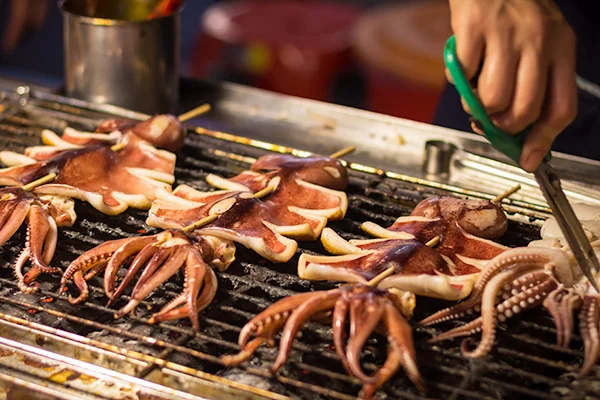
17. Grilled Squid—Kǎo yóuyú—[kow3 yoh2-yoo2]—烤魷魚
Tentacles on a stick, grilled over open flames until they’re charred, chewy, and slightly sweet with a smoky kick. This isn’t your fancy seafood platter—it’s salty, street-side squid that bites back.
Vendors fan the flames like it’s a street performance, brushing each piece with soy sauce glaze as it caramelizes. You’ll hear the sizzle before you see it and smell it long after you’ve walked away.
Chewy? Yes. Messy? Definitely. Worth it? Every single bite.
📍Common at coastal night markets and tourist hotspots like Danshui or Kenting.
💡Pro tip: Ask for extra glaze or chili powder if you want it sticky and spicy. It’ll cling to your fingers—and your me
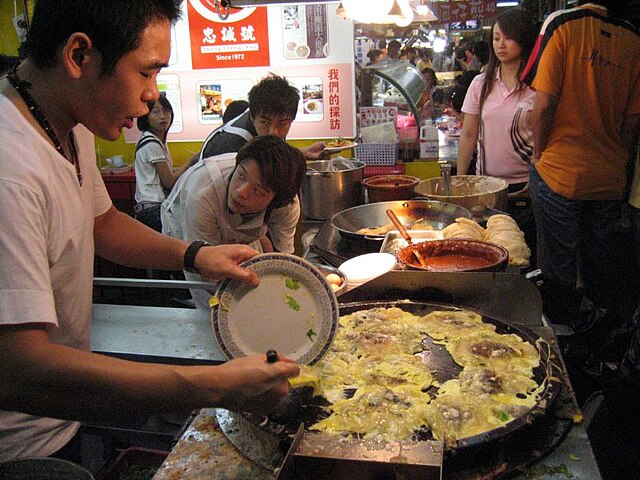
18. Ōu'á jiān – [oh1-ah2 jyen1] – Oyster omelet - (蚵仔煎)
Let’s get one thing straight: this isn’t your basic omelet. It’s Ô-á Chian, and it’s pure night market chaos wrapped in starch, egg, and briny little oysters. The name alone tells you this dish comes with local pride baked in—and a texture that’ll mess with your expectations.
Here’s how it goes down: a ladle of oyster-laced goo hits the hot griddle—egg, sweet potato starch, and leafy greens collide in a semi-controlled culinary explosion. Then comes the glossy red sauce—sweet, tangy, and unapologetically slathered on top like a mic drop.
The result? Chewy. Savory. A little slimy. And totally unforgettable. If you came for clean lines and polite flavors, you’re in the wrong country.
📍*Ningxia, Keelung, or any night market worth its salt will have a local take on this classic.*Hit up Ningxia or Keelung Night Market for a classic version with extra flair.
💡Pro tip: Don’t fight the texture. Embrace the weird. That’s where the magic is.
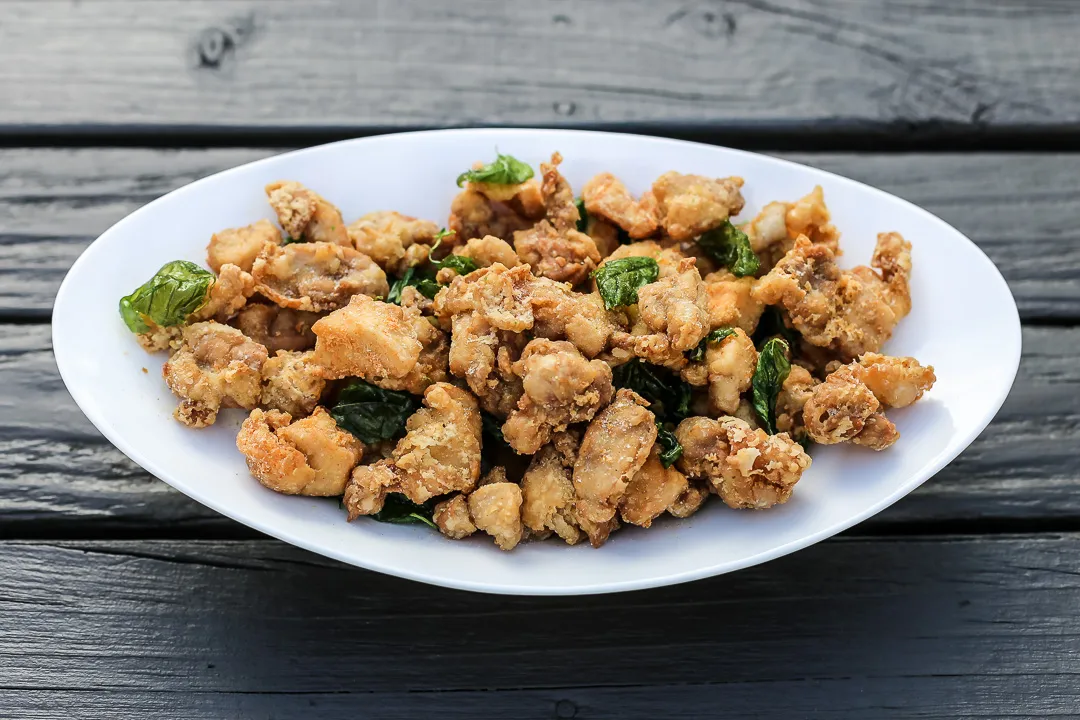
19. Salt & Pepper Chicken—Yán sū jī – [yen2 soo1 jee1] – Salt crispy chicken – (鹽酥雞)
Taiwan’s answer to popcorn chicken—if popcorn chicken had a wild streak and a deep-fried soul. Yán sū jī is the go-to snack when your mouth wants a party and your stomach wants something salty, crunchy, and borderline addictive.
Bite-sized chunks of marinated chicken get battered and flash-fried until golden. Then come the garlic chips, fried basil, and a blizzard of salt and white pepper that coats everything like a final blessing. It’s noisy. It’s greasy. It’s glorious.
This is late-night fuel, hangover cure, and street-side religion all in one greasy paper bag.
📍Ubiquitous at night markets and street-side fry stands—just follow the scent trail.
💡Pro tip: Ask for extra basil and spicy powder. And eat it while it's hot—this snack doesn’t do leftovers.
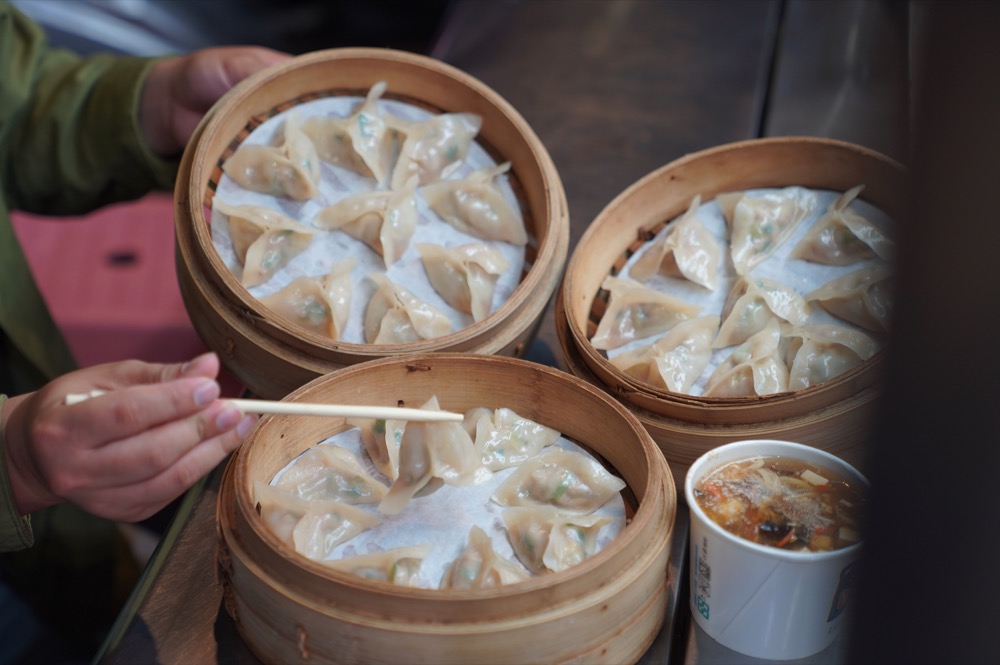
20. Steamed Dumplings—Zhēngjiǎo—[juhng1-jyaow3]—(蒸餃)
Pillowy little pockets of joy, gently steamed until the wrappers go translucent and the filling hits peak juiciness. Zhēng jiǎo are the quieter cousin to their pan-fried relatives—but don’t let the softness fool you.
Inside, there’s a savory explosion of pork, chives, or whatever the vendor swears is their family recipe. You dip, you bite, and suddenly you’re chasing steam like a junkie.
This is dumpling therapy—served in bamboo baskets, with no reservations and no regrets.
📍Look for lines near mom-and-pop shops or tucked-down alleys. Steamed means steady hands and serious skill.
💡Pro tip: Don’t sleep on the vinegar-soy dipping sauce. A little drizzle goes a long way toward greatness.
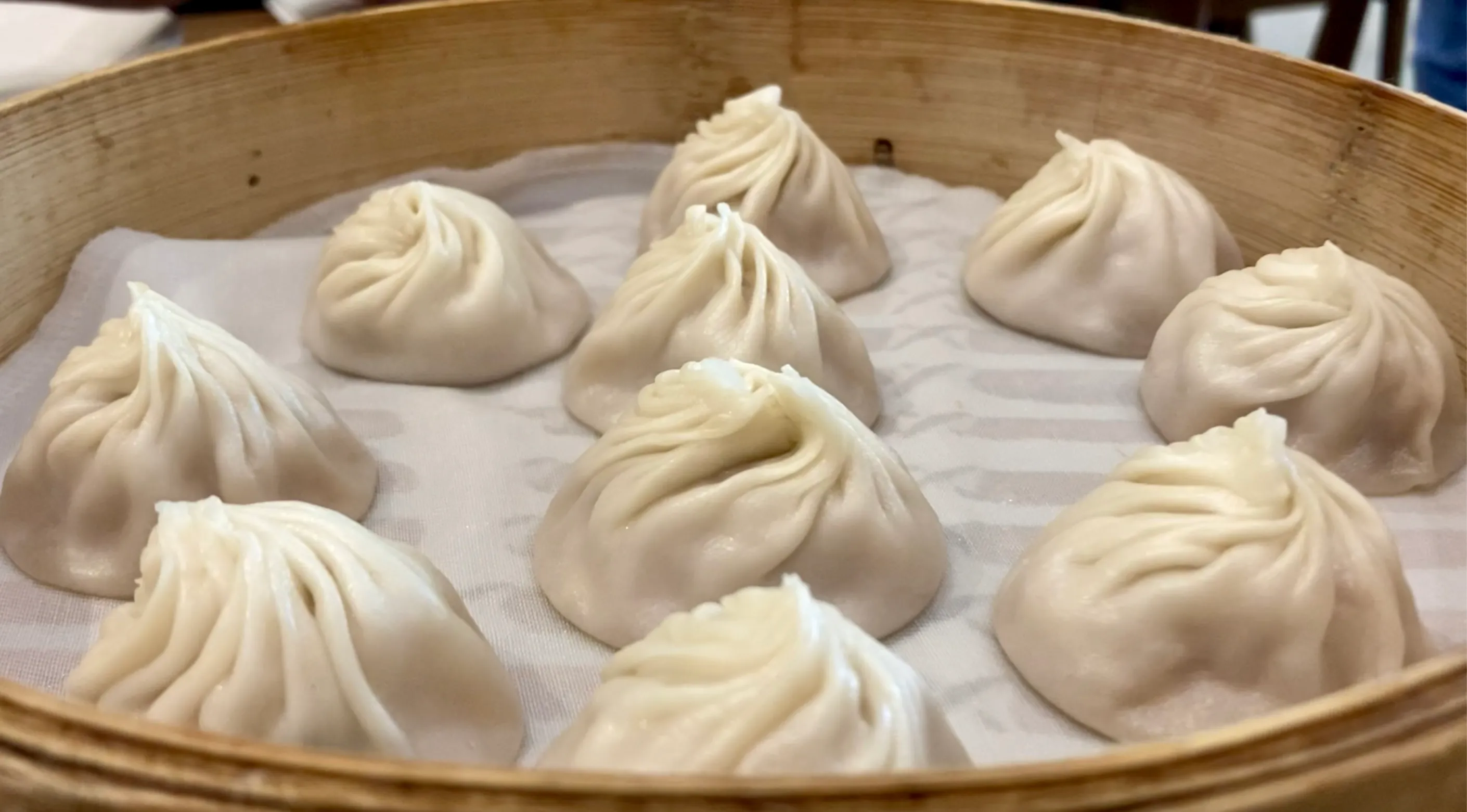
21. Soup Dumplings—Xiǎolóngbāo—[shyal3-long2-baow1] - Small steam bun - (小籠包)
If I had to pick one dumpling to eat for the rest of my life, it would be this one. Xiǎo lóng bāo are more than food—they're a ritual. A perfectly pleated dough pouch cradling hot soup and seasoned pork like it’s guarding treasure.
Every bite is a careful maneuver. You lift with grace, nibble the top, slurp the scalding broth, then devour what’s left in one messy, glorious mouthful. The flavors are rich and savory, the textures delicate, and the satisfaction downright spiritual.
And no place nails it better than Din Tai Fung. Their xiao long bao are engineered perfection—thin skins, balanced broth, and a dance of ginger and vinegar that turns each bite into poetry. I've eaten these dumplings all over the world, but something about the original Taipei branch always hits deeper. Maybe it's the hum of the steamers, the rhythm of pleating hands, or just nostalgia with a side of soy sauce.
📍Start at Din Tai Fung's flagship in Xinyi, Taipei, but explore the side-street vendors too—you might find something even more soulful.
💡Pro tip: Don’t sleep on the vinegar-soy dipping sauce. A little drizzle goes a long way toward greatness.
💡Pro tip: Always order the truffle version once. Just once. Then go back to the OG pork and never look back.
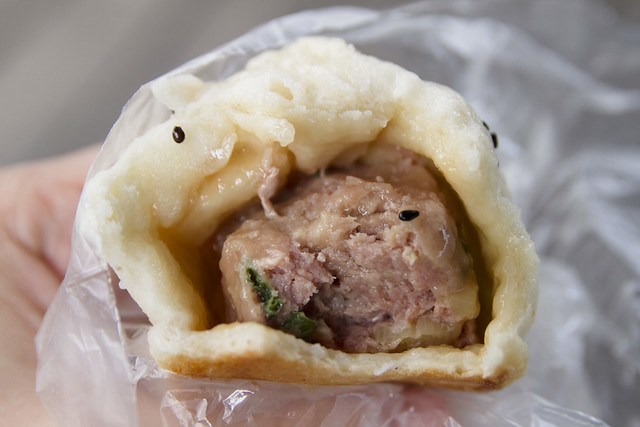
22. Pan-Fried Pork Buns—Jiān zhū ròu bāo—[jee-an1 joo1 row4 baow1] - (煎豬肉包)
Imagine if a dumpling and a bao had a crunchy love child—and then gave it a golden brown crust. That’s Jiān zhū ròu bāo, and it’s one of my personal go-tos when I want something hot, hearty, and handheld.
These beauties start soft and doughy, but once they hit the skillet, the base crisps into a toasty, pan-fried shell that cracks just enough to let out a puff of porky steam. Inside? Juicy ground pork, seasoned and sealed into a pocket of joy.
They’re messy. They’re molten. And they hit like a savory punch to the taste buds. One bite in, and you get it—this is Taiwan’s version of a meat pie, only way better and far more dangerous to white T-shirts.
📍Popular at breakfast stalls and night markets—try Shilin or a morning cart near any MRT stop.
💡Pro tip: Flip it crust-side up and eat carefully. That crispy bottom is the prize.
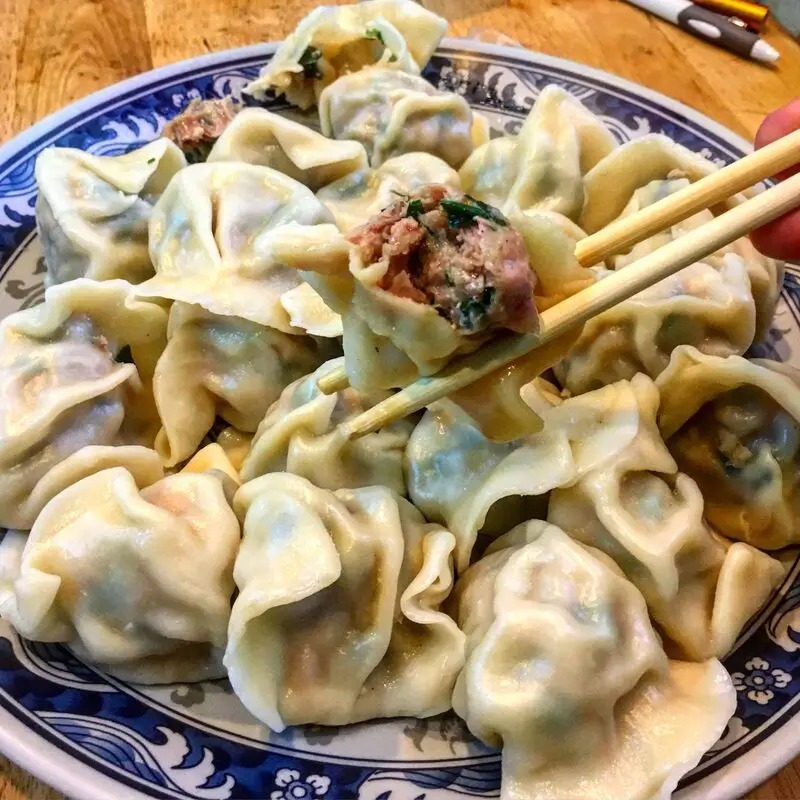
23. Boiled Dumplings-Shuǐjiǎo - [shway3-jeeow3] - Water dumpling - (水餃)
Forget the takeout versions you’ve had elsewhere—Taiwan’s Shuǐ jiǎo are in a league of their own. These boiled beauties are thick-skinned, generously stuffed, and absolutely dripping with flavor.
Stuffed with ground pork, chives, cabbage, or shrimp, these dumplings swim in boiling water until perfectly plump. They come out glossy and tender—ready for a soy-vinegar bath and a dab of chili oil. You don’t just eat them; you commit to them.
They’re a staple in every home and night market, and for me? It’s comfort food, plain and simple. They’re what I crave when I want something familiar, filling, and unapologetically Taiwanese.
📍Try them at street-side dumpling shops, mom-and-pop stalls, or even a family kitchen if you’re lucky.
💡Pro tip: Dip carefully. Too much sauce drowns the flavor—this one’s all about balance.
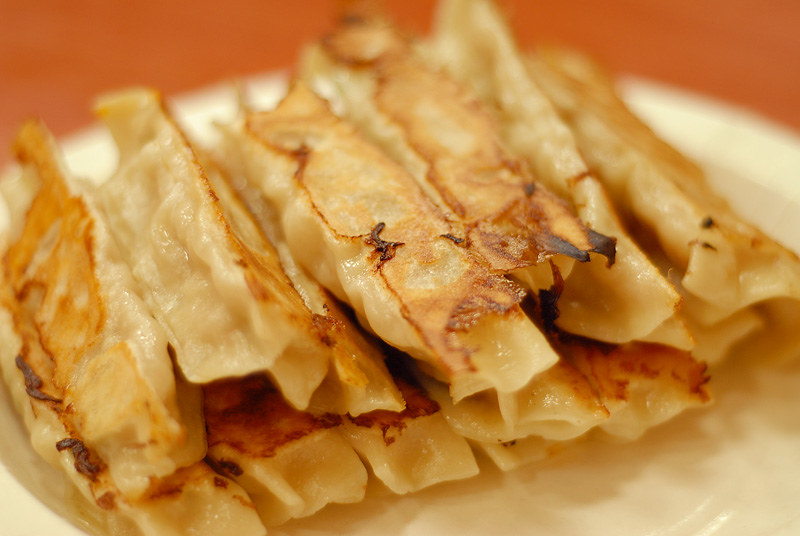
24. Potstickers—Guōtiē—[gwo1-tyeh3] - Pan-Fried Dumplings - (鍋貼)
Crispy-bottomed and pan-seared to perfection, Guōtiē are the rowdy sibling of the dumpling family—louder, bolder, and proud of their golden crust. Think of them as the streetwise cousin of steamed dumplings, raised on hustle and hot skillets.
They’re half steamed and half fried, which means one bite hits you with crunch, chew, and juice all at once. The filling’s usually pork and cabbage or chive, but every vendor’s got their twist—some juicier, some garlickier, some with that perfect salty hit that keeps you chasing the next one.
For me, they’re a go-to late lunch or post-filming snack. Hot off the pan, dipped in soy-vinegar, and eaten standing by a plastic table. That’s where Guōtiē shines best.
📍Try the no-frills shops near Taipei Main Station or that one stall under the MRT overpass—locals always know.
💡Pro tip: Listen for the sizzle. If they’re cooking fresh to order, you’re in the right place.
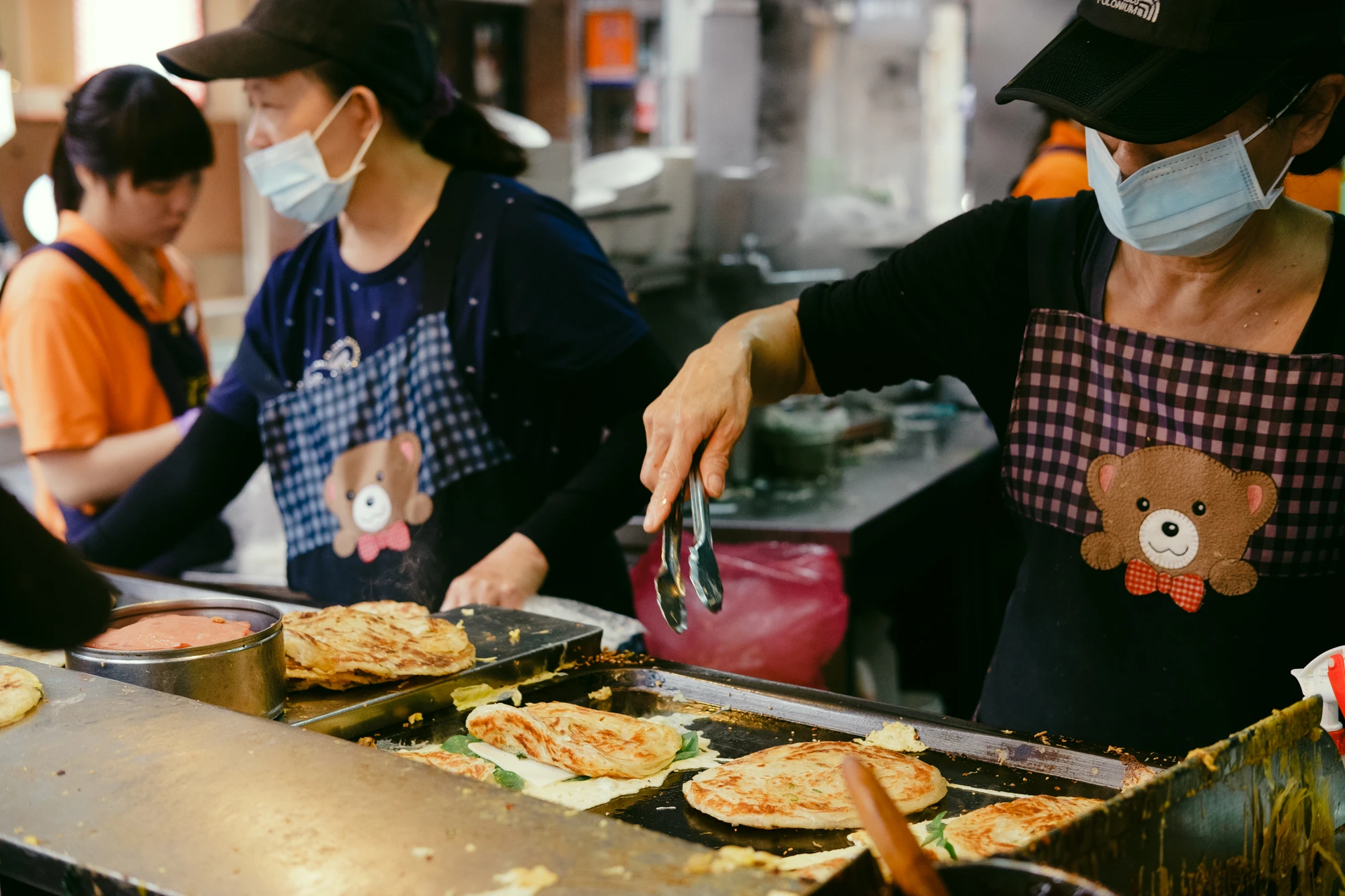
25. Scallion Pancake—Zhuābǐng—[jwah1-beeng3] – Fluffy pancake – (抓餅)
Taiwan’s flakiest street food flirt. Zhuā bǐng is what happens when dough meets hot oil and a heavy hand. Layered, pan-fried, and shredded on the griddle with wild wrist flicks, this scallion-studded flatbread crackles with every bite.
You can get it plain or tricked out—egg, cheese, ham, basil, kimchi—whatever the vendor’s got, they’ll roll it in like a late-night dare. My go-to? Egg, cheddar, and a splash of sweet chili sauce. It’s breakfast, lunch, and drunk food all wrapped into one glorious grease bomb.
And when people talk about the best zhuā bǐng in Taipei, there’s one name that always sizzles to the top: Tiānjīn cōng zhuābǐng – [tyen1-jeen1 tsong1 jwah1-beeng3] – Tianjin scallion fluffy pancake – (天津蔥抓餅) on Yongkang Street. Don’t let the name fool you—this stall isn’t from Tianjin, and it’s not selling northern-style bing. This is the beloved Taiwanese-style zhāobǐng: crisp, flaky, wildly customizable, and damn near legendary. The line snakes down the sidewalk for a reason—this place is the real deal.
There’s no wrong time for zhuā bǐng. Just a hot pan, a plastic bag, and maybe a bench nearby to recover from the flavor overload.
📍Top pick: Tian Jin Scallion Pancake, Yongkang Street, Taipei (near Dongmen MRT Exit 5). Just follow the smell and the crowd.
💡Pro tip: Ask for “加蛋加起司” (jiā dàn, jiā qǐ sī) – egg and cheese. Trust me, it’s worth the heartburn.
🐖 Meats & Mains
Hearty pork, chicken, and meat-forward dishes.
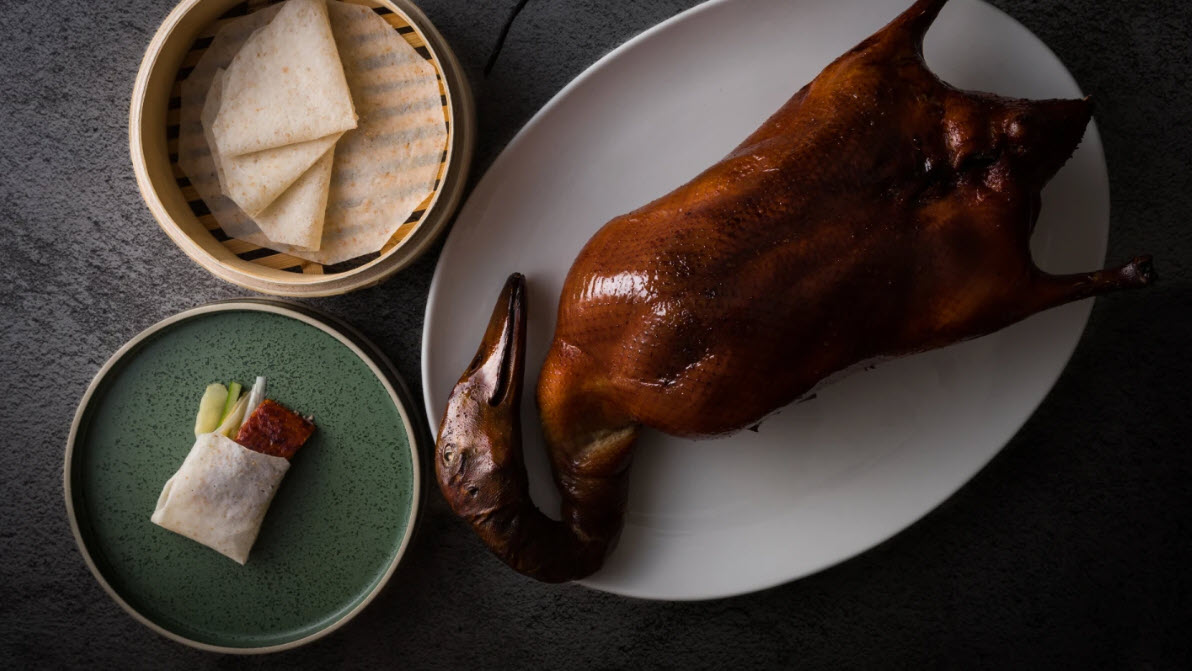
26. Taiwanese Peking Duck—Huá Tài piàn yā—[hwah2 tie4 pyen4 yah1]—(華泰片鴨)
This isn’t just duck—it’s a crispy-skinned ceremony with a side of showmanship. Huátài Peking Duck at Gloria Outlets is the kind of dish that walks the tightrope between high-end presentation and primal meat lust.
Served tableside with a chef carving it in thin, glistening sheets, the duck skin is lacquered, crackling, and hits like caramelized thunder. You wrap it in a paper-thin pancake with cucumber, scallion, and a smear of sweet bean sauce. It’s hands-on, melt-in-your-mouth, and unapologetically indulgent.
This isn’t your average food court, duck. It’s 華泰 (Huátài), which has become a minor pilgrimage for both locals and travelers who crave tradition with a modern twist. And while Peking duck might trace its roots to Beijing, the version here? It’s got Taiwan's signature attention to detail, plus a shopping bag or two to go with it.
📍 Huátài Restaurant at Gloria Outlets, Taoyuan—2nd Floor, tucked above the fashion frenzy.
💡 Pro tip: Book ahead or go early. They sell out fast, and watching the carving tableside is half the flavor.
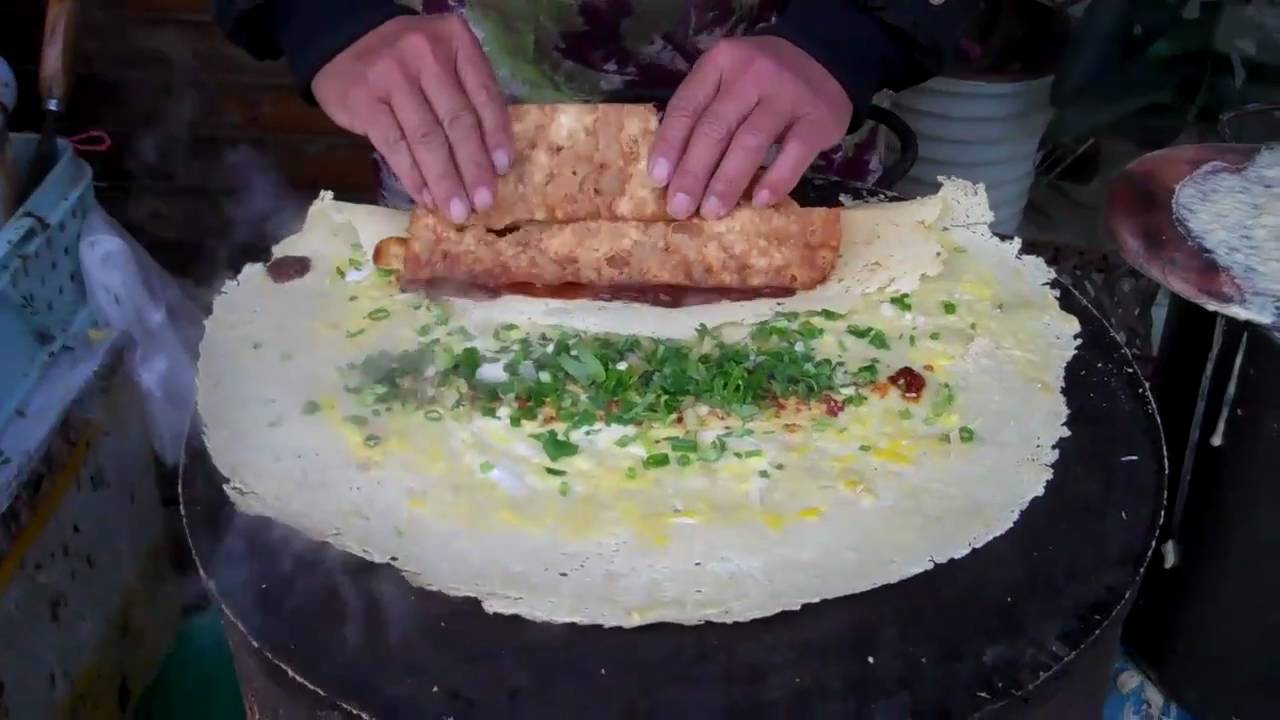
27. Taiwanese Egg Crepe—Dànbǐng—[dahn4-beeng3]—(蛋餅)
This is Taiwan’s breakfast MVP—flaky, eggy, and greasy in the best possible way. Dàn bǐng is what happens when a scallion pancake hooks up with an omelet and decides to ditch the rules. You’ll find it sizzling on flat-top grills all over the island, from morning markets to 24-hour breakfast joints that never sleep.
Each one starts with a soft dough or pre-made wrapper thrown on the griddle, cracked with an egg, and rolled tight like a burrito with attitude. Then comes the filling: cheese, bacon, tuna, corn, kimchi—whatever fuels your morning chaos. It’s comfort food with a crunch and somehow always better at 7 AM or after a long night out.
My favorite versions have just enough char, a gooey center, and a hit of sweet soy or chili sauce on top. The kind that burns your fingers through the plastic bag because you’re too impatient to wait.
📍 Try Yonghe Soy Milk King in Taipei or any random corner stall with a morning crowd and no English menu—that’s where the gold lives.
💡 Pro tip: Ask for it crispy (“煎得脆一點” – jiān de cuì yìdiǎn). It’ll change your life.
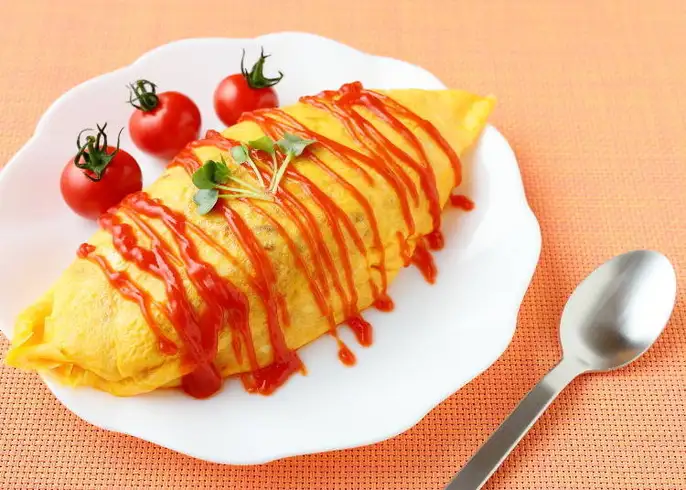
28. Ketchup Omelet Rice—Fānqiéjiàng dànbāofàn—[fahn1-chyeh2-jyahng4 dahn4-bao1-fahn4] – (番茄醬蛋包飯)
If nostalgia had a flavor, this might be it. Dàn bāo fàn is Taiwan’s take on the Japanese omurice—fluffy egg folded over a mound of ketchup-fried rice like a silky blanket, then drizzled (or smothered) with more of that sweet, tangy red stuff. It’s messy, warm, and low-key addictive.
Kids love it. Hungover adults need it. And for expats and travelers? It’s that weirdly comforting meal that feels like a throwback to every childhood lunchroom… only better, with rice that actually slaps.
It’s not fancy. It’s not street food. But it's everywhere—from train station diners to student cafés and late-night bento shops. And when it’s done right? That egg’s just set, the rice is savory-sweet, and the ketchup glaze? Yeah, it sticks in your memory long after the last bite.
📍 Hit up university-area cafés or small mom-and-pop bento joints around Taipei. The more hand-drawn menu signs, the better.
💡 Pro tip: Ask for a cheese-stuffed version if they’ve got it. Just trust me.
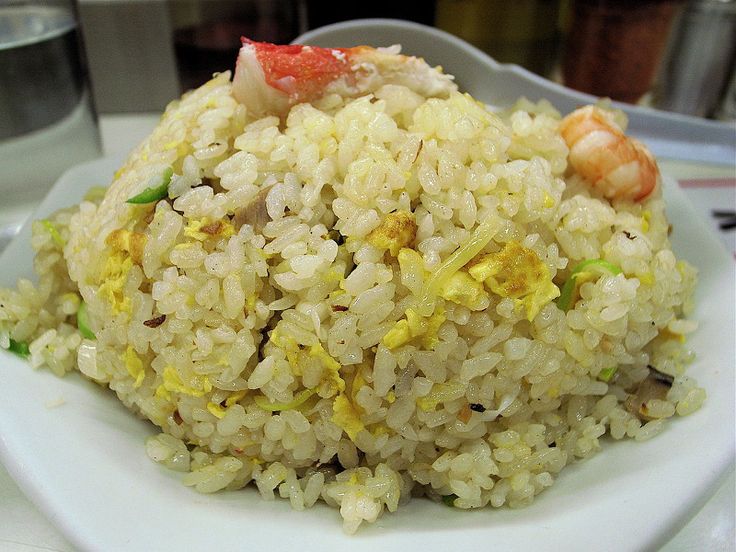
29. Fried Rice—Chǎofàn—[chow3-fahn4]—(炒飯)
It’s the dish that asks for nothing—but delivers everything. Chǎo fàn is Taiwan’s weeknight workhorse, lunchbox legend, and midnight savior all rolled into one bowl. Golden grains, kissed by wok flame, tossed with egg, scallions, and whatever protein's handy. It’s basic. It’s brilliant. It’s bulletproof.
And then there's shrimp fried rice at Din Tai Fung—a humble name for what’s basically stir-fried sorcery. The eggs are delicate, the shrimp perfectly curled and just barely sweet, and the rice? Light, fluffy, and somehow never greasy. Every bite is textbook perfection. It’s the kind of plate that makes you question why anyone would mess with something so simple when it can be done this well.
Here’s the thing: fried rice isn’t about bells and whistles—it’s about technique. And when done right, it’s an art form. Whether it’s tossed in a back-alley kitchen or plated at a Michelin-starred dumpling house, chǎo fàn just hits.
📍 Din Tai Fung (Xinyi flagship or any branch) for the gold standard. Otherwise, trust any wok-scarred joint with a sweaty chef and a tiny menu.
💡 Pro tip: Watch the kitchen if you can. If you hear that high-pitched wok scream, your rice is in good hands.
🛒 Can’t get to Taiwan just yet? Grab authentic rice and other Asian groceries shipped to your door from Weee! — America’s Largest Online Asian Market with my affiliate link.
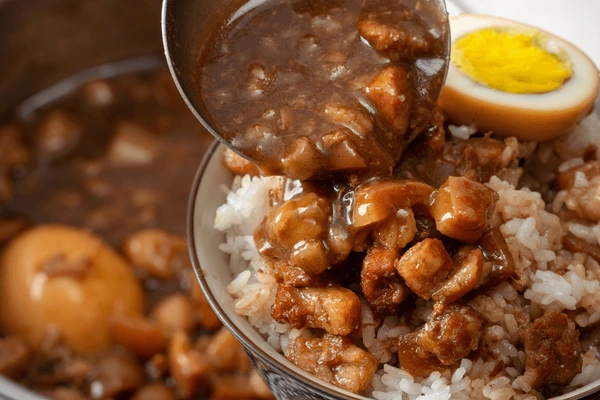
30. Braised Pork Rice—Lǔ ròu fàn—[loo3 row4 fahn4]—(滷肉飯)
This is Taiwan in a bowl—messy, humble, and absolutely unforgettable. Lǔ ròu fàn is a pile of steamy white rice smothered in slow-braised minced pork, dark soy, and a depth of flavor that can only come from a pot that’s been brewing stories for years.
It’s the food of night owls, students, cab drivers, and just about anyone who knows that real satisfaction doesn’t come with truffle oil—it comes with fat. Salty, savory, melt-in-your-mouth pork fat that soaks through every grain like a greasy, delicious love letter.
And if you want the full experience? Head to Sanxia Old Street—a red-brick time warp where locals line up for bowls of braised pork perfection. The smell alone will pull you in from half a block away.
Every shop has its own take—some go heavy on the soy, some throw in mushrooms, and some swear by secret spices. Me? I want it sticky, slightly sweet, with pickled veggies on the side and a soft egg that spills gold.
📍 Sanxia Old Street, New Taipei—look for the shops with low stools and locals who eat like it’s the last meal of the day.
📍 Formosa Chang is a chain with legit flavor, but the hole-in-the-wall joints in Tainan? That’s where the magic lives.
💡 Pro tip: Add a soy egg (“滷蛋”) and ask for extra sauce if they’ll give it. No shame in swimming in flavor.
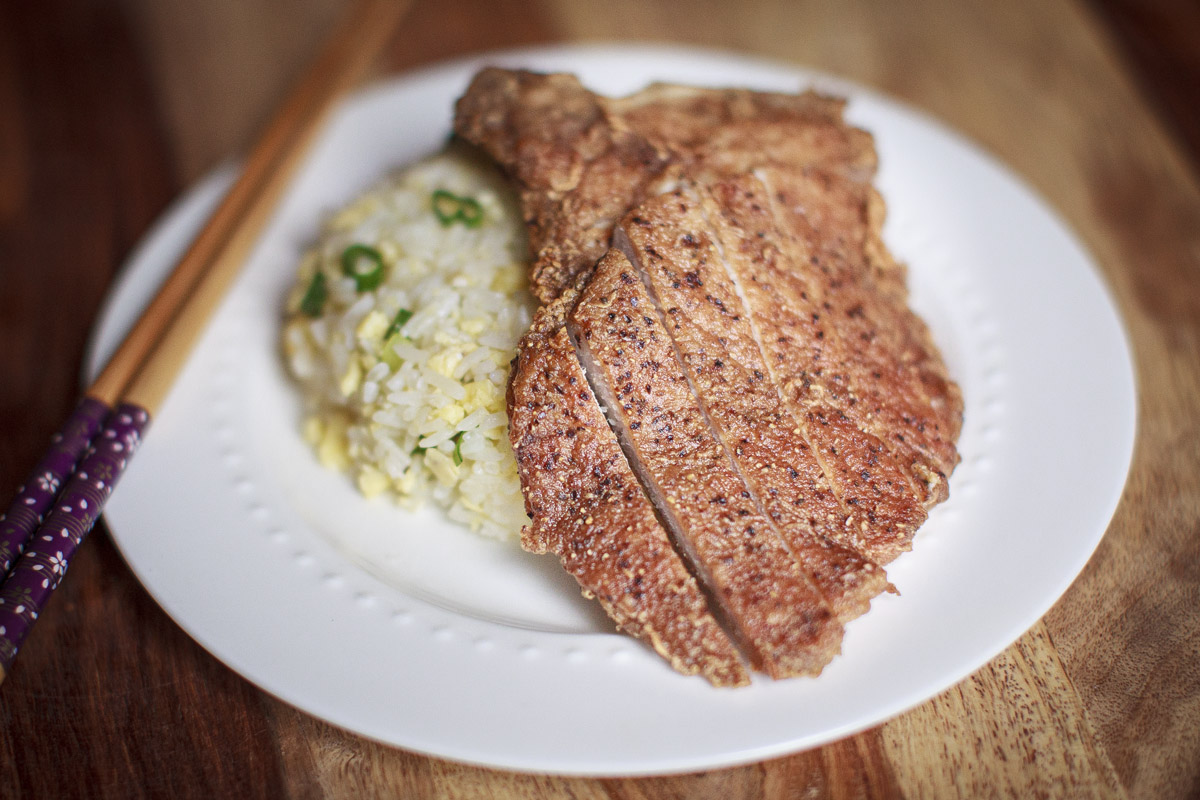
31. Pork Chop Rice—Zhūpái fàn—[jhoo1-pie2 fahn4] - Pork chop rice - (豬排飯)
Crispy, juicy, and unapologetically satisfying—Zhū pái fàn is the Taiwanese pork chop rice plate that punches way above its price tag. A thin, marinated pork chop, flash-fried till golden with a peppery crust, laid gently (or not so gently) over a bed of white rice and maybe a splash of gravy. No fancy garnish, no apology for the oil. Just pure comfort.
You’ll find it everywhere—from traditional bento shops to department store food courts—but the flavor’s in the details. That five-spice kick in the breading. The soy marinade that goes deep. That crunch you hear before you even bite in.
It’s the kind of meal you eat standing up at a lunch stall, sweating under a plastic roof, grinning like an idiot. Because in that moment, all you need is hot rice, crispy meat, and a second to breathe it all in.
📍 Fuhang Bento (富航便當 - Fùháng biàndāng – [foo4-hahng2 byan4-dahng1]) in Taipei or any school-adjacent lunchbox shop that smells like fried heaven.
💡 Pro tip: Ask if they’ve got the “滷蛋” (Lǔdàn – [loo3-dahn4]– soy egg) or braised cabbage on the side. Pork chop’s great. But those extras? They’re what make it a meal.
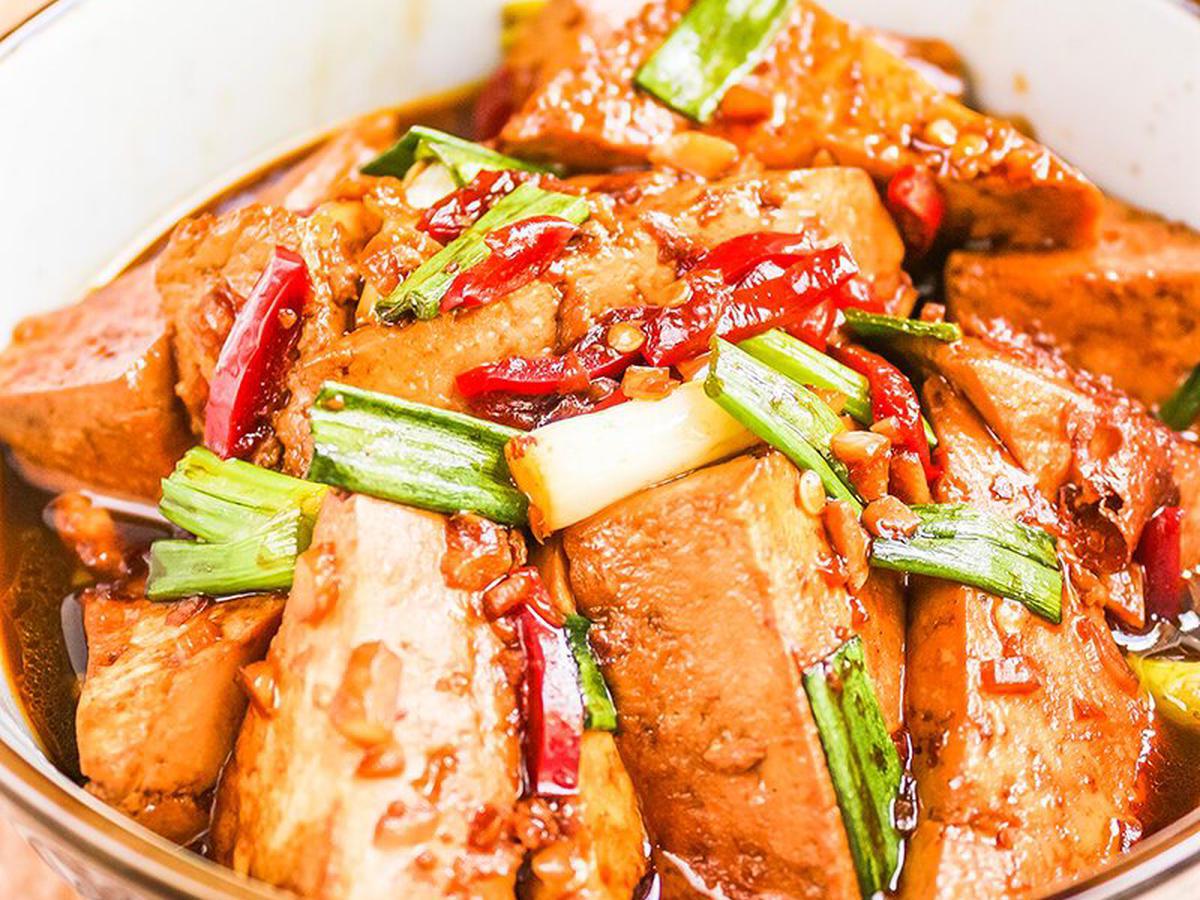
32. Braised Dried Tofu—Dòugān—[doh4-gahn1] - (豆乾)
At first glance, Dòu gān looks humble—brown blocks of firm tofu stacked in trays like leftover bricks. But don’t be fooled. This stuff’s been marinated, slow-braised, and flavor-punched with soy, garlic, and just enough five-spice to make your eyebrows raise.
It’s chewy in the best way—dense, meaty, and oddly addictive. The kind of snack that doesn’t try to impress but ends up winning the whole damn show. One bite in and you get umami, smoke, and just a whisper of sweetness. Paired with a tea egg, some peanuts, or a splash of chili sauce? Now you’re talking.
This isn’t tofu pretending to be meat. This is tofu that knows it’s good and doesn’t need to prove a damn thing.
📍 Try the braised tofu from Lu Wei stalls at night markets like Ningxia or Shilin, or grab a bento box from a train station convenience store—it’s usually lurking in the corner.
💡 Pro tip: Let it soak in the Lu Wei sauce for a few minutes longer. It absorbs everything, like a savory sponge from the gods.
🌱 Veggie & Sides
Tofu, greens, and plant-powered eats.
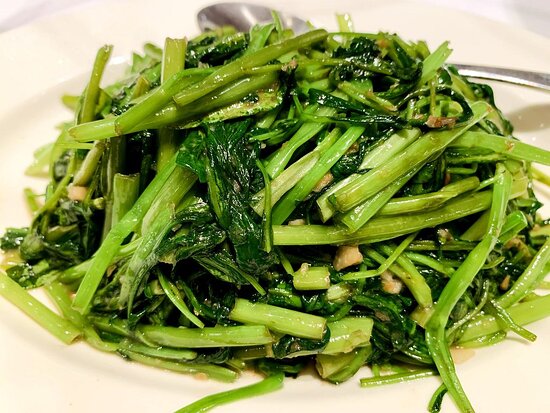
33. Water Spinach Stir-Fry—Kōngxīn cài—[kong1-shin1 tseye4] - Hollow heart vegetable - (空心菜)
Forget limp greens—Kōng xīn cài is the rockstar of Taiwan’s veggie lineup. Also called water spinach or “hollow heart vegetable,” this stuff is all about texture: tender stems, leafy tops, and a crunch that holds up under serious wok fire.
It’s usually stir-fried with garlic (lots of it), maybe a hit of chili, and just enough oil to make it shimmer. One toss in a smoking hot wok and boom—it transforms from humble produce to a garlicky, green sidekick that steals the show from the mains.
This dish is everywhere—night markets, mom-and-pop shops, lunchboxes, and bento joints. It’s fast, flavorful, and the excuse you need to say you ate something healthy today.
📍 Found at nearly every street-side stir-fry joint or local buffet—especially good at Lu Wei stalls or old-school eateries near temples.
💡 Pro tip: Want extra flavor? Ask for it with fermented tofu sauce or anchovy paste. Don’t knock it till you’ve licked the plate.
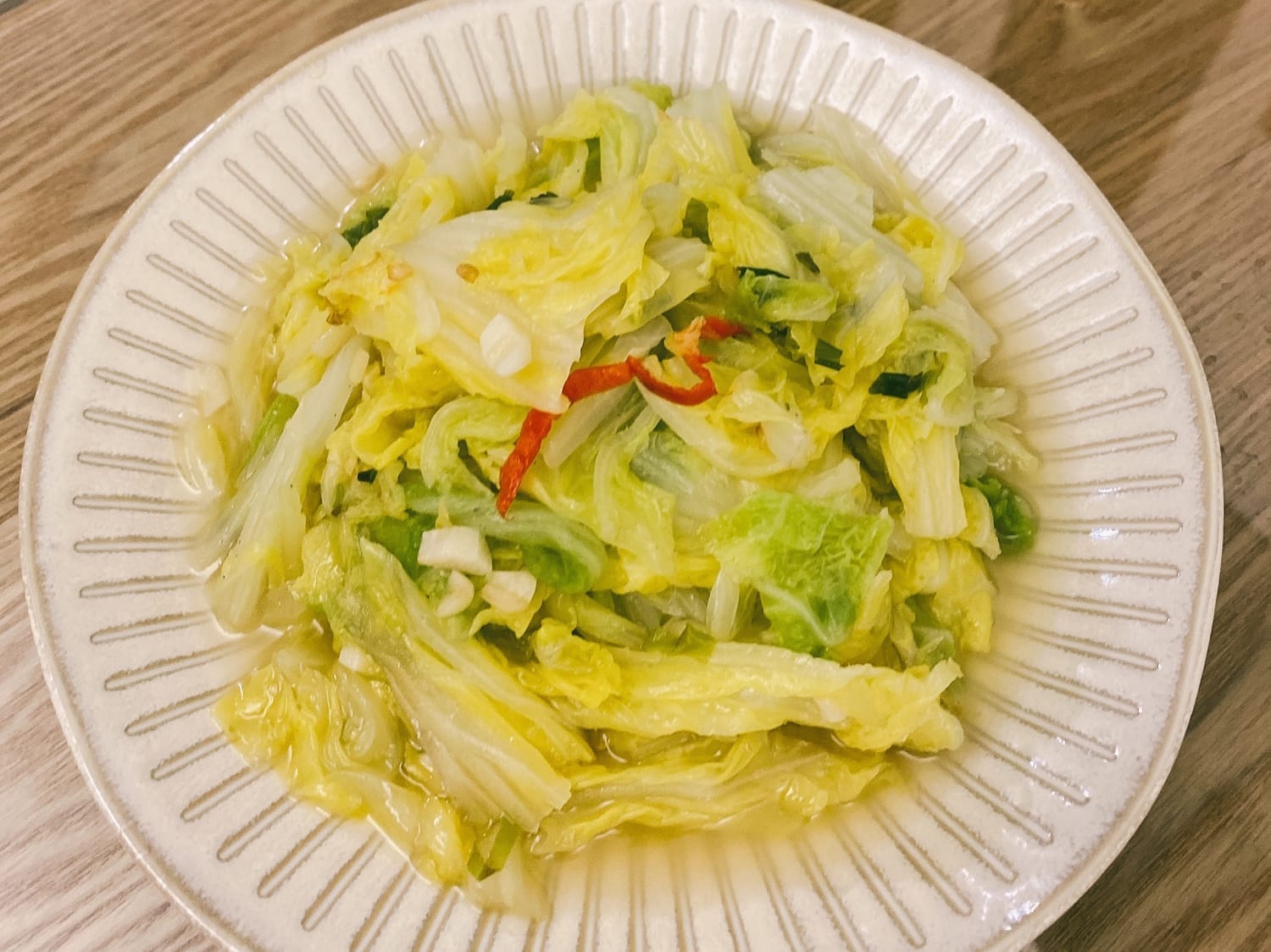
34. Stir-Fried Cabbage—Chǎo báicài—[chow3bye2-tsye4]—(炒白菜)
Simple. Sweet. Underrated as hell. Chǎo báicài is stir-fried cabbage done the Taiwanese way—wok-seared, lightly caramelized, and full of that smoky “wok hei” that turns basic veg into something craveable.
Usually hit with just garlic and a splash of broth or rice wine, this dish leans into the natural sweetness of the cabbage, with a bit of crunch left in the thicker stems. Sometimes it comes with tiny dried shrimp or a whisper of pork fat. Sometimes it doesn’t need the help.
Either way, this is everyday soul food in Taiwan—served alongside everything from fried pork chops to spicy hot pot. You won’t find it headlining any food festival, but locals know: when the cabbage’s on point, the meal’s on track.
📍 Order it at any (便當) Biàndāng – [byan4-dahng1] – Bento box – (便當) shop, hot pot place, or family-run stir-fry joint—it’s always on the menu.
💡 Pro tip: Ask if it’s local mountain cabbage (高麗菜) Gāolícài – [gow1-lee2-tsye4] – Cabbage. The elevation-grown stuff has even more flavor.
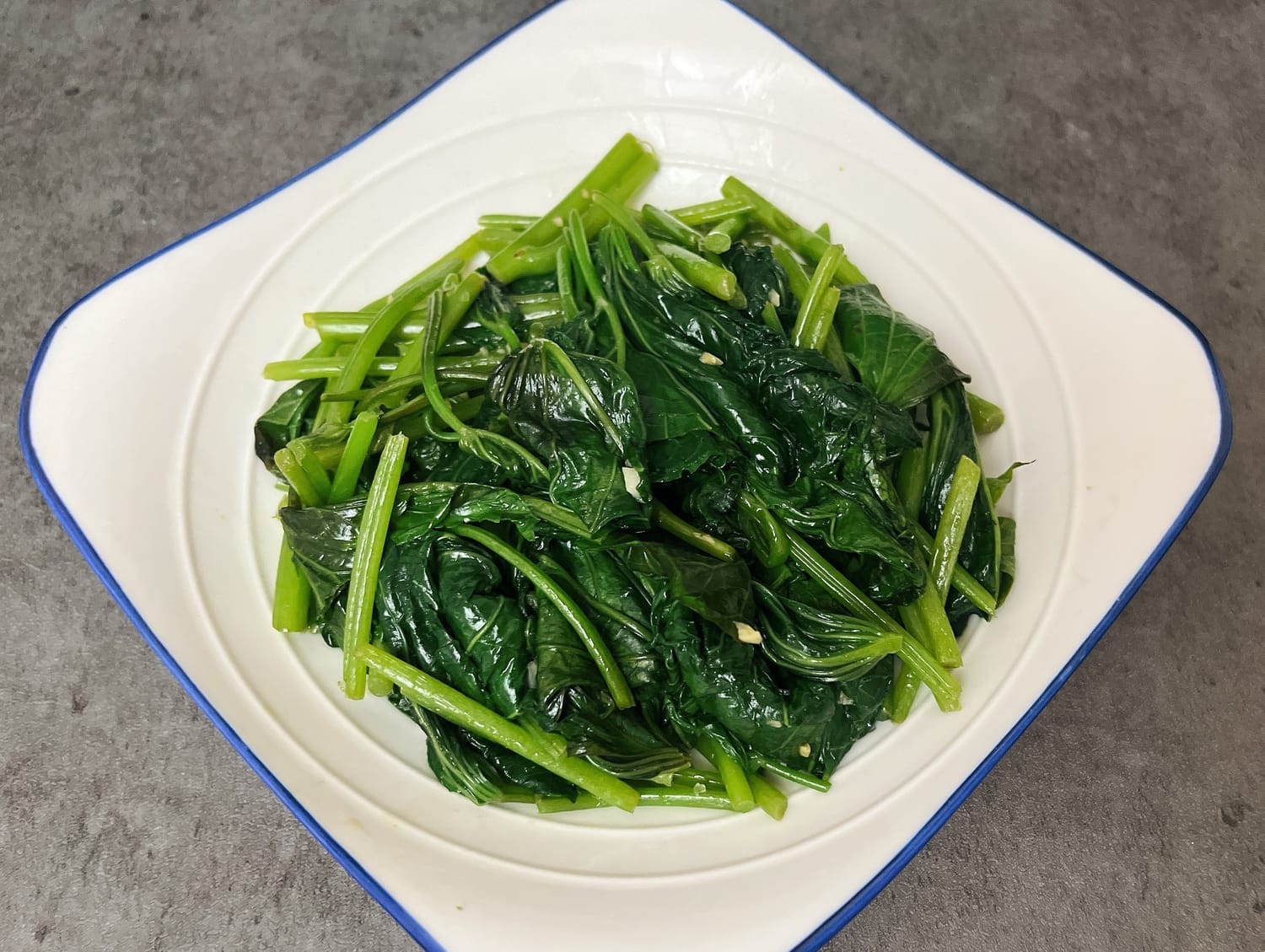
35. Stir-Fried Sweet Potato Leaves—Dìguāyè—[dee4-gwah1-yeh4] – (地瓜葉)
You probably didn’t come to Taiwan thinking, “I need some sweet potato leaves in my life.” But trust me—one plate of Dìguā yè, and suddenly you’re Googling where to find seeds back home.
These deep green leaves are stir-fried fast and hot, usually with a hit of garlic, sometimes a splash of fermented bean paste, and always that telltale sheen of wok-charred oil. The texture’s soft but not soggy, with just enough bite to make you respect the leaf. There’s something earthy about it—like spinach with street smarts.
This isn’t a show-off dish. It’s the side that keeps your meal grounded. And when you need to balance out the fried, the fatty, or the “holy hell that’s spicy”—this is the quiet, green fix you didn’t know you needed.
📍 Common at budget eateries and set meal spots (快炒店) across Taiwan. It’s usually scrawled on the whiteboard menu, so keep an eye out.
💡 Pro tip: If they offer it with garlic or spicy bean sauce—say yes. Every time.
🧭 Want to discover Taiwan’s street food with a local guide who knows where the real flavors hide? Book a GetYourGuide Taiwan food tour through my affiliate link—it’s how I find new favorites in every city.
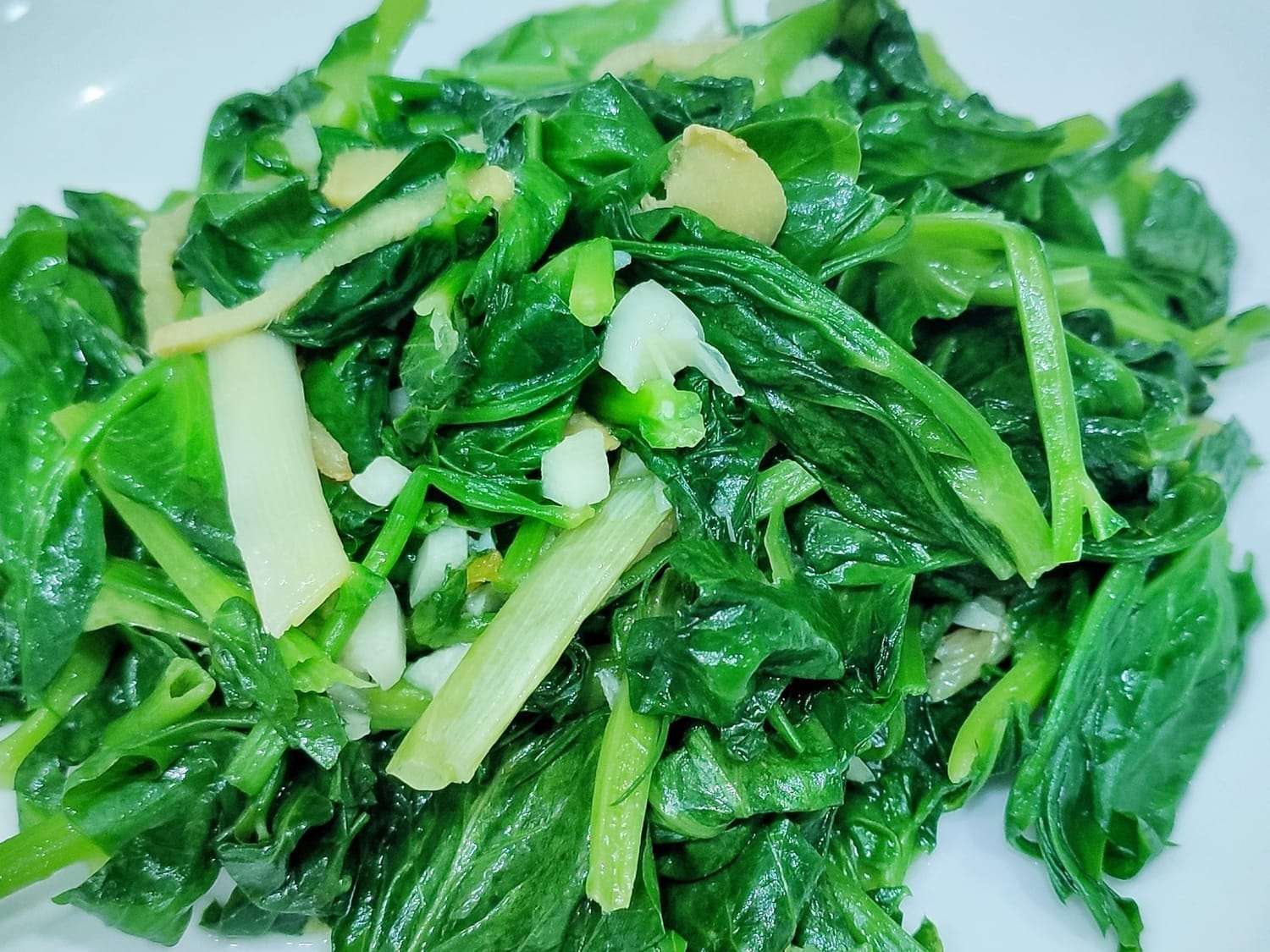
36. Stir-Fried Pea Shoots—Dòumiáo—[doh4-myow2]—(豆苗)
Bright. Crisp. Clean. But with that wok-fired edge that reminds you this is still Taiwan, not some spa menu. Dòu miáo—tender young pea shoots—are one of the best greens you can order, and honestly? One of my personal go-to’s when I want something green without sacrificing the sizzle.
Stir-fried lightning fast with garlic, the leaves wilt just enough while the stems keep a delicate crunch. It’s buttery without butter. Grassy in a good way. And if the vendor’s wok game is strong? You’ll taste a subtle smokiness that elevates this humble vegetable into the main event.
There’s a purity to it. It doesn’t need chili, or sauce, or fancy plating. It just needs heat, garlic, and someone who knows what they’re doing with a steel ladle and a flame.
📍 Some of the best I’ve had? Tucked inside tiny stir-fry joints near Taipei’s Yonghe district. Bonus points if there’s steam on the windows and Grandma’s running the wok.
💡 Pro tip: Eat it fast—Dòu miáo’s best when it hits the table still glistening. Let it sit too long, and it sulks.
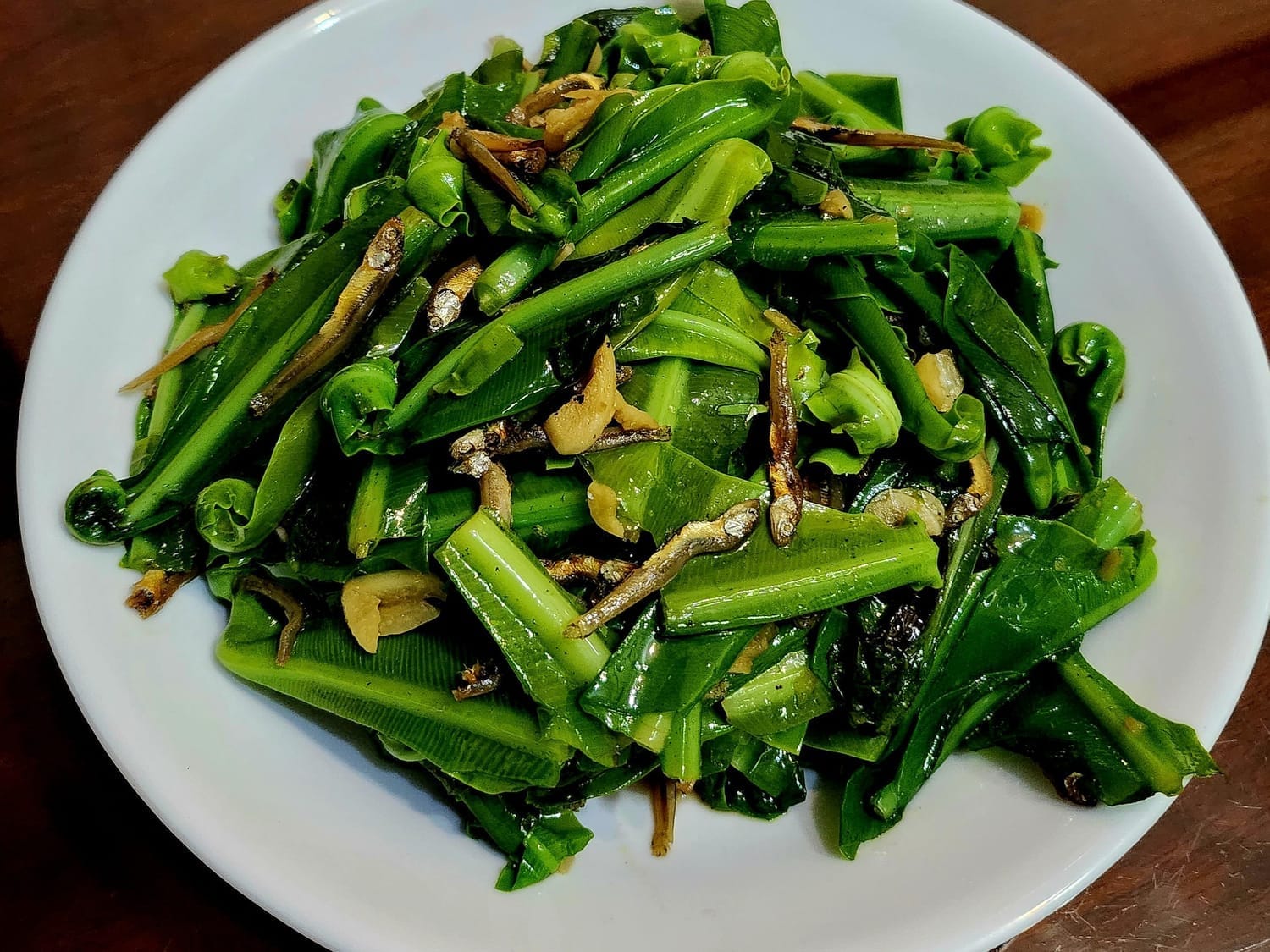
37. Bird’s Nest Fern—Shānsū—[shan1-soo1] – (山蘇)
This isn’t your average veggie. Shān sū is Taiwan’s jungle green—literally. Grown wild in the island’s misty mountains and beloved by Indigenous communities, it’s got a look like something off a Jurassic Park salad bar and a taste that’s all its own.
The texture? A wild hybrid of snap and slime (in a good way), like okra met seaweed and got stir-fried with garlic and vinegar. It’s tangy, herbal, and just a little sour—especially when it’s cooked with shredded ginger or a splash of rice vinegar. Sometimes there’s chili. Sometimes soy. Always attitude.
This is the dish you try when you’re done playing it safe. When you want the kind of flavor that doesn’t come with a postcard or a tourist line. This is what you order when you're dining with locals who know what’s up.
📍 Best eaten in Indigenous restaurants, mountain town eateries, or rustic joints along Taiwan’s east coast—Hualien and Taitung are hot spots.
💡 Pro tip: If it’s got ginger and vinegar on the menu, go for that version. It balances the funk and lets the fern shine.
🍬 Fruits & Sweets
Icy, chewy, syrupy, healthy goodness.
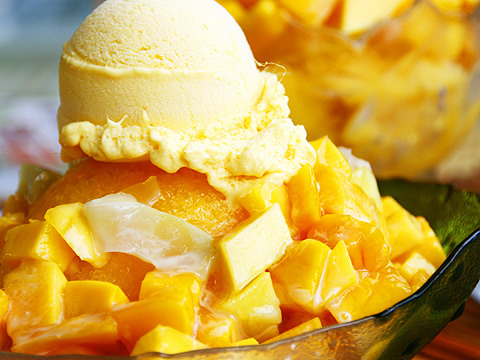
38. Mango Shaved Ice—Mángguǒ bīng—[mahng2-gwo3 beeng1] - (芒果冰)
If Taiwan had a national dessert for sweating through a humid summer, Mángguǒ bīng would be it. Giant mounds of feather-light shaved ice, fresh-cut mango that practically glows, a flood of sweet condensed milk, and sometimes—if you’re lucky—a scoop of mango sorbet on top, just to rub it in.
This isn’t some dainty bowl of shaved ice—it’s a full-blown event. You don’t eat it—you dig in like you’re uncovering buried treasure. And when you hit that soft spot in the middle where the juice, ice, and milk mix into one cold, tropical mess? That’s the magic.
Every tourist tries it. Every local secretly judges where they go. And if you haven’t had it in Taiwan’s summer heat, you haven’t really had it at all.
📍 Start with the legends—Ice Monster in Taipei or Smoothie House near Yongkang Street. But the best ones? Probably hiding in a mom-and-pop dessert shop without an English menu.
💡 Pro tip: Peak mango season is May through July. Go then or go home.
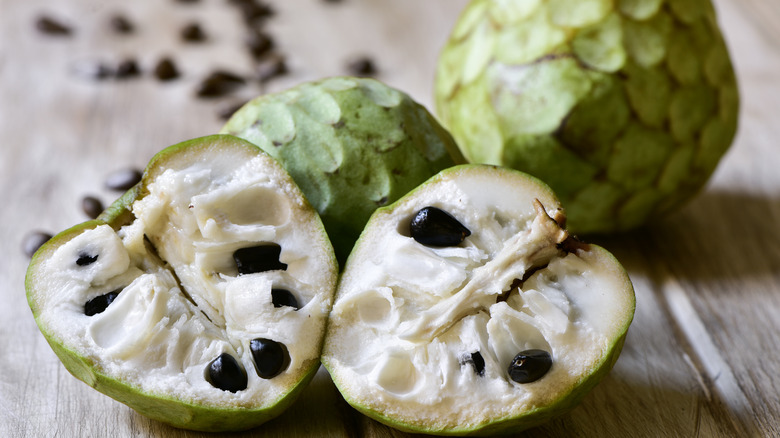
39. Custard Apple - Shìjiā - [shrr4-jeeah1] - Custard apple - (釋迦)
If a grenade and a pine cone had a love child that tasted like tropical candy, you’d get Shìjiā. Also known as sugar apple or custard apple, this green, knobby oddball hides a creamy, custard-like flesh inside—sweet, floral, and just weird enough to keep you guessing.
You don’t slice it. You break it open with your hands like a jungle snack. Inside? Segments of soft, white flesh with big black seeds you spit out like watermelon. It’s messy. It’s primal. And it tastes like banana, pineapple, and bubblegum had a tropical three-way.
In Taiwan, it's a beloved street fruit, especially in the south. Locals chill it in the fridge and eat it cold—perfect after a sticky day out chasing food and trains.
📍 You’ll find the freshest ones in Taitung, where it’s a local treasure. But fruit vendors across the island stock it during peak season (late fall to early spring).
💡 Pro tip: If it’s soft to the touch and smells sweet, it’s ready. Too hard? Let it ripen a day or two, or you’ll be chewing chalk.
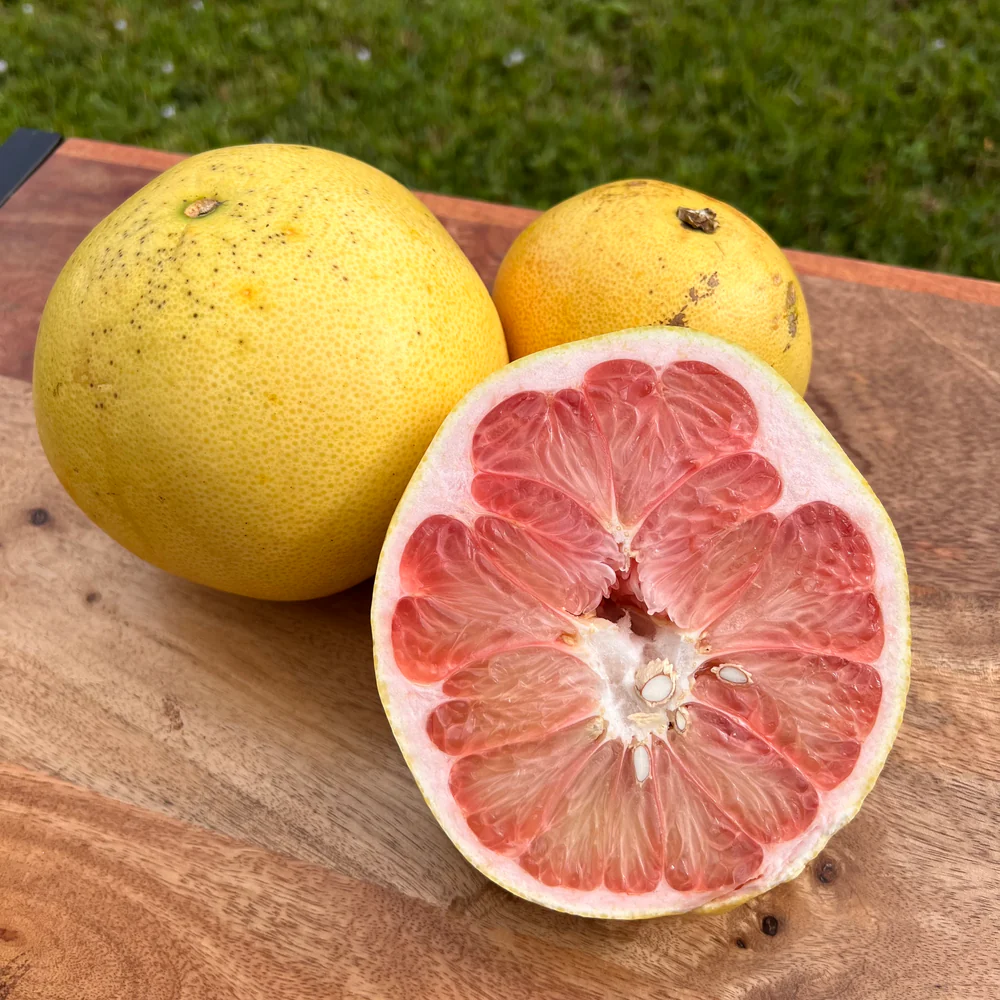
40. Pomelo—Yòuzi—[yo4-dz]—(柚子)
If Taiwan had a fruit that comes with its own fan club and holiday, it’s Yòuzi. This massive citrus beast rolls in during Mid-Autumn Festival like it owns the season—part mooncake sidekick, part edible lantern, part cultural icon.
Peeling it is half the fun. You don’t just slice it. You wrestle it. Thick skin, spongy pith, and a citrus perfume that hits before the first bite. The flesh inside? Pale yellow or pink, firm, juicy, and just the right mix of sweet and tart. None of that bitter grapefruit drama—this is mellow citrus with good vibes only.
Kids wear the peel on their heads like hats, elders insist it brings good luck, and travelers just stand there wondering how the hell this giant fruit got so famous.
📍 Buy them fresh at local markets in the fall, especially in Yilan or Tainan, where they grow the good stuff.
💡 Pro tip: Let it sit a day or two after picking—it gets sweeter. And save the peel. Seriously—locals use it for everything from tea to mosquito repellent.
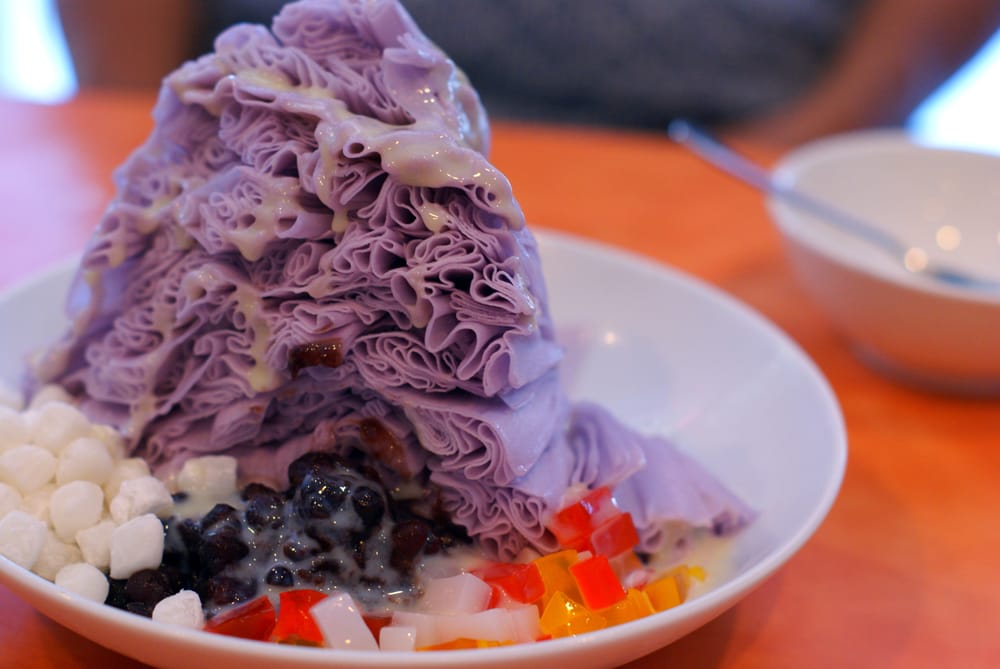
41. Snowflake Shaved Ice—Xuěhuā bīng—[shweh3-hwah1 beeng1]—(雪花冰)
Imagine regular shaved ice took a sabbatical in Paris, studied texture, got all bougie, and came back extra. That’s Xuěhuā bīng—Taiwan’s luxurious take on the classic frozen treat. The name literally means "snowflake ice," and yeah, it delivers: thinly sliced ribbons of flavored milk ice, stacked high like a snowy mountain, and melting like a dream the second it hits your tongue.
Flavors range from mango and matcha to peanut, taro, chocolate, and even tieguanyin tea. Toppings? Go wild—boba, mochi, grass jelly, fresh fruit, and condensed milk. If you can name it, someone’s already drizzled it on snow ice in Taipei.
This isn’t just dessert. It’s performance art. It’s your post-night market cool-down. And it's one of those foods that makes you stop mid-bite and mutter, “Why don’t we have this back home?”
📍 Try the OG at Ice Monster, or dig into lesser-known gems around Gongguan or Fengjia Night Market in Taichung.
💡 Pro tip: If you’re sharing, get a large. If you’re alone… still get a large. You’ll thank me halfway through.
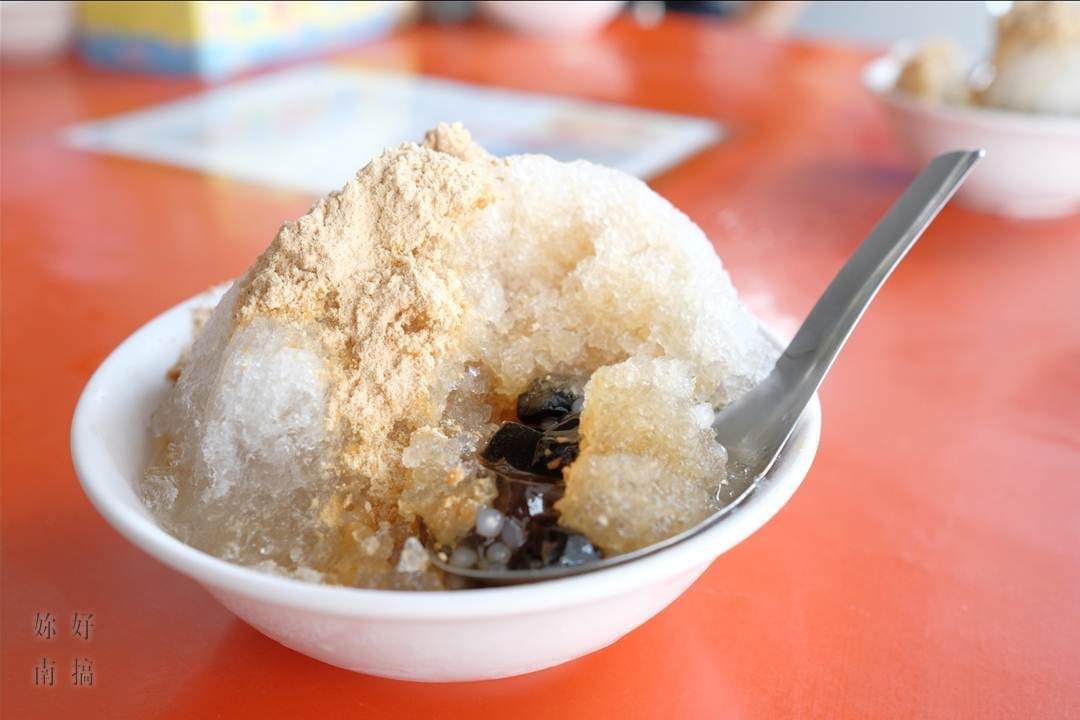
42. Traditional Shaved Ice—Bàobīng—[bow4-beeng1] – (刨冰)
Before there was bougie snowflake ice, there was this: Bàobīng—Taiwan’s OG shaved ice, loud, messy, and unapologetically over the top. It’s the kind of dessert that doesn’t care about presentation—it’s here to cool you down and sugar you up in the best way possible.
You start with a pile of coarsely shaved ice, dump on a flood of brown sugar syrup, and then stack it high with toppings like red beans, taro balls, grass jelly, mochi, and mung beans. But me? I keep it tight with chewy black boba pearls and a generous pour of condensed milk. That combo hits like a creamy sugar bomb with just the right bounce in every bite.
This is street food chaos in dessert form. No rules, no shame. Just a bowl of icy comfort you eat before it melts into sweet soup. Locals grow up on this stuff. Tourists stumble on it and wonder where it’s been all their lives.
📍 Best eaten curbside at mom-and-pop dessert joints. Try the old-school spots near Wufenpu, Tainan night markets, or anywhere the ice machine sounds like it’s dying.
💡 Pro tip: Don’t overthink it—just say “boba and condensed milk” and let the auntie behind the counter do the rest.
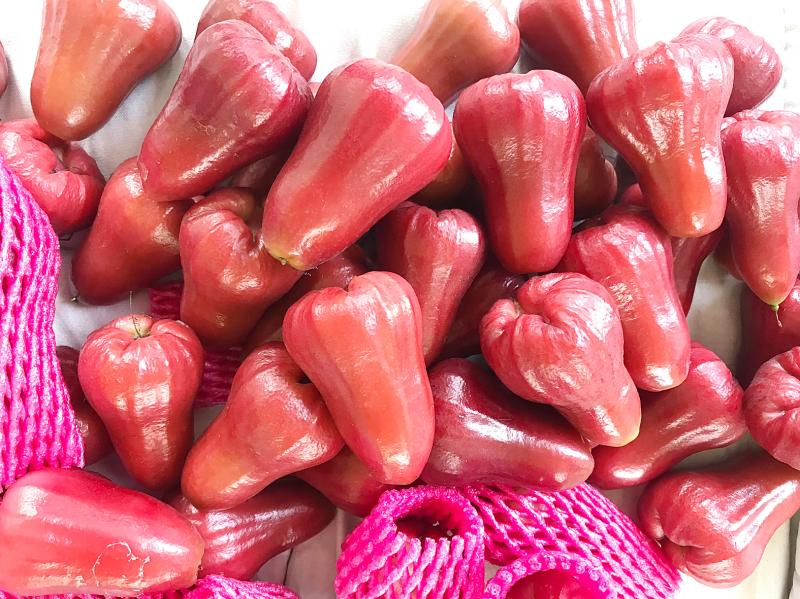
43. Wax Apple—Lián wù—[lyen2 woo4]—(蓮霧)
If I had to crown a single fruit king of the Taiwanese summer, Liánwù would wear it with quiet swagger. Known as wax apple, this bell-shaped beauty is one of my absolute favorites in all of Taiwan—crisp, juicy, refreshing, and subtle in all the right ways.
Bite into one, and you don’t get hit with a sugar bomb. Instead, you get clean, floral notes like biting into a chilled raindrop with a crunch. It hydrates more than it satisfies a sweet tooth, which is exactly what makes it so addictive on a sticky Taipei afternoon. When it’s done right—especially the ruby-red ones from Pingtung—it’s nature’s Gatorade, but better looking and a whole lot tastier.
I grab these constantly between bites of deep-fried madness or spicy noodles. They’re the pause button in a day full of street food chaos. The texture, the chill, the way it leaves your fingers slightly misted—it’s everything you want from a summer fruit and nothing you don’t.
And for the record? I always score mine fresh at Dongmen Market—a local spot that never misses.
📍 Look for them at Dongmen Market in Taipei or in roadside stalls and wet markets down south. Pingtung and Taitung grow the best ones.
💡 Pro tip: Always go for the deep-red, glossy ones—and chill them in the fridge. Room temp is a rookie move.
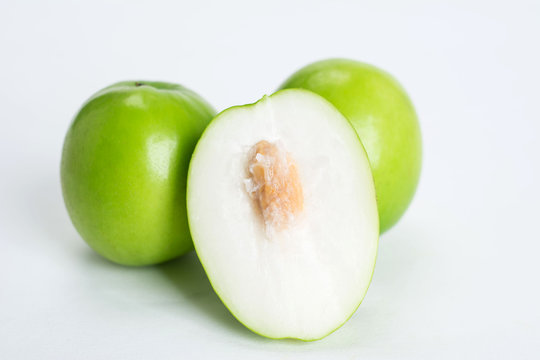
44. Jujube—Zǎozi—[dzow3-dz] - (棗子)
This one doesn’t get enough love outside Taiwan, but let me tell you—Zǎozi is a quiet little powerhouse. Also called Taiwanese jujube, it looks like a small green apple but eats like something between a pear, a date, and a crunchy sugar snap. Sweet, crisp, clean. No fuss.
It’s one of those fruits that surprises you with its simplicity. No dripping juice, no pits to wrestle with—just an easy, satisfying crunch that makes you feel like you're eating something good for your soul and your skin. And yeah, it's loaded with vitamins, but what I care about is how damn refreshing it is.
This is another one of my go-to market grabs. When it’s in season, you’ll find it stacked high at Dongmen Market, and I never leave without a bag. Chilled in the fridge? Game over. That’s the move. One bite, and you’re hooked.
📍 Best in local Taipei markets like Dongmen, or fruit stands across central Taiwan during peak harvest (winter to early spring).
💡 Pro tip: The greener the skin, the crisper the bite. Don’t wait for it to go soft—it’s not a plum. Eat it while it’s still snappy.
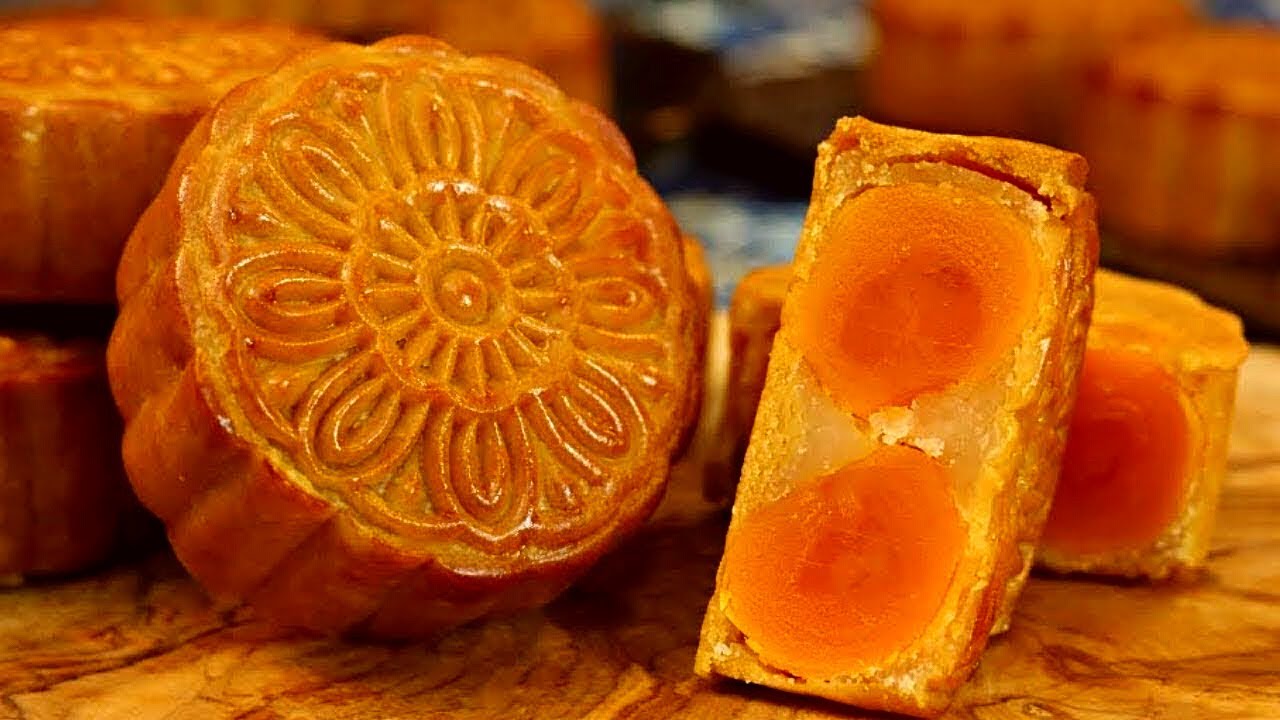
45. Mooncake (月餅, Yuèbǐng)
Let’s be honest—Yuèbǐng, or mooncake, isn’t something you casually snack on. It’s dense. It’s rich. It’s got more symbolism than a tattoo sleeve. But once a year, when lanterns light up and the moon looks close enough to touch, these baked bricks of tradition take center stage.
There’s something cinematic about biting into a mooncake. The golden, glossy crust gives way to a thick filling—lotus seed paste, red bean, taro, sometimes even a salty egg yolk sitting dead center like a full moon. It’s sweet-meets-savory in a way that doesn’t care what your palate thinks—it just is. You either lean in, or you miss out.
And yeah, I’ve had the boutique versions with rose petals and fancy packaging. But I still prefer the old-school ones—straight from a family bakery or market stall, preferably wrapped in wax paper and a little grease. We usually grab ours from Nanmen Market, and for a few weeks every fall, they feel like edible nostalgia.
📍 Available in nearly every bakery across Taiwan during Mid-Autumn Festival (中秋節), but Nanmen Market and traditional mom-and-pop shops do it right.
💡 Pro tip: Slice it thin and share it. These things are calorie bombs—and rich enough to double as breakfast, dessert, or regret.
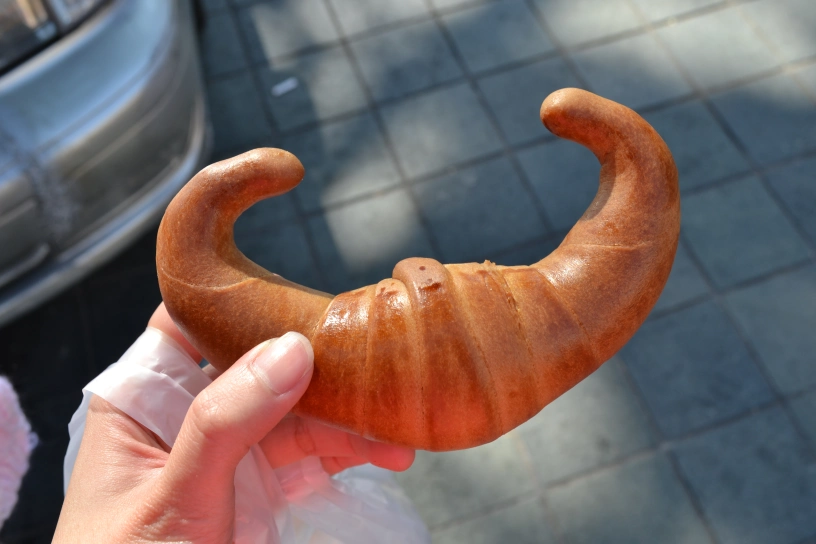
46. Ox Horn Bread—Niújiǎo miànbāo—[nyoh2-jeeow3 myen4-baow1] - (牛角麵包)
Call it a croissant if you must, but Niújiǎo miànbāo is a beast of its own. Shaped like a horn—hence the name—it’s denser, chewier, and way more satisfying than its flaky French cousin. This isn’t some delicate café pastry. This is grab-it-with-your-hands-and-tear-it-apart bread. And I love it for that.
It’s got just enough sweetness to keep you going, with a glossy crust that sometimes hides a surprise filling—custard, sweet potato, or red bean. But honestly, even plain, it hits that perfect spot between indulgent and humble.
This buttery street hero is especially famous in Lùgǎng—[loo4-gahng3] – (鹿港), a historic city that knows a thing or two about baked goods. You’ll find bakeries there that have been rolling these out for generations—no frills, just perfectly balanced dough and tradition you can taste.
It’s the kind of bread I grab on a road trip and end up devouring before I hit the freeway.
📍 Best in Lukang, but you’ll find decent versions in most traditional bakeries across Taiwan. Look for the glossy, golden-brown finish.
💡 Pro tip: Ask if they have the taro or custard-filled ones. And get two—you’ll eat the first one before you leave the block.
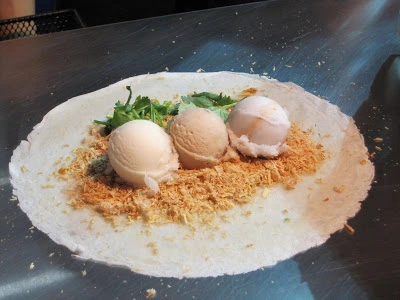
47. Peanut Ice Cream Roll (花生卷, Huāshēng juǎn)
This one's weird. And I mean that as a compliment.
Huāshēng juǎn looks like a spring roll at first glance, but inside? It’s a frozen flavor grenade—shaved peanut brittle, two scoops of creamy taro or pineapple ice cream, all wrapped up in a paper-thin crepe with a flourish of fresh cilantro. Yes, cilantro. In a desert.
It shouldn't work. But it does. It really does.
The crunchy peanut shavings melt into the ice cream, the herbaceous cilantro cuts through the sweetness, and the whole thing disappears in about five seconds—especially if you're standing on Jiufen Old Street, watching the fog roll in over the mountains and chasing ghosts of old gold miners.
For me, this is Taiwan’s answer to the taco truck—unexpected ingredients, bold combos, and totally satisfying in a way that leaves tourists stunned and locals smirking.
📍 Head to Jiufen Old Street—there’s a peanut ice cream stall halfway up the hill that’s legendary. You’ll know it by the smell and the crowd.
💡 Pro tip: Don’t skip the cilantro. It’s not a garnish—it’s the flavor twist that makes the whole thing sing.
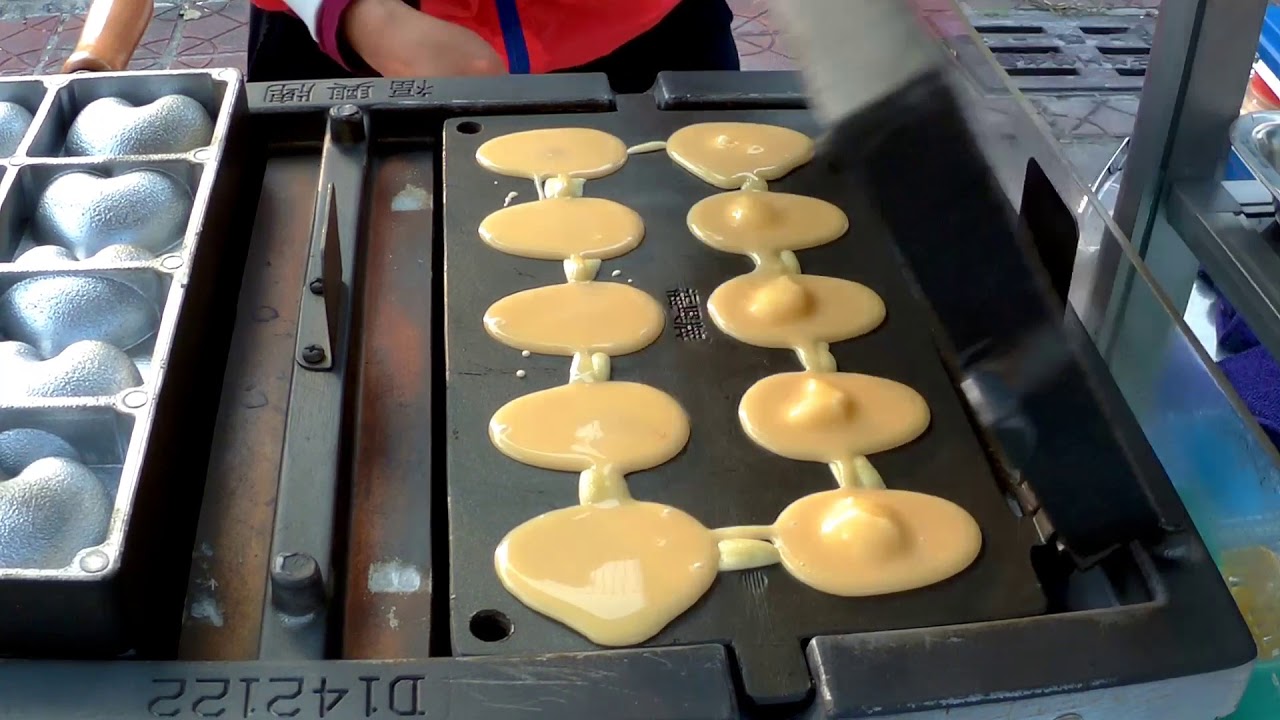
48. Egg Cakes—Jīdàn gāo—[jee1-dahn4 gow1] - (雞蛋糕)
They’re small. They’re sweet. They smell like your childhood—even if you didn’t grow up here. Jīdàn gāo, or Taiwanese egg cakes, are what happens when fluffy batter meets hot cast iron and a little street-side magic. Crispy edges, custardy insides, and shaped like fish, bears, or cartoon characters if you’re lucky.
You’ll find them at night markets, usually manned by someone flipping them fast with one hand and taking payment with the other. No packaging, no pretense—just fresh, hot, and gone in three bites.
There’s this tiny stall on Shida Road with no sign, barely a stall—just the scent of vanilla and butter calling you from down the block. I found it after filming late one night, and now it’s one of my must-hits when I’m in the area. The kind of place where the vendor knows their regulars and hands you your bag before you even ask.
Forget fancy desserts. This is Taiwan in its purest snack form—warm, humble, and stupidly addictive.
📍 Look for pop-up griddles at local night markets, especially Shida Road Night Market in Taipei.
💡 Pro tip: Eat them while they’re hot. They lose their magic once cold, and believe me, you don’t want leftovers—you want more.
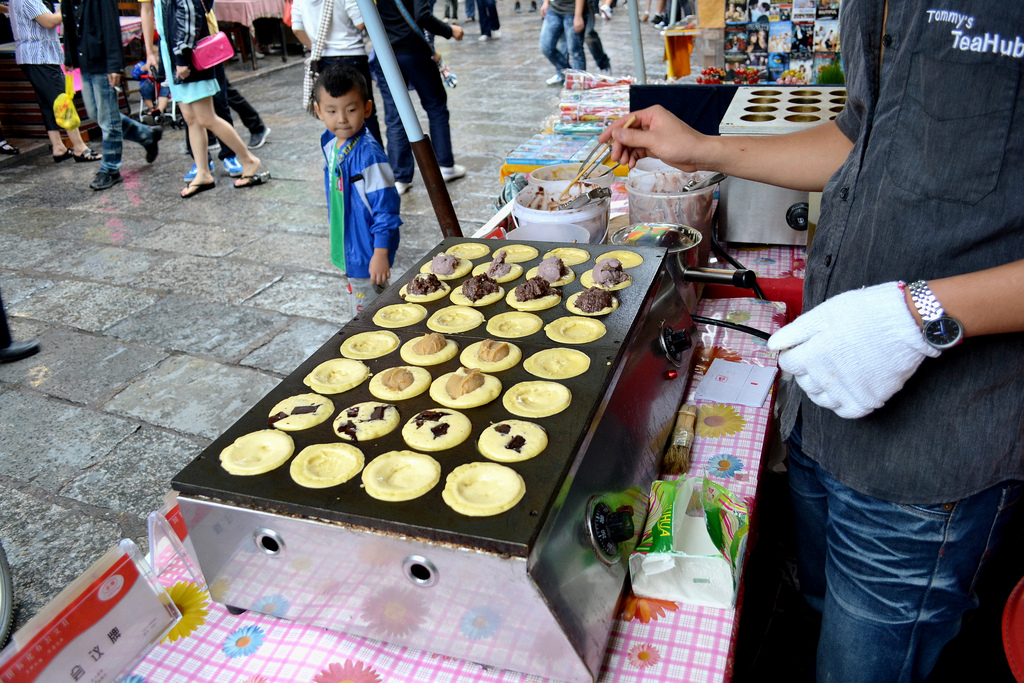
49. Wheel Cakes—Hóngdòu bǐng—[hong2-doh4 beeng3]—(紅豆餅)
There’s nothing fancy about Hóngdòu bǐng—and that’s exactly why they’re perfect. Wheel cakes are thick, round pancakes stuffed with gooey fillings and cooked on cast-iron molds until golden, puffed, and oozing goodness from the sides.
Traditionally, it’s red bean paste inside, hence the name. But my go-to? Custard. Thick, sweet, eggy custard that practically melts when you bite in. Burn-your-mouth hot if you’re impatient (like I always am), but worth every molten second.
They’re cheap, fast, and satisfying. Street dessert for people who don’t mess around. There’s always someone flipping a dozen at once, batter dripping from the ladle, steam rising with every turn. I usually spot one on my way to somewhere else… and always end up stopping anyway.
📍 Common at every night market and near MRT stations—my favorites are near Shilin Night Market and Gounguan Night Market.
💡 Pro tip: Custard sells out fast. Ask early. And grab two—one for now, one for your “I-should’ve-bought-more” moment later.
🧋 Drinks & Cold Treats
Boba tea, herbal brews, and icy refreshments.
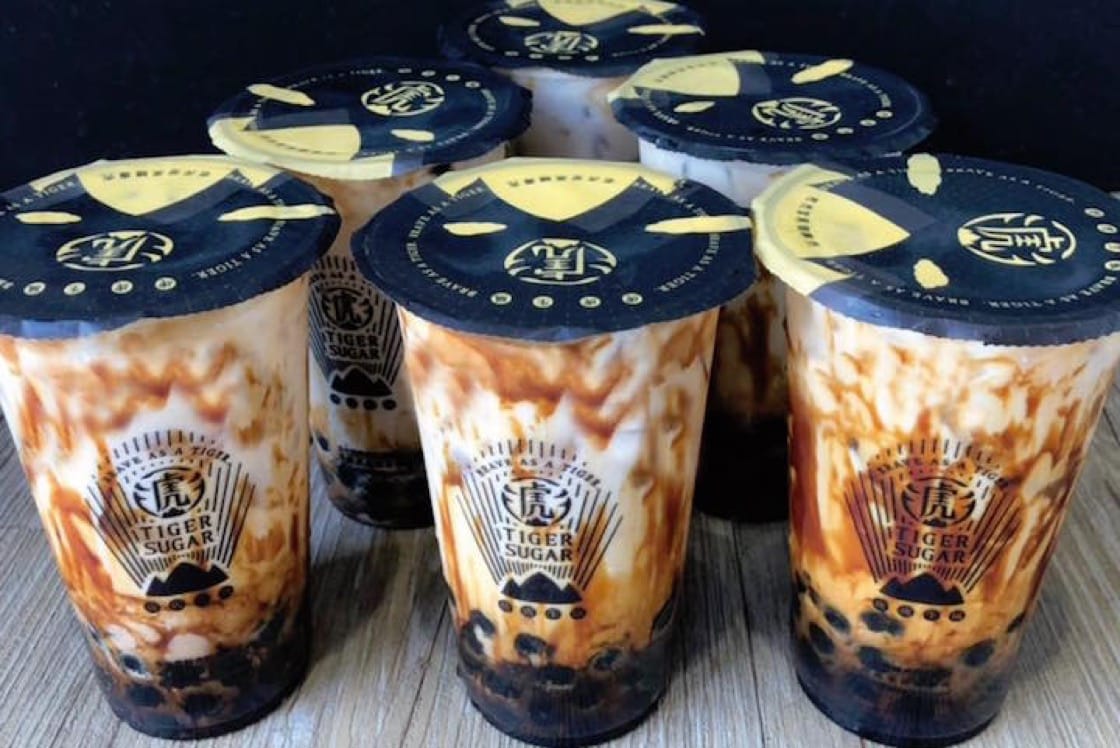
50. Classic Bubble Milk Tea—Zhēnzhū nǎichá—[jen1-joo1 nigh3-chah2] – (珍珠奶茶)
If Taiwan had a national drink, this would be it. Bubble Milk Tea—the original version—isn’t a trend here. It’s a lifestyle. And like all great things in Taiwan, it started on the street, with just a few simple ingredients: strong black tea, creamy milk, and chewy tapioca pearls that feel like dessert hiding in your straw.
It’s not about being photogenic. It’s about that perfect balance—sweet, strong, ice-cold, and just a little chewy. The kind of thing that cools you off and perks you up, all in the same sip.
I’ve had bubble tea in New York, Tokyo, Bangkok… But it always tastes better here, on a humid Taipei afternoon, standing under a street sign while scooters whip by. The original shop in Taichung, Chun Shui Tang, claims to have invented it—but honestly? The mom-and-pop stand down the alley might make a better one.
It’s a drink you chase down after night market snacks or between MRT rides. A classic. A comfort. A sugar-coated time machine back to your first Taiwan visit.
📍 Find it anywhere—chains like 50 Lan or Tiger Sugar, or better yet, that nameless stall with the long line and no English menu.
💡 Pro tip: Start with 30% sugar and half ice. And yes, always get the pearls. If you’re not chewing, you’re doing it wrong.
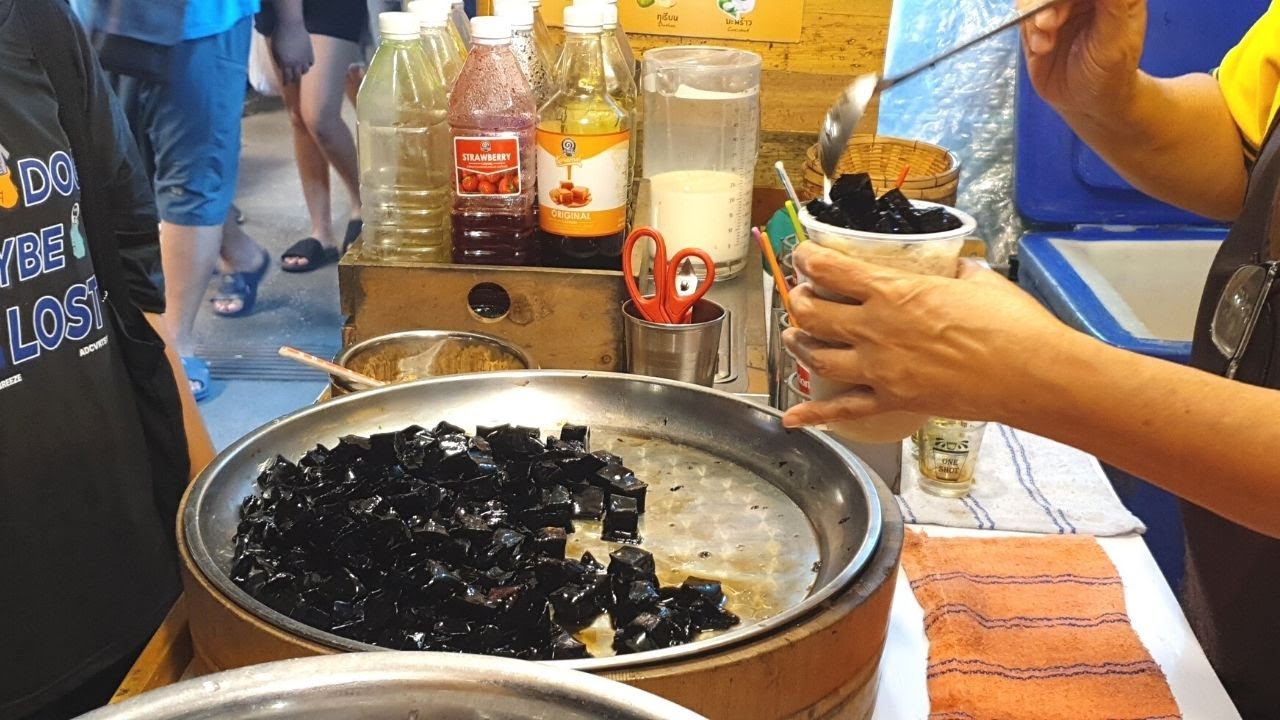
51. Grass Jelly Tea Xiāncǎo chá - [shyan1-tseye2 chah2] - (仙草茶)
You don’t drink Xiāncǎo chá for the sugar rush. You drink it for the vibe. This is Taiwan’s ancient answer to sweltering humidity and upset stomachs—a dark, slightly bitter herbal tea brewed from mesona leaves (aka “immortality grass,” if that tells you anything).
Served cold and slightly sweetened, it’s like sipping earthy iced tea with a medicinal kick—refreshing, grounding, and a little old-school in the best way. Add cubes of soft, jiggly grass jelly, and you’re officially in bonus territory.
Not everyone loves it at first sip. But give it a second. That bitterness grows on you, like your favorite dive bar or an uncle who’s quiet but always knows what’s up.
I first picked it up at a tiny stand near Chiang Kai-shek Memorial Hall, sweat-soaked from filming, and man—nothing cooled me down like that tall, dark cup of leaf magic. Since then? It’s been my go-to detox after too many fried snacks and too much boba.
📍 Look for old-school tea vendors, herbal shops, or night markets with handwritten menus.
💡 Pro tip: Ask for “微糖” (Wéitáng – [way2-tahng2] – slight sugar) to let the herbal notes shine. Bonus if they toss in a splash of lemon juice.
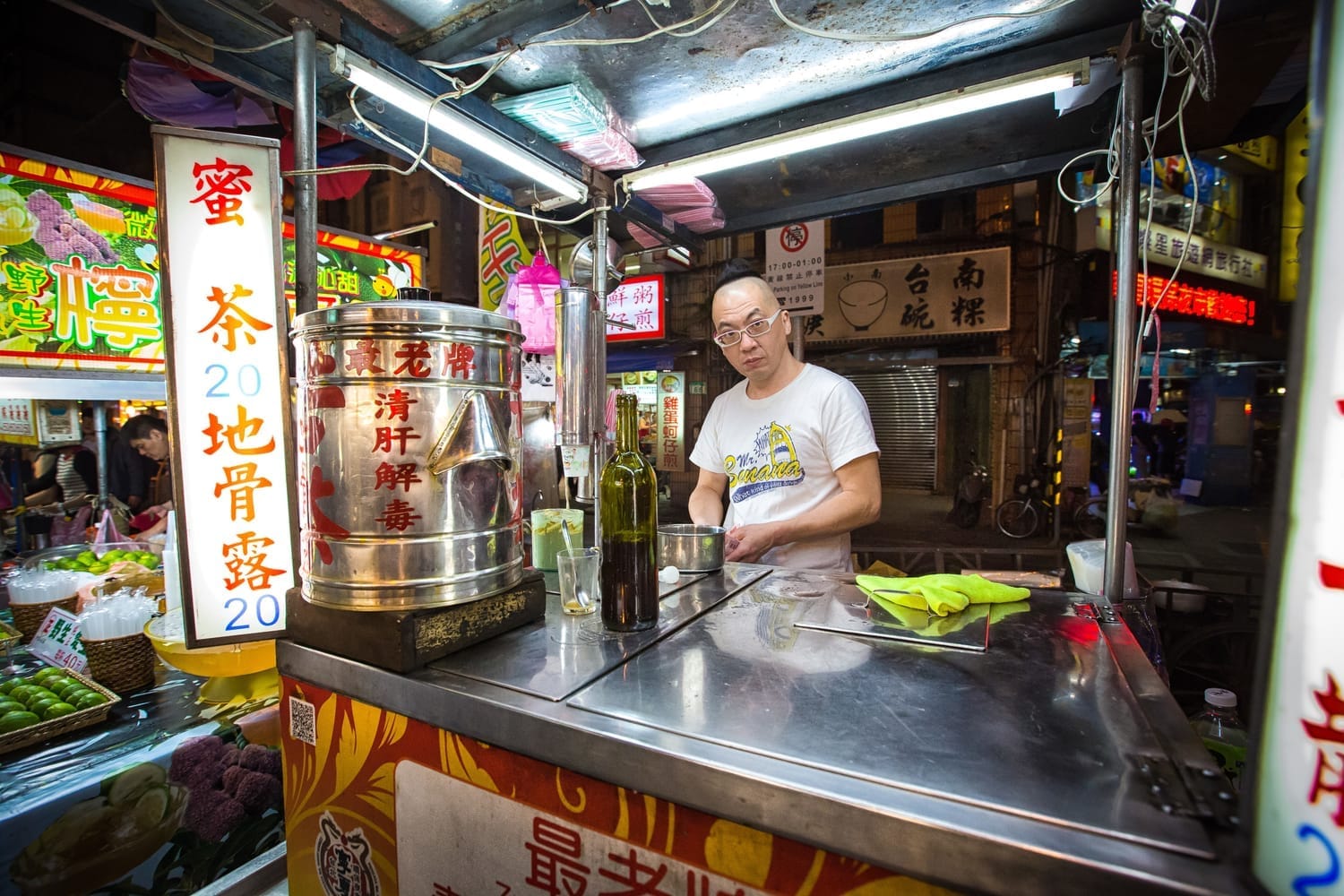
52. Sugarcane Juice—Gānzhèzhī—[gahn1-juh4-jrr1]—(甘蔗汁)
This one doesn’t mess around. Sugarcane juice is exactly what it sounds like—fresh-pressed cane stalks, juiced to order right in front of you. No powder, no concentrate, just crisp, grassy sweetness that hits different on a humid Taiwan night.
You’ll hear it before you see it—that loud, crunching press, grinding long stalks into a pale green nectar that drips straight into your cup. Served cold, sometimes with a squeeze of lime, it’s the kind of drink that feels like hitting reset on your whole digestive system after a deep-fried food bender.
It’s especially satisfying after a round of street snacks—stinky tofu, fried squid, whatever questionable skewers you just inhaled. I’ve got a favorite stand on Yongkang Street that does it right: old press machine, no frills, always a line. You know the one.
Forget energy drinks. This is liquid cane fuel for night market warriors.
📍 Found all over night markets—look for a cart with giant stalks stacked like bamboo and juice puddles at its feet. My go-to? Yongkang Street, Taipei.
💡 Pro tip: Ask for it “少冰” (Shǎobīng – [shal3-beeng1] – less ice) if you want more juice per sip. Bonus if they add lemon or lime—it balances the sugar beautifully.
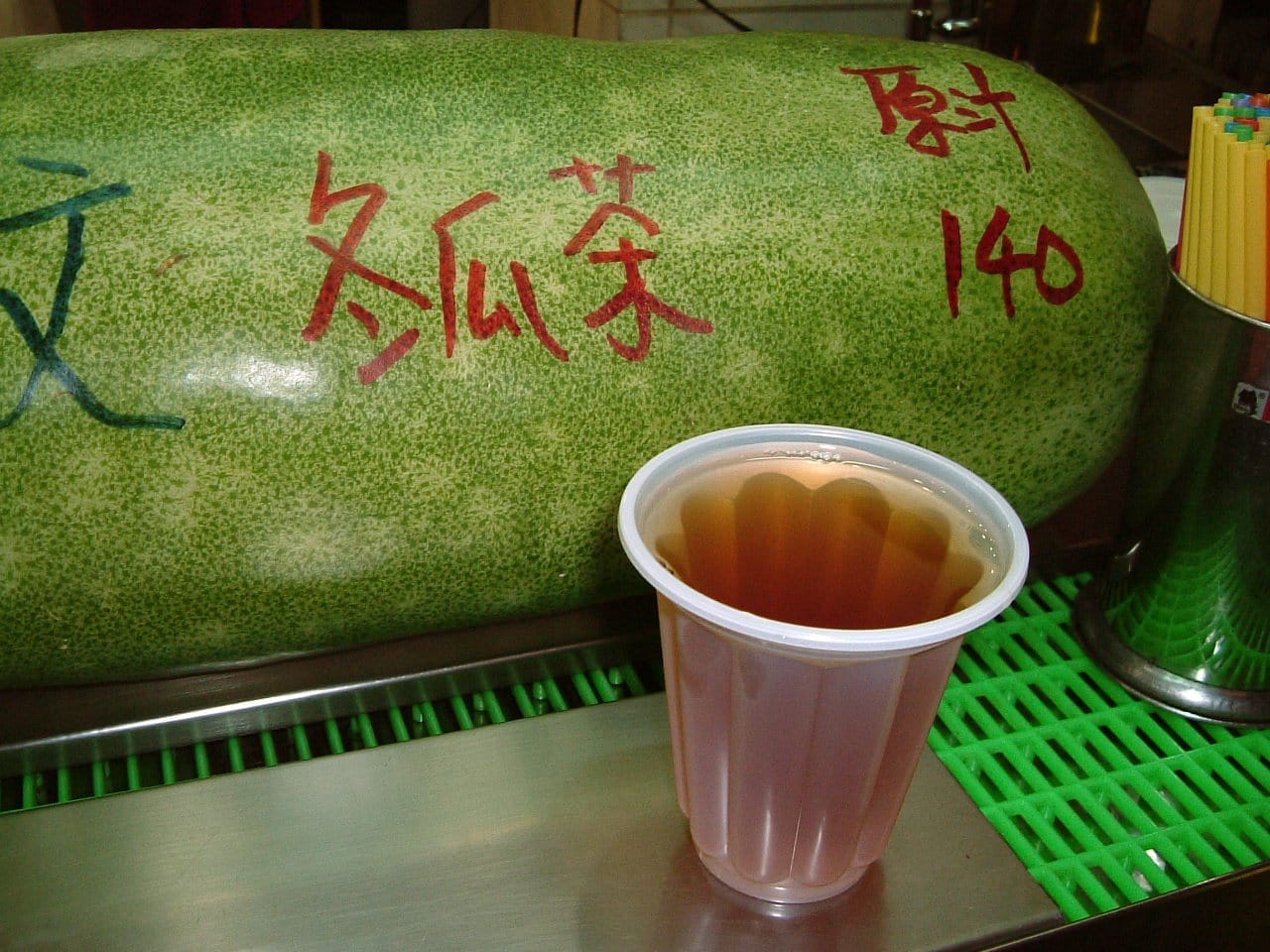
53. Winter Melon Tea—Dōngguāchá—[dong1-gwah1-chah2]—(冬瓜茶)
Winter melon tea is Taiwan’s stealthy sweet drink—no caffeine, no fizz, just smooth, mellow vibes in a cup. Made by simmering blocks of caramelized winter melon with water, it’s golden brown, lightly sweet, and oddly calming.
It tastes like someone took sugarcane juice, dialed it down, and added a whisper of roasted earthiness. Served ice-cold, it’s a go-to cooler for kids, grannies, and overfed travelers trying to balance out all the greasy snacks they just demolished.
I’ve had it hot, iced, and even frozen into popsicles. But my favorite is the street-side version in a plastic cup, beads of condensation sliding down the side while I plot my next food move.
📍 Look for giant metal tanks filled with brown liquid and slow-melting ice at almost any traditional drink stand. The one near Dadaocheng Wharf? Solid.
💡 Pro tip: Ask for it “無糖” (wú táng – no added sugar). It’s usually sweet enough on its own.
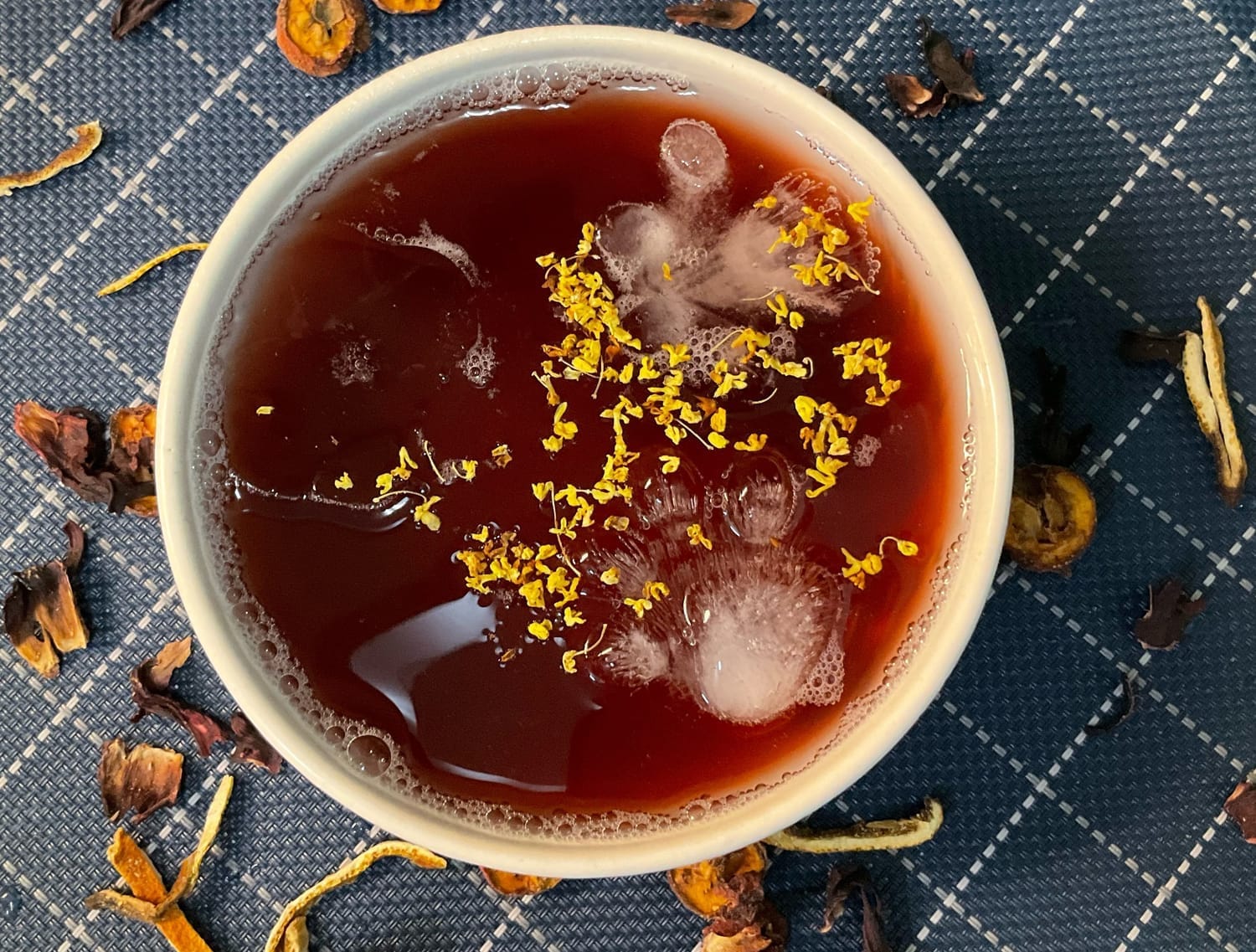
54. Sour Plum Drink (酸梅湯, Suān méi tāng)
Here’s one that catches people off guard. Sour Plum Drink isn’t just tart—it’s smoky, salty, sweet, and a little weird in the best possible way. Made from smoked plums, licorice root, and herbs, this drink feels more like a potion than a beverage—and I mean that as a compliment.
It cools you down and wakes up your taste buds, especially after heavy street food. One sip and you’re like, “What is this?” By the third, you’re hooked. If boba is candy, this is Taiwan’s version of a smoky mezcal—grown-up, bold, and unapologetic.
The first time I tried it was at a tiny stand in Tainan, and I wasn’t sure what to expect. Now it’s the drink I look for when I need a reset or just want to confuse and impress a friend.
📍 Try it at herbal tea stalls or old-school shops specializing in traditional Chinese drinks. Look for that deep reddish-black color.
💡 Pro tip: It’s best ice-cold. And if they offer “加檸檬” (Jiā níngméng – [jyah1 neeng2-muhng2] – Add lemon), do it—it softens the edges and brightens the whole thing.
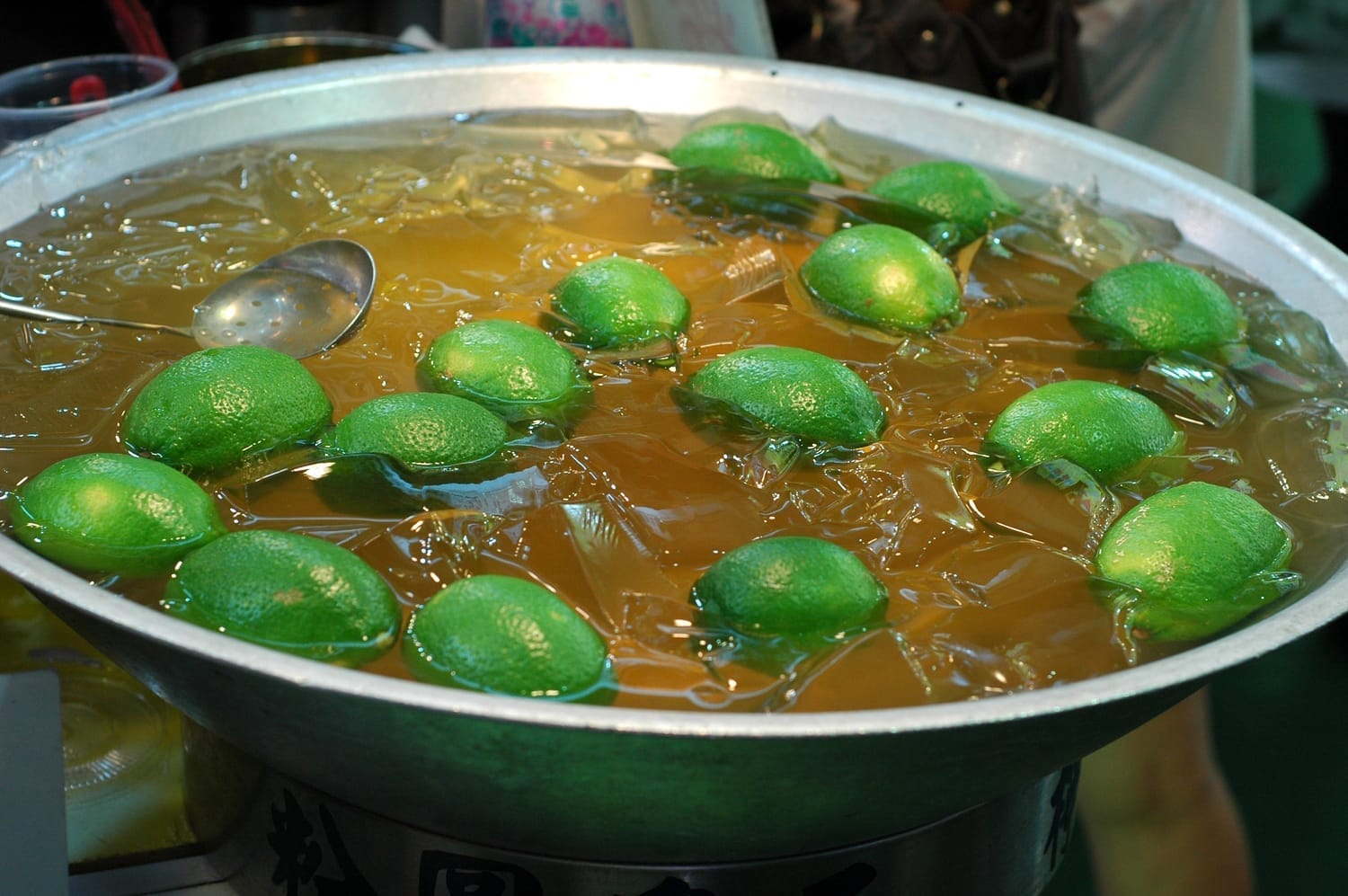
55. Aiyu Jelly—Àiyùbīng—[eye4-yoo4-beeng1]—(愛玉冰)
Light, citrusy, and born from the mountains of central Taiwan—Aiyu jelly is one of the island’s most iconic cold desserts, even if it’s often served in a plastic cup like a drink.
Made from the gel of fig seeds (no gelatin here—just seeds and patience), it’s the kind of refreshing treat that cuts through the brutal heat like a citrus scalpel.
The jelly itself is delicate and slightly slippery, with a barely-there sweetness. But once you add fresh lemon juice, honey, and a scoop of crushed ice, it transforms into a tart, bright, soul-cooling dish that locals swear by during summer.
I usually grab mine from a little stall near Chiayi Train Station—run by an older lady with a giant ladle and a line of sweaty, grateful regulars. A true Taiwanese legend in a cup.
📍 Look for signs that say 愛玉冰 (Aiyu Jelly—Àiyùbīng—[eye4-yoo4-beeng1]) or 愛玉檸檬 (lemon version) in mountain towns, night markets, or roadside carts.
💡 Pro tip: Always ask for “加檸檬” (Jiā níngméng – [jyah1 neeng2-muhng2] – Add lemon)—it’s what makes it pop.
📸 Want to capture your own Taiwanese flavor trail in full 360 glory? Grab an Insta360 X3 using my affiliate link—it’s what I use to film food hunts, alley dives, and backstreet surprises in cinematic style.
🎥 Curious to See It All Come to Life?

If reading about Taiwan’s food lit a fire in your belly, wait till you see it up close.
From smoky night market stalls to side-street legends, I film the real deal—the sizzling, the chaos, the bite-by-bite stories behind what makes Taiwan taste the way it does.
No scripts, no fluff—just the everyday magic that happens when food meets the street.
👉 Check out the Amaiwan Traveler YouTube channel for more scenes, stories, and sensory overload from across the island.
It’s not always polished. But neither is the food—and that’s what makes it worth watching.
Final Bite: Taiwan, One Dish at a Time
You made it through all 55.
From beef noodle bowls that hug your soul to stinky tofu that assaults your senses (in the best way), Taiwan isn’t just a destination—it’s a feast. A wild, sticky, fragrant symphony where every bite tells a story, and every street corner is a chance to chase the unexpected.
Whether you're planning your first trip or just daydreaming with chopsticks in hand, this list isn’t about checking boxes. It’s about following the sizzle—into alleys, onto scooters, and straight into a culture that speaks fluent flavor.
📘 Want to dive even deeper?
Check out Follow the Sizzle: A Travel Book Series for the Hungry, Curious, and Slightly Lost. It’s raw, story-driven travel writing—straight from the night markets, backstreets, and sights of Taiwan and beyond. First stop: eating your way through Taiwan.
And hey, if this guide lit a fire under your travel plans—share it, bookmark it, or come say hi on YouTube. I’ll be the guy filming next to the grill.
Stay curious. Stay hungry.

HEY, I’M AUTHOR…
... Amaiwan Traveler is your no-BS expat guide to where America meets Taiwan. Through my blog and YouTube channel, I dish out raw street eats, epic views, and all the cultural mix-ups that make travel real. Come along for the ride and taste the world the way locals live it.


GET THE INSIDE SCOOP!

Welcome to Amaiwan Traveler, your bridge between America and Taiwan. Here, raw travel stories, local eats, and cultural secrets come together. Stay curious, stay hungry, and join the journey.
Join the Insider List
Subscribe for fresh travel tales, local secrets, and tasty tips straight to your inbox. No spam, just the real stuff. Click Join Now and come along for the ride!
Created with © systeme.io