The casinos are easy to notice in Biloxi. They are large, visible and designed to hold your attention. My earlier article included them alongside seafood, museums, Mardi Gras and the coast. Looking back, those subjects make more sense together than as ten separate reasons to visit.
Biloxi’s character sits in the relationship between its waterfront, its working history and the people who keep making a life here. A resort can be part of that picture. It should not be the whole frame.
Begin with the working water
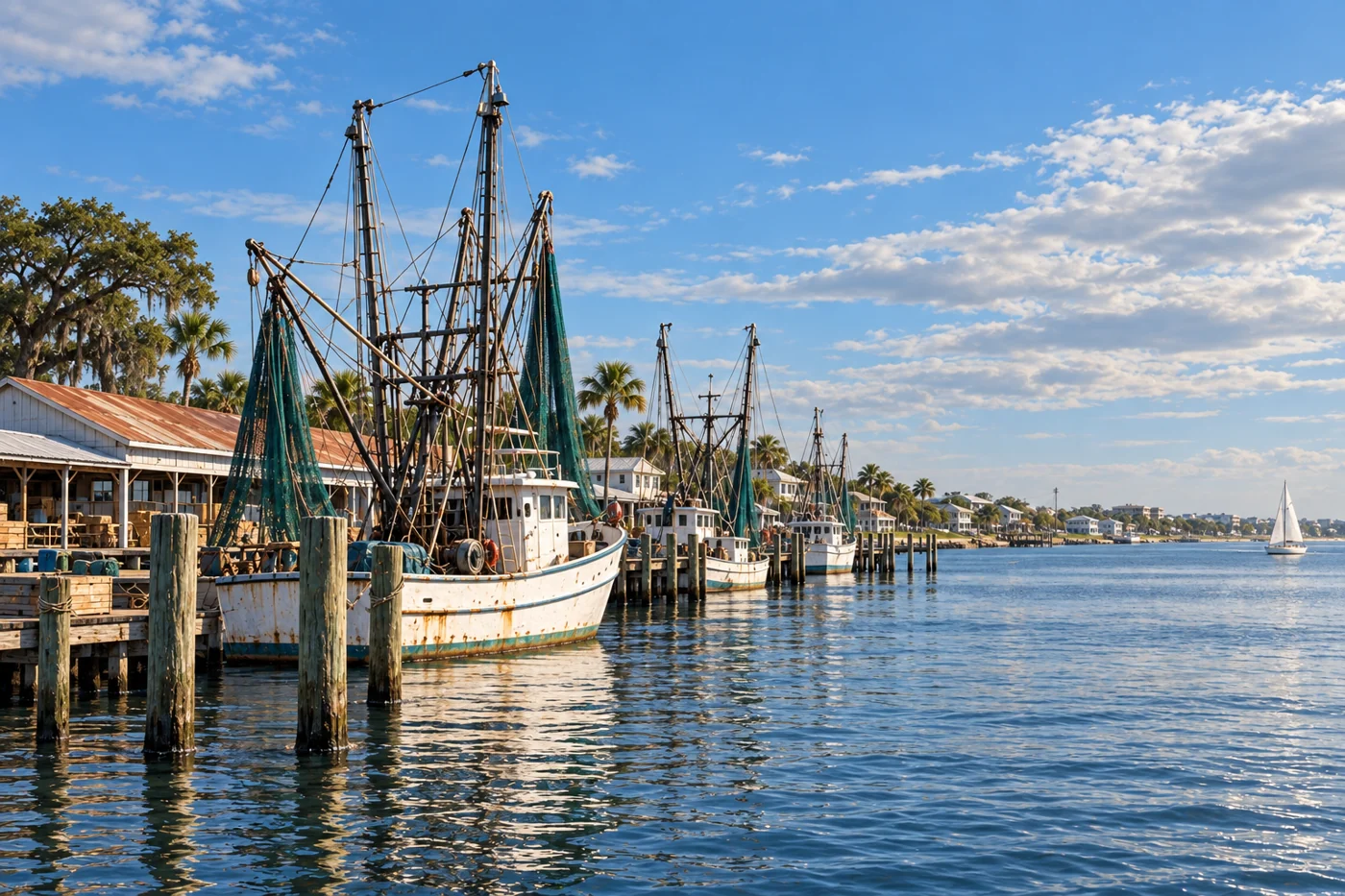
Seafood is a useful starting point because it connects a meal to a local industry. Shrimp, oysters, gumbo and po’boys appeared throughout the original guide. Instead of turning those dishes into a restaurant checklist, ask a simpler question: what does this food tell you about the coast around you?
The Maritime & Seafood Industry Museum gives that question some substance. It connects the city to fishing, boats and the work behind the waterfront. Visit before a meal if you enjoy understanding a place through what it produces. A plate of seafood becomes more interesting when the harbor is part of the story.
That does not mean every seafood dish is locally caught or every waterfront restaurant tells the same story. Ask what is available and where it comes from. Let the answer guide the order.
Southern hospitality is an interaction, not a guarantee
The old article leaned heavily on warm welcomes and friendly strangers. There is a useful idea underneath that language: make time for people. It is less useful to promise that an entire city will perform friendliness for every visitor.
Leave a little space around a meal or a museum visit. Ask a specific question, listen to the answer and accept that someone may be busy. Those small exchanges offer more than a broad claim about Southern charm ever could.
Mardi Gras carries local memory
Mardi Gras belongs to the Gulf Coast’s calendar and social life. The costumes and parades are the most visible pieces, but the preparation and traditions extend beyond the day a visitor sees.
The Coastal Mississippi Mardi Gras Museum gives the subject a place in the itinerary outside parade season. If you travel for an event, use its actual dated schedule. “February or March” is background, not a plan, and a museum visit should not depend on an old opening-hours list.
Make room for an individual voice
The Ohr-O’Keefe Museum of Art is a strong counterpoint to a generalized image of the South. George Ohr’s ceramics give you something particular to look at: an artist with a distinctive approach, rooted in this city.
That specificity is what makes an art stop useful. You do not need to know the whole history of ceramics to be curious about the shapes, the material and the choices behind them. Give the collection time rather than treating the museum building as another exterior photograph.
The casinos belong in the picture
A resort such as Beau Rivage combines gaming with dining and entertainment. If a show or a meal interests you, it can be a deliberate part of the visit. There is no need to make gambling the organizing principle of the whole trip.
The contrast is useful: a highly controlled indoor experience beside a coast whose working life and weather are much less predictable. Step outside that resort setting and the city becomes larger than its most prominent buildings.
Look at the coastline with some history in mind
The Biloxi Visitors Center brings together stories of the city and its connection to the water. The nearby lighthouse offers a recognizable landmark, but its survival and restoration also point toward the storms that have shaped this coastline.
Military life is another part of Biloxi’s identity. Keesler Air Force Base is within the city, with a major training role. That is context for understanding Biloxi, not an invitation to treat an active base as an ordinary tourist attraction.
A smaller itinerary, a clearer picture
For a first visit, choose one museum, a meal and some time near the water. Add a performance if it genuinely interests you. Check opening days before setting out and allow for the distance between places; this is not one continuous shaded walking district.
If you know South Florida, the comparison can be revealing. A walk beside Fort Lauderdale’s New River introduces another city through its relationship with water. Biloxi has its own version, shaped by the Gulf Coast rather than the Atlantic.
The point of looking beyond the casinos is to notice what surrounds them. Food, work, art, tradition and the coastline give you a much fuller place to spend the day.
Story sources & context
Adapted from the existing Amaiwan Traveler archive. Practical details may change; follow official links before a visit.