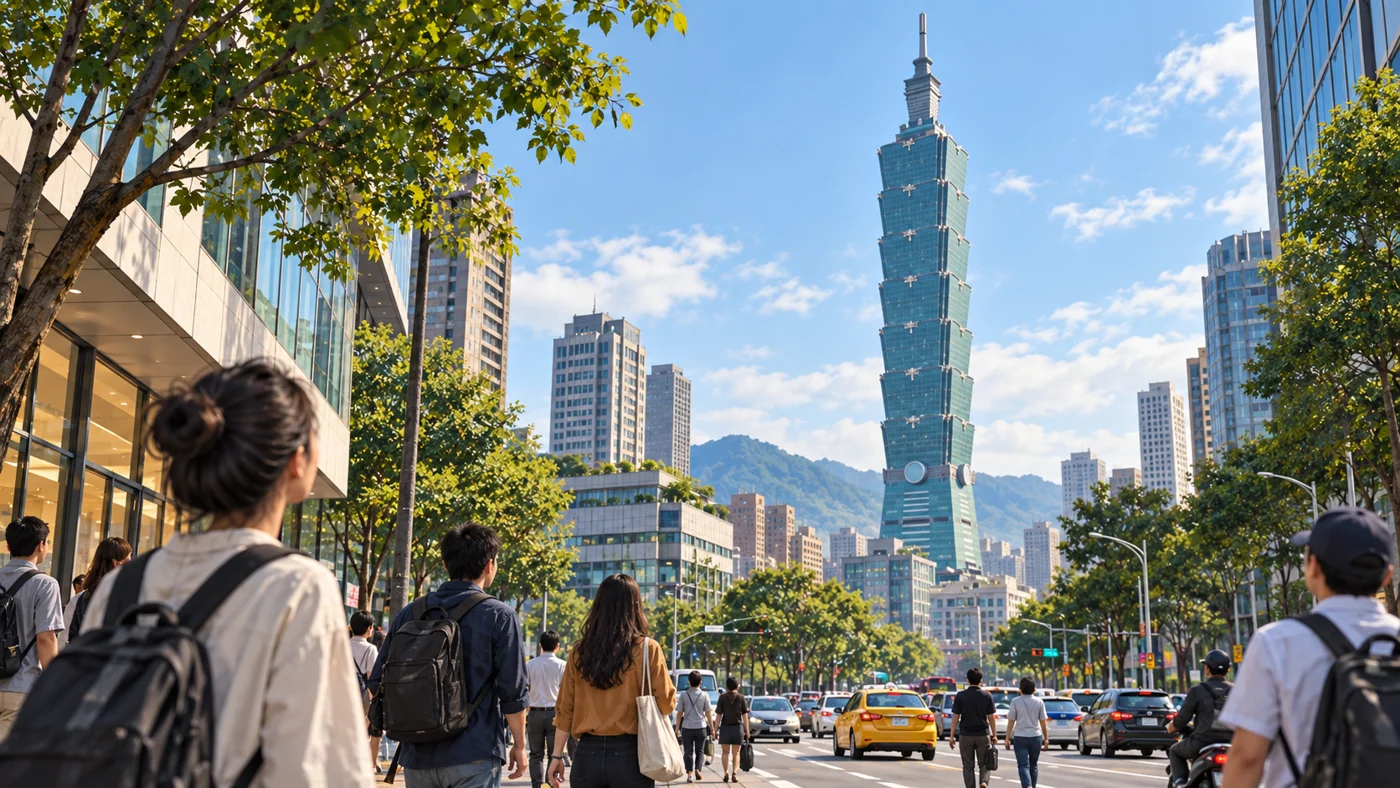
In West Taipei, the distance between historical periods can be a few streets. A temple, a preserved commercial lane, a former market, and the broad spaces around government buildings each tell a different part of Taiwan’s story.
This walk connects those settings without treating them as seven boxes to tick. Start in Wanhua, continue toward Ximending if you feel like it, and leave the government and memorial spaces for a second outing when that makes the day more comfortable. The point is to notice what changes as you walk.
Longshan Temple: history with a daily routine
Begin around Longshan Temple. Its roots reach back to the Qing era, but a temple visit happens in the present: people arrive to worship, pause, and return to the streets outside. Give that purpose priority over your photograph.
Look at the relationship between the temple and the neighborhood around it. A religious building is also part of the daily geography of the people who use it. Follow posted guidance and avoid blocking entrances or people at prayer.
Bopiliao: read the shape of the street
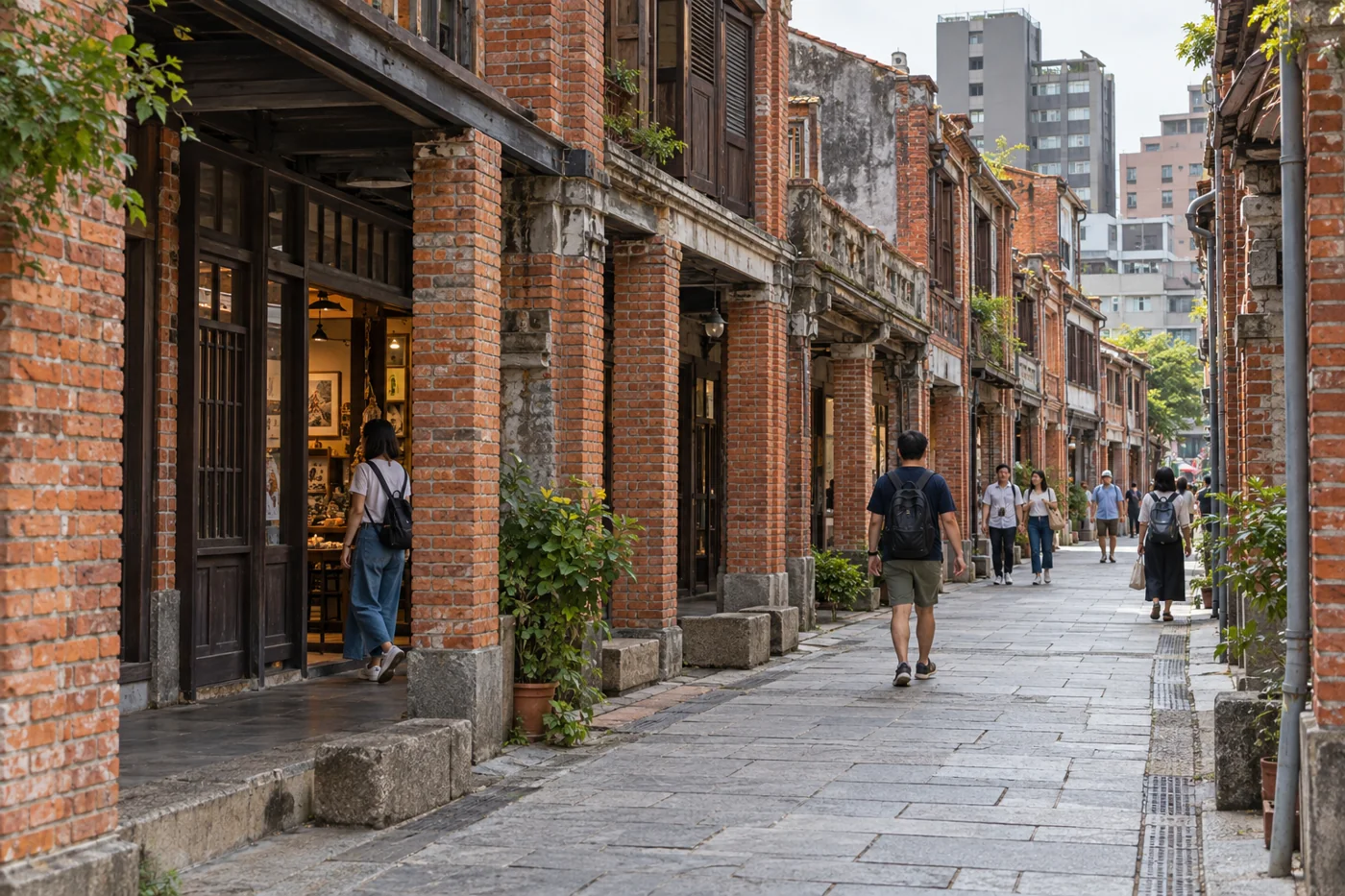
Nearby Bopiliao makes the older commercial fabric easier to see. Look for brickwork, covered frontages, and the way the buildings follow the street. These are useful things to notice even before you read a date.
The historic block’s own account describes a settlement formed during the Qing period and shaped through Japanese rule and the Republic of China era. That matters: the place is a mixture of layers, not a perfectly preserved instant from one dynasty. Allow time for whatever historical displays are open when you visit.
Ximending and the Red House: buildings acquire new lives
Continue toward Ximending for a change in street rhythm. Around the Red House, market history sits beside contemporary shopping, performance, and social life. The building began as a public market in 1908 during Japanese rule and later became a theater. Its changing uses make the history more interesting than the façade alone.
Make this your natural stopping point if you want a shorter walk. Sit down, have something to eat, and let Ximending be part of the day. You can return for the next section without losing the thread.
The Presidential Office: a building carried across regimes
The Presidential Office was built to house Taiwan’s Japanese Governor-General. Its formal frontage and tower express a different kind of authority from the smaller streets around Bopiliao. The official building history explains its colonial origins and later use.
Look from permitted public areas and treat an interior visit as a separate arrangement. Current entry rules belong on the official visitor page; an old walking-tour schedule is not enough to plan admission.
228 Peace Memorial Park: pause for what the name means
The park commemorates the February 28 Incident of 1947 and its victims. The postwar history here includes state violence and the longer period of repression associated with the White Terror. This is a place to slow down and read, rather than use the memorial as another backdrop.
The park’s memorial and former radio-station setting help explain why this particular public space carries that history. The dates in a guide become more meaningful when you give the names and accounts at the site your attention.
Chiang Kai-shek Memorial Hall: monument and debate
The scale changes again at Chiang Kai-shek Memorial Hall and Liberty Square. The hall was completed in 1980 to commemorate Chiang. Today, its meaning also involves the reassessment of authoritarian rule. The memorial’s own visitor information acknowledges that history.
Consider the broad approaches, the monument, and the space between them. These are deliberate choices about how power is presented. Read them alongside the history of democratization, rather than treating grandeur as the whole story.
Make the walk fit your day
Use Longshan Temple, Ximen, NTU Hospital, and Chiang Kai-shek Memorial Hall MRT stations as possible starting or finishing anchors, depending on which section you choose. Check your actual walking route and current access before setting out. The full sequence involves substantial walking and exposed public spaces.
For a first outing, Longshan Temple, Bopiliao, and Ximending are enough. For a second, connect the Presidential Office exterior, 228 Peace Memorial Park, and the memorial hall. These are flexible groupings, not booked tours. Carry the questions into the next streets: who built this, what was it for, and how is it used now?
Story sources & context
Adapted from the existing Amaiwan Traveler archive. Practical details may change; follow official links before a visit.