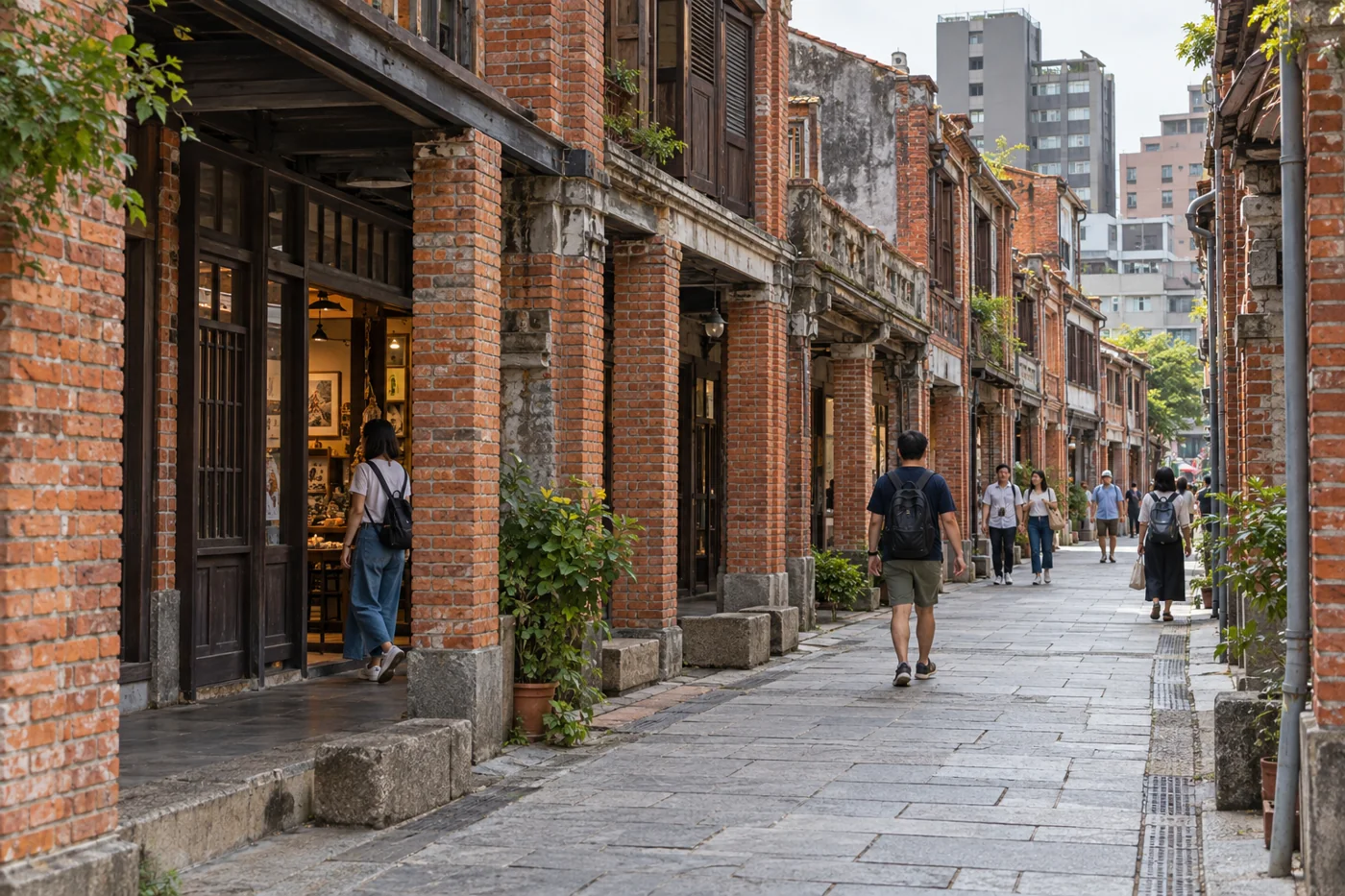
The street has a different job in the morning. Around Longquan Street in Taipei’s Da’an District, the Shida area becomes a place to buy vegetables, choose fruit, and work through an ordinary shopping list. A visitor arriving only for the evening would miss that part of its day.
That is what drew me into Longquan Market with the camera. The walk follows a working neighborhood market, with produce and household goods sharing the narrow lanes. You can enjoy it without buying much, but it helps to understand what everyone else came to do.
A market you feel at walking speed
My notes from the walk describe chopping blocks, crates of vegetables, wet pavement, and scooters edging through the crowd. The sounds overlap: vendors working, people talking, engines close enough to make you pay attention. Ginger and brine were part of the morning’s smells.
These details shape how you move. You step aside to look, wait while someone finishes a purchase, and keep an eye on the lane behind you. The narrow space is part of the experience. It is also a reminder that visitors are sharing someone else’s workplace.
Morning market or night market?
A morning market puts household shopping in view. You see ingredients before they become a meal: vegetables, fruit, and the small decisions people make about what to bring home. A night market gives more space to eating as you go, meeting friends, and browsing after dark. Both belong to Taipei’s everyday life; neither needs to be declared the “real” one.
If you have only seen Taipei through night-market food videos, this walk fills in another part of the story. You can pair the two experiences on different days. Start with Longquan in the morning, then give Raohe or Linjiang an evening of its own. The Taipei neighborhood guide helps put those choices in context.
How to arrive as a considerate visitor
Plan for the morning, and check the Longquan Street location in Da’an before leaving. The Shida area’s evening activity is not a promise that produce vendors will still be there later. Individual stalls keep their own routines, so this is a morning outing rather than a fixed opening-time guarantee.
- Carry small cash and a reusable bag if you intend to shop.
- Ask the price and quantity before agreeing to a purchase. A handwritten number alone may not tell you the unit.
- Step out of the lane before stopping for a photograph, and ask before filming a vendor closely.
- Choose footwear that feels secure on damp pavement. Keep your bag close enough that it does not brush the stalls.
You do not need fluent conversation to begin with a greeting, point politely, and confirm a total. Give the vendor time to help their regular customers too. Watching quietly can be as worthwhile as asking questions.
Prices in the video are a snapshot
The produce section begins around 3:33; the narrow-lane walk follows around 4:17. Use those moments to see how the market works. Seasonal produce, quantities, and individual stalls make a video price a poor promise of what your own shopping will cost.
Leave room afterward for breakfast or a few surrounding streets. The useful discovery here is how a neighborhood feeds itself. For more of the food story, continue into Follow the Sizzle, or explore the other Taiwan walks and field notes.
Story sources & context
Adapted from the existing Amaiwan Traveler archive. Practical details may change; follow official links before a visit.