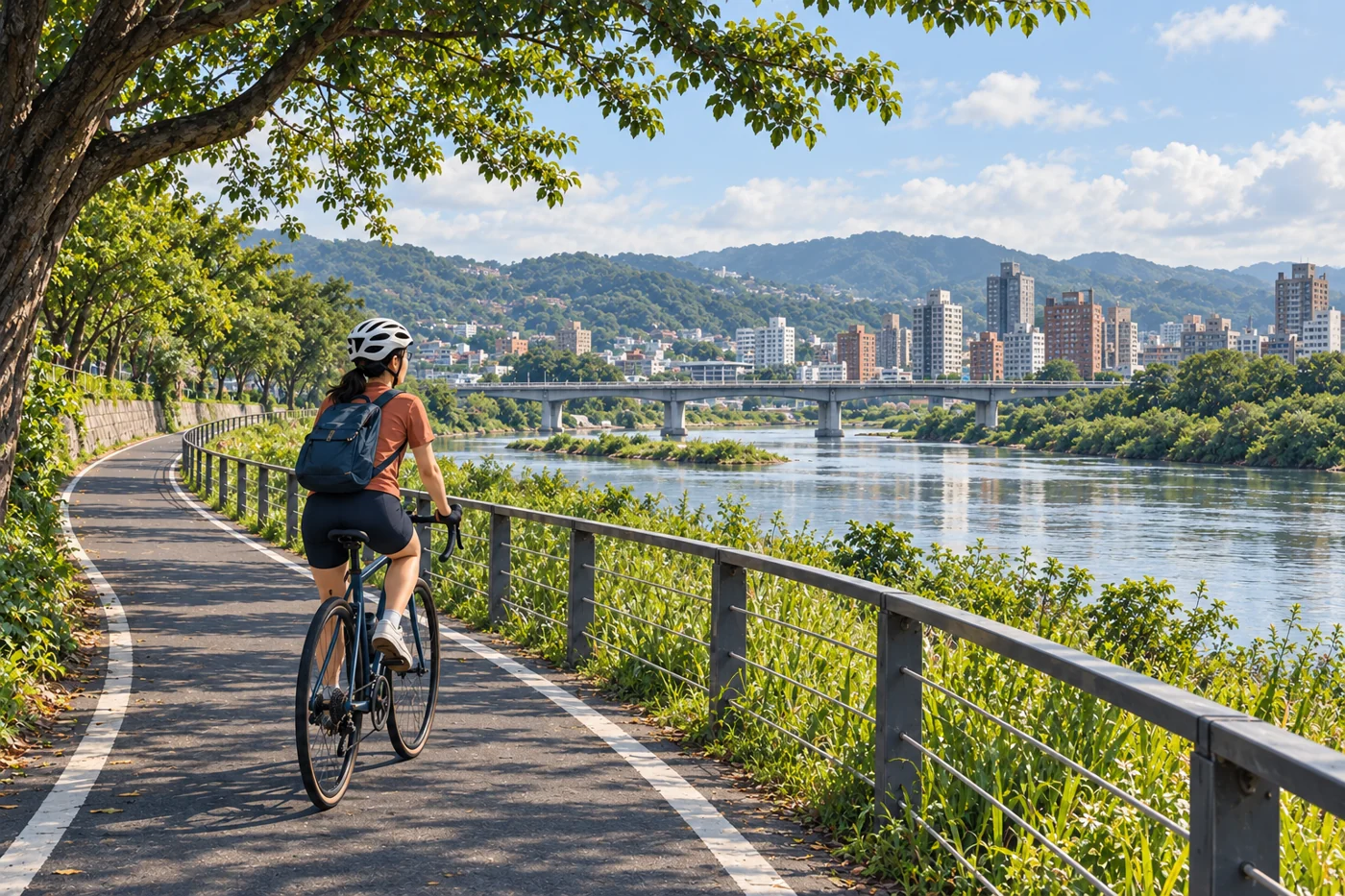
A day outside Taipei can begin with a very small decision: river or mountain, old street or open coast? That is more useful than trying to work through a long list of attractions.
My earlier guide had 27 entries, but several were parts of the same outing. Tamsui and its old street do not need to be counted twice. Neither do Shifen’s old street and waterfall. This guide brings the useful material together into 14 choices, with enough travel logic to help you pick one.
Two personal preferences from the original still belong here: Jiufen is one of my favorites, and the Pingxi Railway is a favorite way to explore. That does not mean either has to be your choice. Your time, the weather and how much walking you want should decide the day.
Easy starts: hot springs and the river
1. Beitou: choose a bath, a walk or both
Beitou is a good choice when you want a change of atmosphere without a complicated cross-country journey. Around Xinbeitou, the hot-spring history, park setting and museum give the visit a clear focus. A bath is an option, not a requirement.
Travel logic: use the MRT to Beitou and change for Xinbeitou. Decide whether you want a public bath or a private room before going; admission, clothing rules and reservations depend on the facility. The Beitou Hot Spring Museum is a useful starting point for context.
The original also listed Sulfur Valley separately. Treat it as an optional extension with its own transport and access check, not as another name for the central Xinbeitou walk. Geothermal scenery is not an invitation to step into untreated hot water.
2. Tamsui and Bali: let the river organize the outing
Tamsui gives you an old street, food and open river views close together. A-gei and iron eggs were among the local foods in the original guide; try something because it interests you, rather than making every snack another obligation.
Travel logic: take the MRT to Tamsui and start with the waterfront. Fort San Domingo can add a historical stop if you have time for the walk or local transport. Bali is on the opposite bank; a ferry crossing depends on service and conditions. It is an optional second part of the day, not somewhere you simply continue walking to from Tamsui Old Street.
Best for: a flexible outing where you can stop early or stay for the changing light. Choose either a longer historical walk or more time on the riverfront. You do not need to cover both banks and every landmark.
A day in the hills
3. Yangmingshan and Qingtiangang: pick one mountain area
Yangmingshan is a large mountain landscape, not a single attraction with one entrance. Qingtiangang’s grassland and volcanic setting make a clear focus for a visit. Trying to combine every scenic area can turn the day into a series of bus waits.
Travel logic: choose the trail or visitor area first, then work out the connecting bus from the city. Check the park’s trail classifications and current notices before setting out. A short distance on a map does not tell you the gradient or exposure.
Best for: a day when visibility and weather support time outside. Qingtiangang has wild buffalo; stay on permitted paths and obey fences and local instructions. Do not approach an animal to improve a photograph. If the weather closes in, shorten the plan.
4. Guanyinshan: choose the walk before choosing the view
Across the river from Tamsui, Guanyinshan offers a different angle on the Taipei basin. The old guide called the hiking generally easy. That is too broad: the route matters, particularly if you are aiming for Yinghanling.
Travel logic: plan the approach to your chosen trailhead rather than navigating only to “Guanyinshan.” The treetop walkway offers a gentler possibility than a summit-focused outing. Check the Yinghanling information if you want the climb.
Best for: someone who wants a deliberate walking day. Choose according to fitness, footing and the return journey. A view is a reason to go, not a reason to ignore tired legs or worsening weather.
The north and northeast coast
5. Yehliu: give the rock landscape your attention
At Yehliu, the interest is in the shapes, textures and erosion of the coast. Look beyond a single famous formation and the visit becomes more satisfying. You do not need an exaggerated “see it before it disappears” deadline to appreciate a changing landscape.
Travel logic: this is a bus or road outing, not an MRT stop. Use the official destination page to check current admission and access, then choose transport that leaves a workable return. Expect exposed sections and follow marked boundaries.
Best for: a coastal day with suitable weather. Jinshan can be a second stop if the connection is straightforward; do not add it automatically.
6. Jinshan: make lunch the center of the day
Jinshan Old Street offers a food-oriented outing on the north coast. Duck and local snacks are part of its identity in both the original guide and current tourism information. The pleasure is choosing a meal, walking a little and leaving room for whatever catches your attention.
Travel logic: use a north-coast bus or a planned road journey. Check Jinshan’s visitor information and the actual bus connection. The coast’s destinations look close together on a list; waiting and transfers still count as travel time.
Best for: a slower food-and-street outing, or a restrained pairing with Yehliu. Shop schedules vary. Do not rely on one specific stall being open to make the entire day work.
7. Longdong: distinguish a coastal walk from an adventure activity
Longdong’s rocky coast appeals for its landscape as well as climbing and water activities. Those are different kinds of visit. A look at the bay does not require committing to a dive or a climb.
Travel logic: identify the exact starting point and return connection. The Longdong Bay Cape Trail page is a starting reference for walkers. For a specialist activity, confirm conditions, equipment and supervision directly with the operator; the old guide’s generic booking links are not evidence of suitability.
Best for: a coastal outing planned around the conditions. Rough water or a weather warning is a reason to change the day, not to improvise another way onto the rocks.
Rail towns and old streets
The Pingxi corridor works best with a short list of stops. Use Taiwan Railway’s current timetable before leaving. Services and disruption arrangements change; this guide does not promise an uninterrupted through-service on your travel date.
8. Houtong: cats, but also a former coal town
Houtong is closely associated with its cats, yet the mining landscape gives the place another layer. The original article linked one of my hiking films with a visit here. A shorter visit can focus on the village and the old industrial setting without adding a major hike.
Travel logic: look for a suitable Taiwan Railway service to Houtong, checking any change required. Houtong lies on the main-line approach to the Pingxi branch; do not assume every train serving the broader area stops there.
Best for: a compact rail outing or one carefully chosen addition to another stop. Follow local guidance around the cats, keep your distance when they withdraw, and remember that the village is also people’s home.
9. Shifen: treat the old street and waterfall as one outing
The railway and the old street are tightly connected at Shifen. The waterfall adds a separate walk, so allow time for both rather than counting them as two unrelated day trips.
Travel logic: check the current railway connection to Shifen and the waterfall’s visitor access. A train arrival is not the same as arriving at the viewing area. Leave enough daylight and time to return without rushing.
Sky lanterns are a visible part of the street’s appeal, but the original article also raised their environmental impact. You can enjoy the town without releasing one. Stay clear of operating tracks and follow railway instructions.
Best for: a first rail-and-waterfall day. My Shifen film shows the older visit; use it for atmosphere, not current transport or access information.
10. Pingxi and Jingtong: leave room for the railway itself
Continuing toward Pingxi and Jingtong shifts the emphasis from a single big sight to smaller streets, railway views and mining history. This is where a modest itinerary helps. A station stop can be worthwhile without a long checklist attached.
Travel logic: choose one or both according to the day’s timetable. Jingtong is the branch terminus; check the return before settling into a long stop. The official railway outing overview explains the corridor’s geography and background.
Best for: someone who enjoys the journey as much as the destination. The exposed Pingxi crags are not included as a casual add-on here. A specialist hike needs its own route, weather and access assessment.
Longer days: Wulai, Keelung and the mining towns
11. Wulai: the river, Atayal context and a waterfall
Wulai combines a mountain setting with an old street and a waterfall. Its Indigenous context matters; approach it as a living place rather than a themed excursion. The visit can be satisfying without trying to add every bath, ride and activity.
Travel logic: Xindian is the MRT gateway, followed by a road connection to Wulai. The old street and waterfall are different points within the visit. Check local transport and return options before making the waterfall your last stop.
The Wulai log cart began as timber transport, not a coal railway. Treat the cart, cable car and any hot-spring facility as separate services whose operation needs checking. Waterfall visitor information is a useful reference.
Best for: a full, unhurried day in suitable weather. Do not assume the old street is primarily a late-night market, or that a mountain river is safe for an impromptu swim.
12. Keelung and Miaokou: let the market be the destination
Keelung offers a harbor-city setting and a strong reason to arrive hungry. Around Miaokou, the food stalls and Dianji Temple give the outing a concentrated center. My original guide linked a Keelung film because the port and market work together as a story.
Travel logic: take a suitable train or bus to Keelung, then allow time to walk between the arrival point, harbor and market. Keep an eye on your return options if you stay into the evening. Individual stalls keep their own schedules.
Best for: people who prefer several small tastes to a long attraction list. Browse before ordering, choose a few things and leave room to change your mind. For a different scale of food outing within Taipei, try the Longquan Market morning story.
13. Jiufen: spend your time, not just your camera battery
Jiufen remains one of my personal favorites from the original guide. The appeal is the combination of hillside lanes, food, tea and views toward the northern coast. The stairs and narrow streets are part of that experience, but they also require energy and patience.
Travel logic: Ruifang is a useful rail-to-road transfer point; Jiufen itself does not have a railway station. Check the onward bus or road journey. The official Jiufen page helps orient the visit.
Best for: a day with time to pause. Expect crowds around the best-known lanes, and make the last return connection part of your plan. Jinguashi is a possible pairing, but leave enough time for both rather than arriving at each in a hurry.
14. Jinguashi: follow the mining history
Jinguashi gives the hillside landscape a different focus: mining, industrial remains and the lives shaped by that work. The Gold Museum and the surrounding settlement make more sense when visited together rather than reduced to a quick photograph of a gold bar.
Travel logic: plan a road connection through the Ruifang area. The official Jiufen–Jinguashi transport overview identifies the corridor; confirm current departures and museum ticketing before travelling. Old entry prices and residency exemptions are not a reliable basis for budgeting.
Best for: a history-focused day or a carefully paced pairing with Jiufen. Stay within open visitor areas. Abandoned mine workings are not an invitation to explore on your own, and no general claim that every local hike suits beginners belongs here.
Before you leave Taipei
Choose one main outing. For the easiest logistics, begin with Beitou or Tamsui. For a longer day, choose a rail corridor or a mountain/coastal destination and build around its return journey. Avoid crossing from one side of northern Taiwan to the other just to collect another stop.
- Check the last leg: a railway station may still be a bus ride or substantial walk from the place you want to see.
- Check conditions: mountains, coastal rocks and rivers deserve more attention after heavy rain or during storm warnings. An attraction listing is not a same-day all-clear.
- Separate scenery from activity: seeing a coast is different from entering the water; seeing mountains is different from choosing a technical trail.
- Keep prices current: use official transport and attraction pages. This guide deliberately avoids carrying over old fares and ticket bundles.
One former attraction has changed permanently: Elephant Trunk Rock’s arch collapsed in December 2023. It is not retained as the intact landmark shown in older photographs.
If the weather or the connections do not work, there is nothing wrong with staying closer. The Taipei neighborhood guide offers another way to give a day some shape. A good outing is measured by what you notice, not how far from the city you get.
Story sources & context
Adapted from the existing Amaiwan Traveler archive. Practical details may change; follow official links before a visit.
- Taiwan Railway timetable
- New Taipei transport overview
- Yangmingshan trail classifications
- Beitou museum
- Guanyinshan walkway
- Yehliu visitor information
- Jinshan visitor information
- Longdong Bay Cape Trail
- Railway outing overview
- Wulai log cart history
- Jiufen visitor information
- Elephant Trunk Rock change
- Tamsui and Bali
- Keelung Miaokou
- Wulai local context