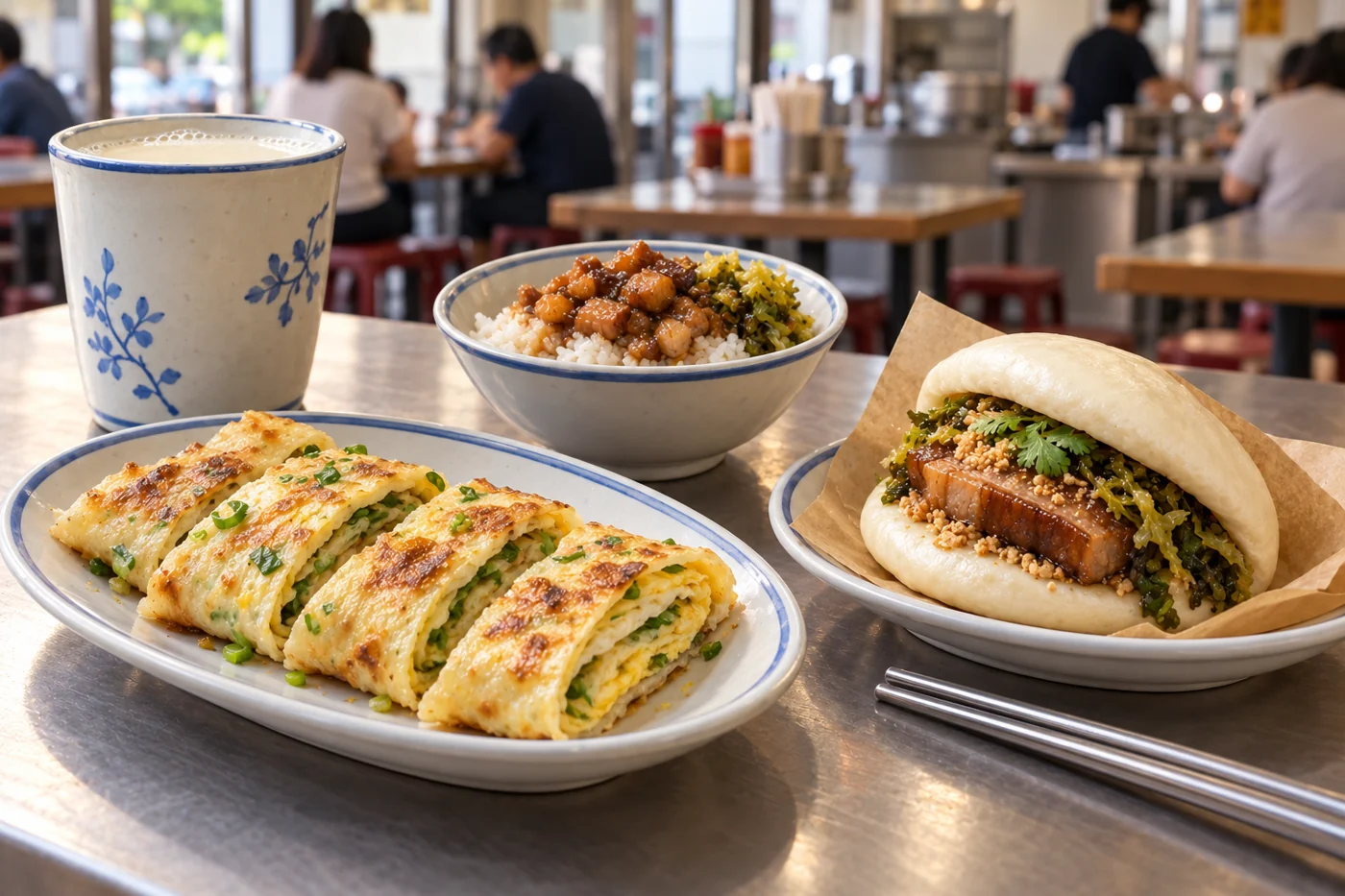
The useful part of learning Taiwan’s food is recognizing what is in front of you. A breakfast griddle, a stack of rice bowls, and a night-market fryer offer different ways into the day.
This guide brings together 50 foods and drinks, grouped by the kind of meal or stop you might want. It includes street snacks, breakfast staples, small-shop meals, and a few sweets to take home. Use it as a reference while you wander; you do not need to turn eating into an assignment.
Find something to eat
- Breakfast — 8 entries
- Rice & noodles — 10 entries
- Buns & savory parcels — 8 entries
- Night-market bites — 8 entries
- Tofu, eggs & simpler snacks — 6 entries
- Sweets & desserts — 8 entries
- Drinks — 2 entries
Traditional Chinese names can help you recognize a menu. The Latin-letter names are common reading aids, not a pronunciation lesson; spellings vary between Mandarin, Taiwanese, and English menus. Recipes vary too. If you avoid an ingredient, check the complete dish, including broth, sauces, toppings, and shared preparation.
Start with the meal you actually want
For breakfast, an egg crepe and soy milk make a manageable beginning. At lunch, a rice or noodle bowl leaves room to sit and notice the shop. At a night market, choose one substantial savory item first, then decide whether you want something small, sweet, or cold.
A morning market is worth its own visit. The Longquan Market story gives that setting more room than a night-market checklist can.
Breakfast
Traditional soy-milk shops and griddle breakfast shops offer different menus. Look at what is being made before joining the queue.
1. Egg crepe · dan bing
蛋餅
A thin pancake cooked with egg, rolled, and cut into bite-sized pieces. Some versions are soft; others have crisp edges. Choose a plain one first if you want to notice the texture, then try the fillings at a neighborhood breakfast shop.
2. Sticky rice roll · fan tuan
飯糰
Sticky rice wrapped around a filling that often includes fried dough, pickled vegetables, and pork floss. The contrast is the point: soft rice around something crunchy. A practical takeaway breakfast, though fillings vary and a roll can be more substantial than it looks.
3. Fried dough and soy milk · you tiao & dou jiang
油條・豆漿
The fried dough stick gives you crisp edges and an airy middle; soy milk makes a simple companion. Traditional breakfast shops may offer hot or cold and sweetened or unsweetened milk. Ask what is available rather than assuming that every cup comes the same way.
4. Savory soy milk · xian dou jiang
鹹豆漿
A warm, lightly curdled bowl with seasonings and toppings, often including fried dough, scallion, and dried shrimp. Think of it as a savory breakfast to eat with a spoon. Soy milk does not make the finished dish automatically vegetarian.
5. Sesame flatbread · shao bing
燒餅
A sesame-topped baked flatbread with layers that can crumble as you bite. It may hold egg or a fried dough stick. Look for it at traditional breakfast shops; the bread and the filling are separate choices worth checking when you order.
6. Radish cake · luo bo gao
蘿蔔糕
A savory cake made with white radish and a starch or rice-flour mixture, commonly sliced and pan-fried at breakfast. A browned surface and soft centre make the contrast. Recipes can contain meat or dried seafood, so check ingredients if that matters to you.
7. Griddle noodles · tie ban mian
鐵板麵
Noodles heated on a breakfast griddle with sauce, often with an egg added. Black pepper and mushroom-style sauces are familiar choices. The name describes the cooking surface; ask about the sauce and toppings instead of expecting one fixed recipe.
8. Breakfast burger
早餐漢堡
A bun with a chosen patty or other filling, often paired with egg and breakfast-shop sauces. It belongs to the everyday Taiwan breakfast landscape alongside crepes and sandwiches. The shop’s menu matters more than a supposed single traditional version.
Rice & noodles
These are useful anchors for a meal. A small bowl does not have to be followed by five more stops.
9. Beef noodle soup · niu rou mian
牛肉麵
Beef, noodles, and broth make a full meal. Red-braised and clearer broths offer different directions, so look at the menu before choosing. A dedicated noodle shop gives this bowl more room than trying to fit it between several night-market snacks.
10. Braised pork rice · lu rou fan
滷肉飯
Soy-braised chopped or minced pork and its sauce over rice. The proportion of fat, sweetness, and seasoning varies by shop. A small bowl with a vegetable side and soup can tell you plenty about an ordinary local meal.
11. Oyster vermicelli · oyster mian xian
蚵仔麵線
Very thin wheat noodles in a thickened broth with oysters; some versions also contain intestine. The soft texture is part of the dish. Check which toppings are actually included, then add garlic, vinegar, or chilli according to the stall’s options.
12. Danzai noodles
擔仔麵
A small bowl of noodles associated with Tainan, commonly finished with a savory pork topping and sometimes shrimp. Its modest size leaves room for another dish. Read the toppings as part of the order, especially if you avoid seafood.
13. Cold sesame noodles · liang mian
涼麵
Noodles served cool with a sesame-based dressing, often cucumber and garlic. They offer a different texture and temperature from a steaming bowl of soup. Mix the sauce through before deciding whether you want more seasoning.
14. Milkfish soup
虱目魚湯
A fish soup strongly associated with southern Taiwan, including Tainan. Pieces of fish in broth are different from a thickened soup made with fish paste. Ask which version is being served and eat attentively around any bones.
15. Fish-ball soup · yu wan tang
魚丸湯
Springy fish balls in broth make a small meal or a companion to rice or noodles. Some fish balls contain a meat filling. The English name alone cannot tell you everything inside, so ask if you are avoiding pork or other ingredients.
16. Bento / boxed meal · bian dang
便當
A takeaway meal built around rice, a main item, and sides. It is everyday lunch food as well as part of Taiwan’s railway-food culture. Look at the complete box: vegetables, egg, pickles, and the main dish can vary considerably.
17. Rice porridge · zhou
粥
Rice cooked with more water into a soft, spoonable meal. It can arrive plain with side dishes or already combined with fish, meat, egg, or vegetables. Check which style the shop serves before ordering a collection of extras.
18. Savory sticky rice · you fan
油飯
Seasoned sticky rice, often with mushrooms, pork, and fried shallot. It has a firmer, more cohesive bite than a bowl of plain rice. Look for it at traditional food stalls and markets, and check the ingredients rather than treating mushrooms as proof it is meat-free.
Buns & savory parcels
Wrappers can be bread, wheat sheets, rice mixtures, or leaves. Similar-looking parcels can have very different fillings.
19. Scallion pancake · cong you bing
蔥油餅
A pan-fried flatbread with scallion through the dough. Layering and frying give it a satisfying chew and crispness. Flakier, pulled-apart versions may be sold as cong zhua bing; the names are related, but they do not promise identical pancakes.
20. Soup dumplings · xiao long bao
小籠包
Small steamed dumplings with meat and broth enclosed in a thin wrapper. Give the hot liquid a moment before biting. They belong comfortably in Taiwan’s food scene, but a dumpling restaurant can be a better setting for them than a walking snack.
21. Pork belly bun · gua bao
刈包
A folded steamed bun around braised pork belly, often with pickled mustard greens, peanut powder, and cilantro. Soft bread and rich filling make a good contrast. Ask about the fat-to-lean choice if offered, and about peanut garnish if needed.
22. Pan-fried buns · shui jian bao
水煎包
Filled buns cooked with water and heat so the base can brown while the dough cooks through. Cabbage, chive, and pork are among the fillings you may encounter. A vegetable name does not confirm that the entire filling is vegetarian.
23. Black pepper bun · hu jiao bing
胡椒餅
An oven-baked bun with peppery pork and scallion inside a crisp shell, often topped with sesame. At some stalls you can watch buns cooking against the oven wall. The filling holds heat, so give a fresh one a little time.
24. Fresh spring-roll wrap · run bing
潤餅
A thin wrapper folded around vegetables and other fillings, often with peanut powder. This is usually a fresh wrap rather than a deep-fried spring roll. Watch what goes in: meat, egg, sweetness, and the vegetables change from stall to stall.
25. Leaf-wrapped rice dumpling · zong zi
粽子
Sticky rice and fillings wrapped in leaves, commonly bamboo leaves. Pork, mushrooms, and salted egg are possible ingredients, but recipes and cooking methods vary. Associated with the Dragon Boat Festival, these parcels also appear outside the festival season.
26. Savory bowl rice cake
碗粿
A rice-based mixture steamed in a bowl until set, then served with savory toppings or sauce. It is not the same as whole-grain sticky rice. Southern versions, especially around Tainan, give you one useful regional direction to explore.
Night-market bites
Portions and pricing vary. Point clearly, confirm the order, and move aside while it is prepared.
27. Fried chicken cutlet · ji pai
雞排
A large seasoned chicken cutlet with a crisp coating. It may arrive whole or cut, and bones can remain. Decide how much appetite you want to give it before ordering several other substantial snacks alongside it.
28. Popcorn chicken · yan su ji
鹹酥雞
Bite-sized fried chicken, usually seasoned after cooking, with basil or other additions depending on the stall. The basket-and-tongs setup may also offer vegetables and tofu. Confirm the quantity and seasoning before the selection heads to the fryer.
29. Oyster omelet
蚵仔煎
Oysters, egg, greens, and a starch batter cooked on a hot surface, with sauce added. The slightly gelatinous texture distinguishes it from a plain egg omelet. Sit down for it if you can; sauce and a soft centre make walking awkward.
30. Sausage in a sticky rice sausage
大腸包小腸
A grilled pork sausage tucked into a split sticky rice sausage, with garlic, pickles, or sauces according to the stall. This was a personal favorite in my original guide. It is a compact combination of rice and meat, not a light bread roll.
31. Taiwanese sausage · xiang chang
香腸
A pork sausage with a noticeable sweetness, often grilled and offered with raw garlic. Try a bite without extra sauce first. It also forms the smaller sausage in the rice-sausage snack above; here you are ordering the sausage on its own.
32. Grilled squid · kao you yu
烤魷魚
Squid grilled and usually brushed with sauce, then served whole, on skewers, or cut into pieces. The appeal is the firm bite with a little char. Ask about the portion and price before a large specimen goes onto the grill.
33. Pig’s blood rice cake · zhu xie gao
豬血糕
A firm mixture of pig’s blood and sticky rice. One street-stall version is served on a stick with peanut powder and cilantro. The blood is a real ingredient; this is a savory meat-based food despite the word “cake.”
34. Braised selections · lu wei
滷味
Choose ingredients from the stall’s assortment, which may include tofu, vegetables, eggs, and meat. They are prepared or warmed in seasoned braising liquid and served with the shop’s preferred finish. Ask how pricing works before filling a large basket.
Tofu, eggs & simpler snacks
This is a group of ingredients and preparations, not a vegetarian section. A-gei contains fish paste, and tofu can be cooked with meat or seafood.
35. Stinky tofu · chou dou fu
臭豆腐
Fermented tofu with a strong aroma. Fried versions pair a crisp exterior with a soft centre and often pickled cabbage; stewed versions are a different meal. Check broth and accompanying ingredients if you need a vegetarian option.
36. Firm dried tofu · dou gan
豆乾
Pressed tofu with a dense, chewy texture, sold plain, seasoned, braised, or as a packaged snack. Daxi is a useful regional association, but you will also see it elsewhere. Check the seasoning and preparation rather than assuming all tofu dishes are alike.
37. Tamsui a-gei
阿給
A fried tofu pocket stuffed with glass noodles and sealed with fish paste, then served with sauce. It is closely associated with Tamsui. The tofu exterior is misleading if you are looking for vegetarian food: the fish paste matters.
38. Baked sweet potato · kao di gua
烤地瓜
A whole sweet potato cooked until the inside softens. It is a simple snack or part of breakfast, found at vendors and some convenience stores. Let it cool enough to handle, then peel back the skin as you eat.
39. Iron eggs · tie dan
鐵蛋
Repeated cooking and drying give these seasoned eggs a dark colour and a much firmer chew than an ordinary boiled egg. They are associated with Tamsui and often sold packaged. Check whether the pack contains chicken or quail eggs.
40. Tea eggs · cha ye dan
茶葉蛋
Eggs simmered with tea and seasonings, their cracked shells allowing a marbled pattern to form on the white. A familiar convenience-store and snack-stall option. They are a separate preparation from the denser iron eggs.
Sweets & desserts
Texture is part of the pleasure: silky pudding, chewy rice, crisp pastry, and shaved ice. Choose the contrast you feel like.
41. Tofu pudding · dou hua
豆花
Very soft soy pudding served with syrup and chosen toppings, such as cooked peanuts or beans. It can be warm or cold. Start with a small number of toppings if you want to notice the pudding itself.
42. Shaved ice
剉冰
A mound of shaved ice with syrup and toppings. Beans, chewy starch-based pieces, and fruit lead to quite different bowls. Choose by the topping display and the season; a photograph of mango does not guarantee it is available that day.
43. Taro and sweet potato dessert balls
芋圓・地瓜圓
Chewy pieces made with taro or sweet potato and starch, served in sweet soup or with ice. Jiufen is especially associated with them. These boiled dessert pieces are different from the hollow fried sweet potato balls below.
44. Wheel cakes · che lun bing
車輪餅
Round batter cakes made in a mould, commonly filled with red bean or custard. They were a personal favorite in my original guide, especially warm. Give the filling a moment to cool even when the outside feels manageable.
45. Fried sweet potato balls · di gua qiu
地瓜球
Small sweet potato and starch balls worked in hot oil until they puff. The result is light and often hollow, with a chewy shell. Watching the repeated pressing and turning can be as interesting as choosing a seasoning.
46. Mochi
麻糬
Chewy glutinous-rice sweets, sometimes filled and sometimes coated in peanut or sesame powder. Hakka preparations are one part of the range you may encounter. Check fillings and coatings; the same broad name covers noticeably different sweets.
47. Pineapple cake · feng li su
鳳梨酥
A small pastry with a crumbly shell and a sweet fruit filling. Recipes vary, including whether winter melon is blended into the filling. It is useful as a bakery purchase or gift; check the ingredient list and storage date before buying a box.
48. Aiyu jelly
愛玉
A delicate jelly traditionally made from the seeds of the aiyu fig, commonly served with citrus and syrup. Look at what is added to the bowl or cup. A light jelly and a very sweet syrup can make quite different impressions together.
Drinks
Ask about sweetness, ice, and ingredients when choices are offered. A smaller cup can leave more room for the meal.
49. Pearl milk tea · zhen zhu nai cha
珍珠奶茶
Tea with a milk component and chewy tapioca pearls. Shops vary in their tea, milk or creamer, sweetness, and ice options. Ask for the combination you want; the name “milk tea” alone does not settle the ingredients.
50. Papaya milk · mu gua niu nai
木瓜牛奶
Papaya blended with milk into a thick drink. The fruit’s ripeness and the shop’s additions affect the sweetness. Ask about added sugar if you prefer a less sweet version.
Let the food lead you into a place
Tamsui makes sense for a-gei and iron eggs; Jiufen has a strong association with taro balls; Tainan gives milkfish, danzai noodles, and bowl rice cake a regional setting. That is a reason to notice what is local, not a promise that every stall serves the same version.
Use the Taipei day-trip guide when food becomes part of a larger outing, or stay with one Taipei neighborhood and see what the next block offers. For a longer food read, take a look at Follow the Sizzle.
Story sources & context
Adapted from the existing Amaiwan Traveler archive. Practical details may change; follow official links before a visit.
- Taipei City: food names and ingredients
- Taiwan Tourism Administration: Taiwan snacks
- Taipei breakfast traditions
- Taipei breakfast menus
- Taipei: food through the day
- Taipei: braising, noodles, and market cooking
- New Taipei: local dishes
- Tainan: regional cuisine
- Taipei: sweets and their preparation
- Taiwan: mochi and pineapple cakes
- Taipei: drinks
- Taiwan: aiyu and papaya milk